Most anti-aging advice is noise stacked on two signals. Daily photoprotection and a nightly retinoid are the only topicals with a mechanism that survives scrutiny — one prevents the damage, the other partially reverses it. Everything else is optimization at the margins, and some of it is just packaging. Here is our position up front: get those two right and you have captured most of the available benefit. This guide tells you what we prescribe, what we refuse to, and where we think your money quietly leaks.
Sunscreen is boring, and it is the whole game
Ultraviolet light is the dominant driver of what people call aging skin. UVA and UVB reach the dermis, generate reactive oxygen species, and upregulate matrix metalloproteinases — the enzymes that cleave the collagen and elastin holding skin firm. This is settled photobiology, not a serum claim. The wrinkling, laxity, and blotchy pigment we read as “old” are largely accumulated photodamage, which is why sun-protected skin — the underside of your forearm — looks decades younger than your face.
That fact is inconvenient for anyone selling creams: nothing you apply reverses damage faster than daily sun keeps inflicting it. A broad-spectrum SPF 30 or higher, worn every day, is the highest-leverage item in this guide. Reapplication beats the number on the bottle — SPF 50 applied once at 8am and forgotten is weaker by noon than SPF 30 reapplied. Mineral filters (zinc oxide, titanium dioxide) sit on the surface and scatter light; chemical filters absorb it and shed it as heat. Both prevent photoaging when applied properly, so the best sunscreen is the one whose texture you will actually wear every day — adherence, not filter chemistry, is where routines fail.
Our position: if you do exactly one thing, do this. If you do two, add the retinoid below.
A retinoid is the only cream with a real mechanism
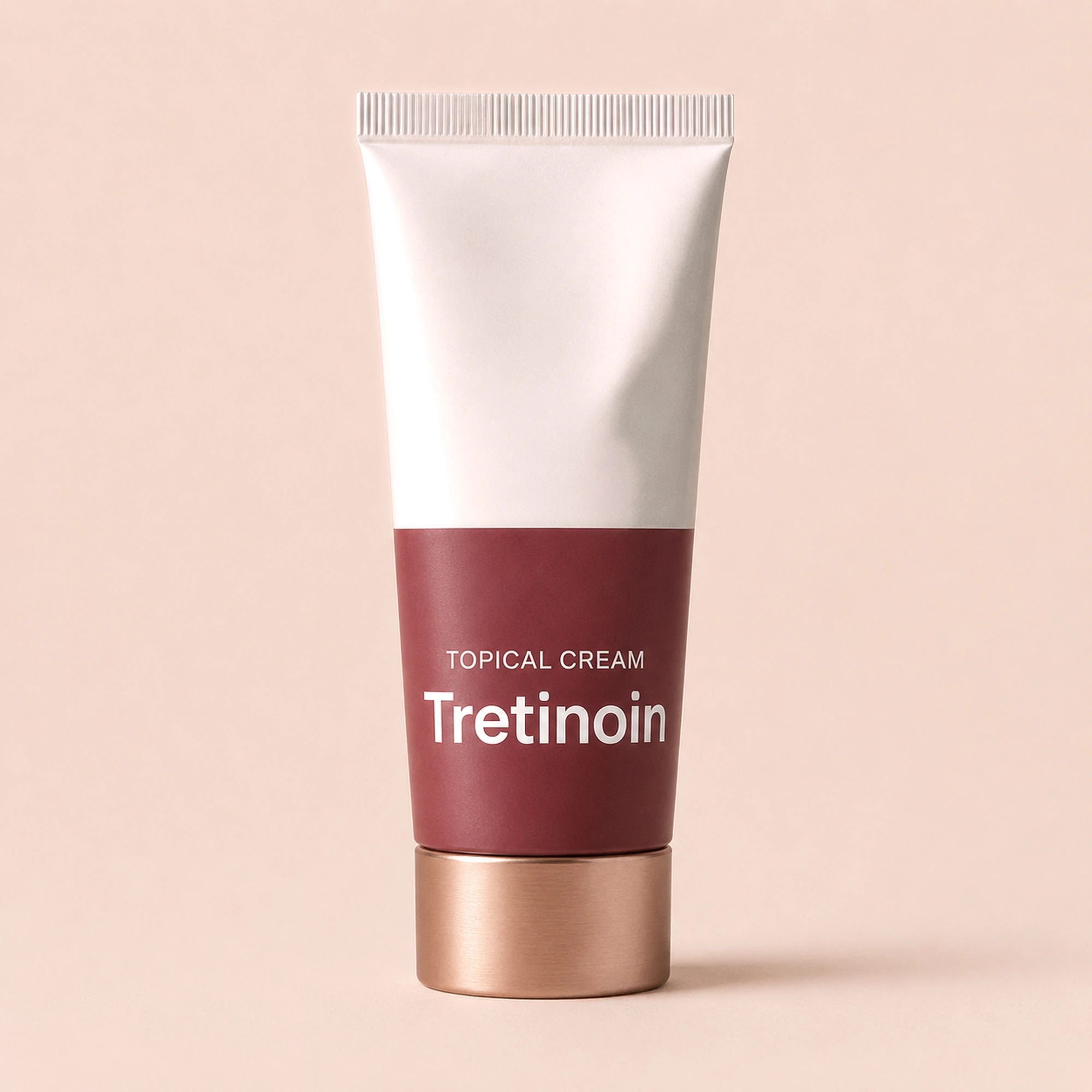
Retinoids are vitamin A derivatives that bind retinoic acid receptors (RARs) in skin. Activating those receptors normalizes how keratinocytes mature and — the part that matters for aging — upregulates procollagen synthesis in the dermis while dialing down the MMPs that degrade it. That is a genuine pharmacologic effect, not a moisturizing sensation. Tretinoin (all-trans retinoic acid) is the molecule that actually carries an FDA indication for photoaging; that regulatory bar is why we treat it as the reference standard.
The family is a potency ladder, not a set of equals:
- Tretinoin — prescription, binds RAR directly, strongest evidence. The ingredient detail lives at /ingredients/tretinoin.
- Adapalene — synthetic, RAR-selective, available over the counter. A reasonable entry point.
- Retinol — over the counter, but a prodrug: skin has to convert it (retinol → retinaldehyde → retinoic acid) before it does anything, so it is milder and slower. Fine for sensitive skin, not equivalent to tretinoin.
Set your expectations to the biology. Tolerance takes a few weeks; visible change in fine lines and tone is a months-long process, not a two-week one, because you are waiting on dermal remodeling rather than surface polish. Apply it at night — tretinoin is photolabile and can raise photosensitivity, which is the other reason the morning SPF is non-negotiable.
The purge is the mechanism, not a setback
New retinoid users often get redness, flaking, and stinging in the first few weeks, decide the drug is “too harsh,” and quit. That irritation follows directly from the mechanism: accelerating keratinocyte turnover and remodeling the barrier transiently disrupts it. It is the drug working, and it settles as skin acclimates.
So the answer is titration, not abandonment. Start low and infrequent, use a pea-sized amount for the whole face, and buffer with moisturizer. Frequency, not concentration, is the lever most people should pull first. If you can only tolerate it twice a week at the start, that is still a working dose — consistency over months beats an aggressive schedule you abandon in three weeks.
Tretinoin 0.025%, two nights a week for two weeks. Then three nights for two weeks. Then alternate nights. Then nightly, if you get there. You step up only when the current step has become uneventful — frequency first, concentration much later, and only after months of tolerated nightly use.
A pea-sized amount for the whole face, on dry skin, with moisturizer before and after. Nothing acidic and no benzoyl peroxide on tretinoin nights during the ramp. Sunscreen every morning, without exception.
The part nobody warns you about is weeks two to four. Irritation peaks there, and that is when most people quit — which is the only way to guarantee no result. The instruction that saves the course is: drop back a step, do not stop. Someone who retreats from three nights to two and holds for a month still gets the benefit. If even two nights is too much, apply it and wash it off after 30 to 60 minutes; that builds tolerance too.
Consult your clinician if the irritation is severe, spreading, or blistering rather than mild flaking. That is not the expected acclimation and can signal a contact dermatitis to an inactive ingredient — a reason to change the formula, not push through it.
Pigmentation is a different problem with a different drug
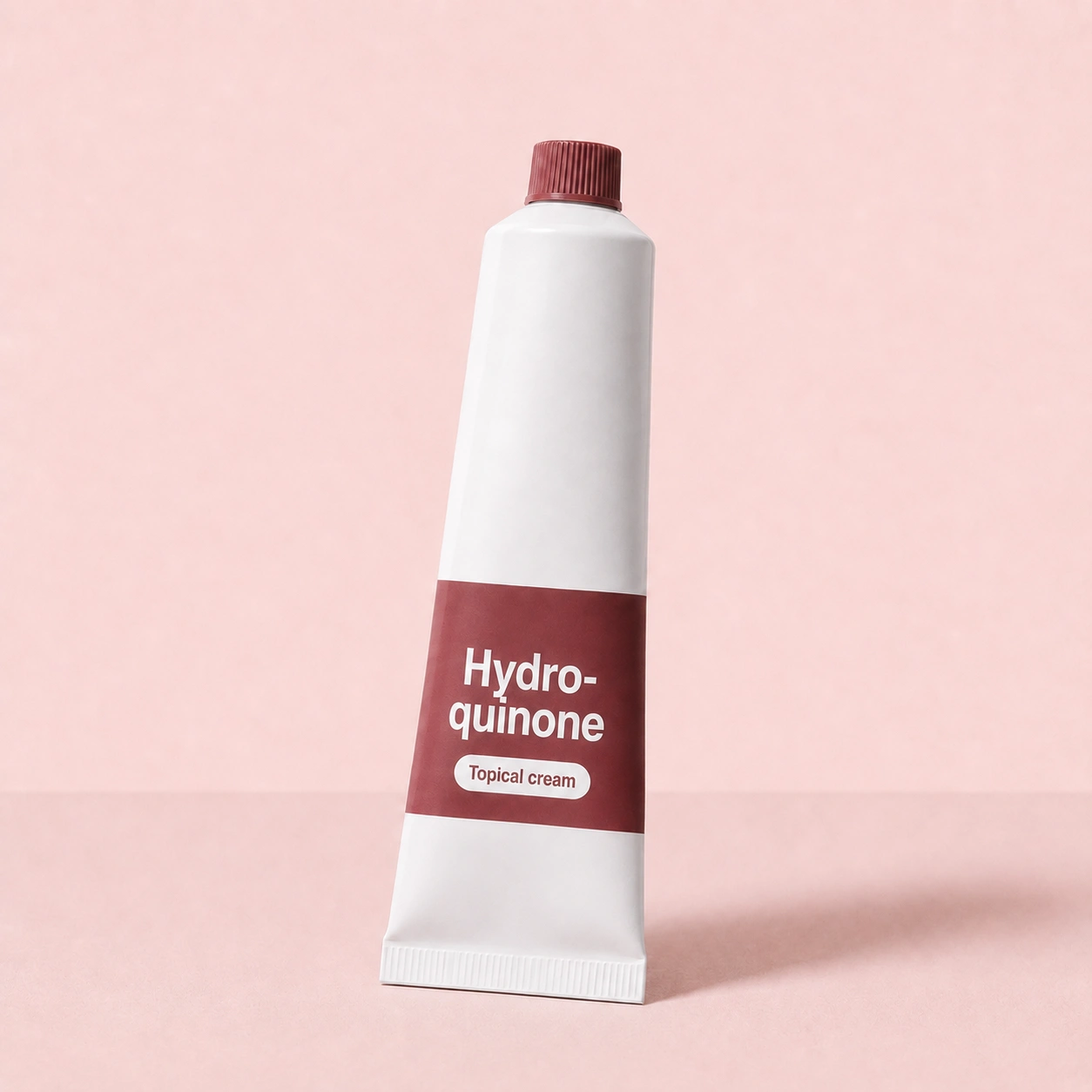
Fine lines and brown patches are not the same target. Uneven pigment — melasma, sun spots, post-inflammatory marks — comes from overactive melanocytes depositing melanin. Hydroquinone works by inhibiting tyrosinase, the rate-limiting enzyme in melanin synthesis, which is why it lightens those specific areas where a retinoid-and-sunscreen routine only helps slowly. We use it in short, supervised courses; the detail is at /treatments/hydroquinone.
Short and supervised is deliberate. Prolonged uninterrupted hydroquinone can, rarely, cause exogenous ochronosis — a paradoxical blue-grey darkening of the treated skin — so this is an “agree the course length with a clinician” drug, not a forever product. Azelaic acid (a tyrosinase inhibitor that is also anti-inflammatory) and niacinamide are gentler adjuncts; their pigment benefit is real but more modest, and the evidence behind them is thinner than for hydroquinone. Pigment also rewards prevention over correction: every one of these agents works better under strict daily sun protection, and melasma in particular rebounds fast without it.
What we actually put in the bottle
We compound tretinoin to the strength your skin can tolerate instead of defaulting everyone to the strongest — typically starting around 0.025% for sensitive skin and stepping toward 0.05% or 0.1% as tolerance allows. Where pigmentation is the main complaint, a hydroquinone-plus-tretinoin compound run as a defined course does more than either alone. We often pair the retinoid with niacinamide or azelaic acid — niacinamide supports the barrier and reduces the transepidermal water loss that makes early retinoid use feel raw, which buys tolerance without dropping potency. A US-licensed clinician reviews your intake and sets the starting point; you are not pulling a strength off a shelf and hoping.
Where the evidence gets thin — and your money leaks
This is the part most brands won’t write.
- Vitamin C (L-ascorbic acid): the mechanism is legitimate — it is an antioxidant and a cofactor for the enzymes that hydroxylate collagen. Whether a given serum delivers enough stable, penetrating ascorbic acid to matter is far less certain, and these formulas oxidize (the browning you see is the product degrading). Reasonable to use, not worth overpaying for.
- Peptides: sold as collagen-signaling ingredients. The mechanistic story is plausible; the controlled human evidence for a visible anti-aging effect is weak and short. We would call this genuinely unproven. If it is already in your routine, keep it — just don’t let it displace the retinoid.
- Collagen drinks, exosome serums, most direct-to-consumer “anti-aging” devices: we don’t recommend spending here yet. When the evidence catches up, we will change this line — that is the falsifier, and we mean it.
The honest hierarchy: sunscreen and a retinoid do the work, pigment agents solve a specific second problem, and everything above is closer to a rounding error you are often overpaying for.
Botox and fillers: excellent, and not from us
Botulinum toxin relaxes the muscles of expression by blocking acetylcholine release at the neuromuscular junction — that is why it softens dynamic lines like frown creases. Fillers restore lost volume, usually with hyaluronic acid. Both work well in trained hands. Both are also in-clinic injectable procedures, not something telehealth should be mailing you, so we refer to vetted partner clinics rather than pretend otherwise. If you are weighing the two, we wrote the comparison at /compare/botox-vs-fillers.
Build it in three steps
- Morning: Cleanser → vitamin C (optional) → SPF 30+. Stop there.
- Night: Cleanser → tretinoin (pea-sized, 3–7×/week as tolerated) → moisturizer.
- Weekly: A gentle exfoliant if your skin tolerates it — never on a retinoid night.
That is the routine. The rest is product marketing.
The takeaways, sorted by how sure we are
- Regulatory fact: tretinoin carries an FDA indication for photoaging; daily broad-spectrum SPF and a retinoid are the two interventions with the strongest backing.
- Settled pharmacology: UV drives photoaging through MMP-mediated collagen breakdown; retinoids upregulate collagen via RAR activation; hydroquinone lightens pigment by inhibiting tyrosinase.
- Guideline-consistent practice: keep hydroquinone to short, supervised courses; titrate retinoids by frequency before strength.
- Our clinical opinion: peptides, vitamin C serums, and most anti-aging devices are optional at best — don’t let them crowd out the two that work.
Ready to start? Get matched to a compounded, clinician-reviewed plan at /quiz/.
The question we can’t answer yet
Here is the honest gap. Nearly all of the retinoid evidence measures appearance — fine lines, pigment, photodamage scored on a scale — over months. What we don’t have is long-term controlled data on prevention: whether starting a retinoid in your 20s or 30s, before any visible change, actually alters the trajectory of skin aging versus starting once the changes appear. “Collagen banking” is a marketing phrase, not a proven strategy. Until someone runs the decade-long comparison, we do the two things we are sure about — protect the skin from UV, and titrate a retinoid to what it tolerates.