Dull, deflated-looking skin during GLP-1 treatment is almost always a side effect of how fast and how much weight you’re losing — not a skin disease. Fix hydration, tretinoin, sleep, and iron first; injectable glutathione is a small, optional add-on, and the oral version is a waste of money.
The weight loss is doing this, not your skin
The weight loss is real and large. In STEP 1 (semaglutide 2.4 mg, 1,961 adults with obesity and no diabetes), mean loss was 14.9% of body weight at week 68 versus 2.4% on placebo. SURMOUNT-1 pushed tirzepatide to 20.9% at the 15 mg dose versus 3.1% on placebo. Lose a fifth of your body weight and some of it comes off your face — subcutaneous fat is a volume depot like any other. Less volume reads as flatter, older, duller skin even when the skin itself is healthy.
And this isn’t a phase that passes. STEP 4 and SURMOUNT-4 both show that weight comes back when the drug stops — regain of roughly 14% of body weight in the year after tirzepatide was switched to placebo. The leaner face is the maintained state, not a titration stage you wait out.
Why the surface looks dull in the first weeks
Two mechanisms stack on top of the volume change. GLP-1 receptor agonists slow gastric emptying and act on appetite circuits in the hypothalamus and hindbrain, so intake — of food and of fluid — drops sharply. Early on, nausea makes it worse: it tracks dose escalation because delayed gastric emptying is dose-dependent, and it fades as titration slows. The practical result is weeks of quiet, mild dehydration during the 0.25 → 0.5 → 1.0 → 1.7 → 2.4 mg climb. Dehydrated skin looks dull. This is the most reversible part.
Fix these before you buy anything
Hydration and electrolytes. Aim for a genuine 2.5+ L of water a day with electrolytes, not sips. This alone resolves a lot of what people call dull skin.
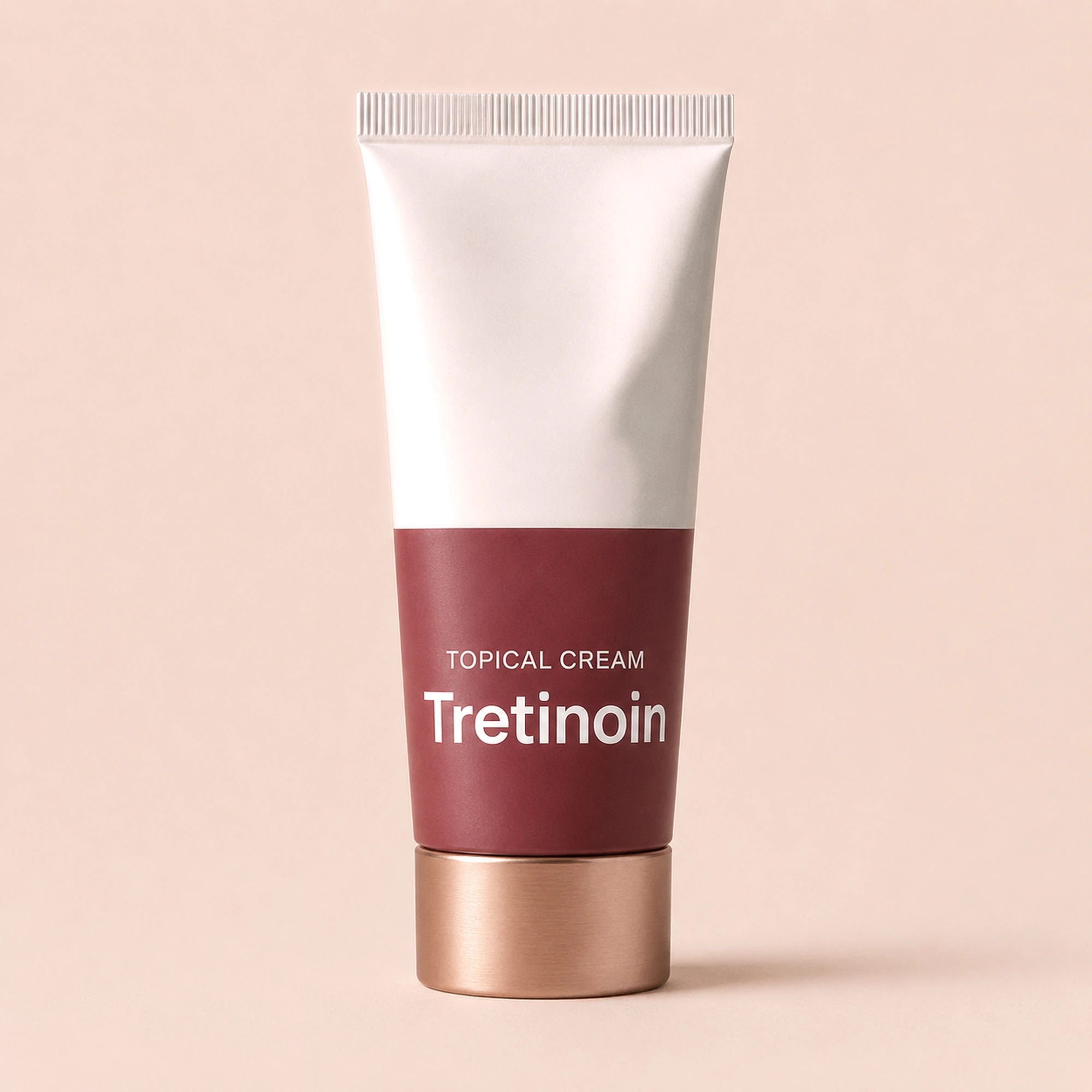
Tretinoin nightly, starting 3–4 nights a week. It binds retinoic acid receptors in keratinocytes, normalizes turnover, and drives dermal collagen synthesis — the highest-evidence topical for skin texture. Everything else here is optional next to it.
Sleep. Most people sleep worse in the first GLP-1 weeks, and skin repair is overnight work.
Iron and ferritin. Reduced food intake makes low iron more likely, and low ferritin tends to dull skin tone before it dents energy. Worth a check if the dullness persists after hydration is fixed.
Where glutathione actually fits
Here’s the honest tier. The weight-loss numbers above come from trials with thousands of participants. The skin-brightening case for glutathione does not — it rests on small studies in narrow populations, and we have no evidence base for it remotely like STEP 1. The mechanism holds up: glutathione inhibits tyrosinase, the enzyme that drives melanin synthesis. Plausible mechanism, thin outcome data. Treat it as a modest extra, worthwhile only once hydration, tretinoin, sleep, and iron are already dialed in.
If you use it, use the injectable route. Protocols vary — one commonly cited range is 600–1200 mg subcutaneous or IM, 1–2× weekly for 8–12 weeks — but the dose, the route, and whether it’s worth doing at all are a clinician’s call, and every Zappy case is reviewed by a US-licensed clinician. Any effect is modest — brightening, not transformation.
Skip oral glutathione
Oral glutathione is broken down in the gut before it reaches circulation, so systemic absorption is poor. That’s pharmacology, not a dose you can fix by taking more. Inject it or skip it; most oral glutathione supplements are functionally placebo.
The caveat we can’t close
DXA substudies of GLP-1 trials show a meaningful share of the weight lost is lean mass, and the standard countermeasure — resistance training plus roughly 1.2–1.6 g/kg/day of protein — protects muscle. Whether preserving lean mass also preserves facial appearance has not been characterized. We don’t know.
The open question worth watching: no trial has tested any topical or injectable against the facial changes of GLP-1 weight loss specifically. Until one does, the skin protocol is borrowed from general dermatology, and glutathione stays a reasonable maybe — not a proven fix.