The short answer
Yes, the shedding is real, and no, the drug is not attacking your follicles. Hair loss on semaglutide or tirzepatide is telogen effluvium — the same reactive shed that follows childbirth, a bad fever, or a crash diet. It is triggered by how fast and how far your weight drops, it peaks around month three to four, and in almost everyone it grows back.
It’s the weight loss, not the molecule
GLP-1 drugs move weight fast. In STEP 1, semaglutide 2.4 mg produced a mean body-weight change of −14.9% at week 68 versus −2.4% on placebo; in SURMOUNT-1, tirzepatide reached −20.9% at the 15 mg dose. A loss that large and that quick is a systemic stressor, and the follicle answers the way it answers any large stressor: an abnormal fraction of hairs leave the growth (anagen) phase and drop into the resting (telogen) phase at once. Roughly three months later they shed together. That lag is why the timing feels disconnected from the injections — the hair filling your drain in month three was pushed out of cycle back in month one.
Two mechanistic details sharpen the picture. First, the appetite suppression that makes these drugs work — slowed gastric emptying plus action on hypothalamic and hindbrain appetite circuits — also makes it easy to badly undereat, and protein is usually the first thing to fall. Second, DXA substudies of GLP-1 trials show a meaningful share of the weight lost is lean mass, not just fat (a real finding, though its long-term functional consequences aren’t yet well characterized). Hair is structural protein. A body short on amino acids and rebuilding less lean tissue is not a body spending resources on your hairline.
What the months actually look like
- Months 1–2: nothing visible. The hair you see now was programmed weeks ago.
- Months 3–4: the shed peaks. Showers look alarming and your part may widen. This is the scary part, and it is the expected part.
- Months 5–7: fine new growth appears at the hairline; shedding slows.
- Months 8–12: density returns, usually completely.
What actually moves the needle
Protein first. This is the one lever with a real mechanism behind it. Clinicians commonly target 1.2–1.6 g/kg of body weight per day to protect lean mass during rapid loss, and hitting that floor is harder than it sounds when a drug is suppressing your appetite. Undereating protein is the most common fixable cause of GLP-1 hair loss.
Slow the loss if you can. Sustained loss faster than about two pounds a week is the setting where the follicle pays. The standard semaglutide titration ramps slowly anyway: 0.25 mg weekly to start, stepping roughly every four weeks (0.25 → 0.5 → 1.0 → 1.7 → 2.4 mg), and slower if side effects hit. If shedding is severe, holding a dose longer is a legitimate lever — that is a conversation to have with your clinician, not a change to make alone.
Check the obvious deficiencies. Iron (ferritin), B12, vitamin D, zinc, and TSH all drive diffuse shedding on their own and are common in people eating less. Get a basic panel rather than guessing.
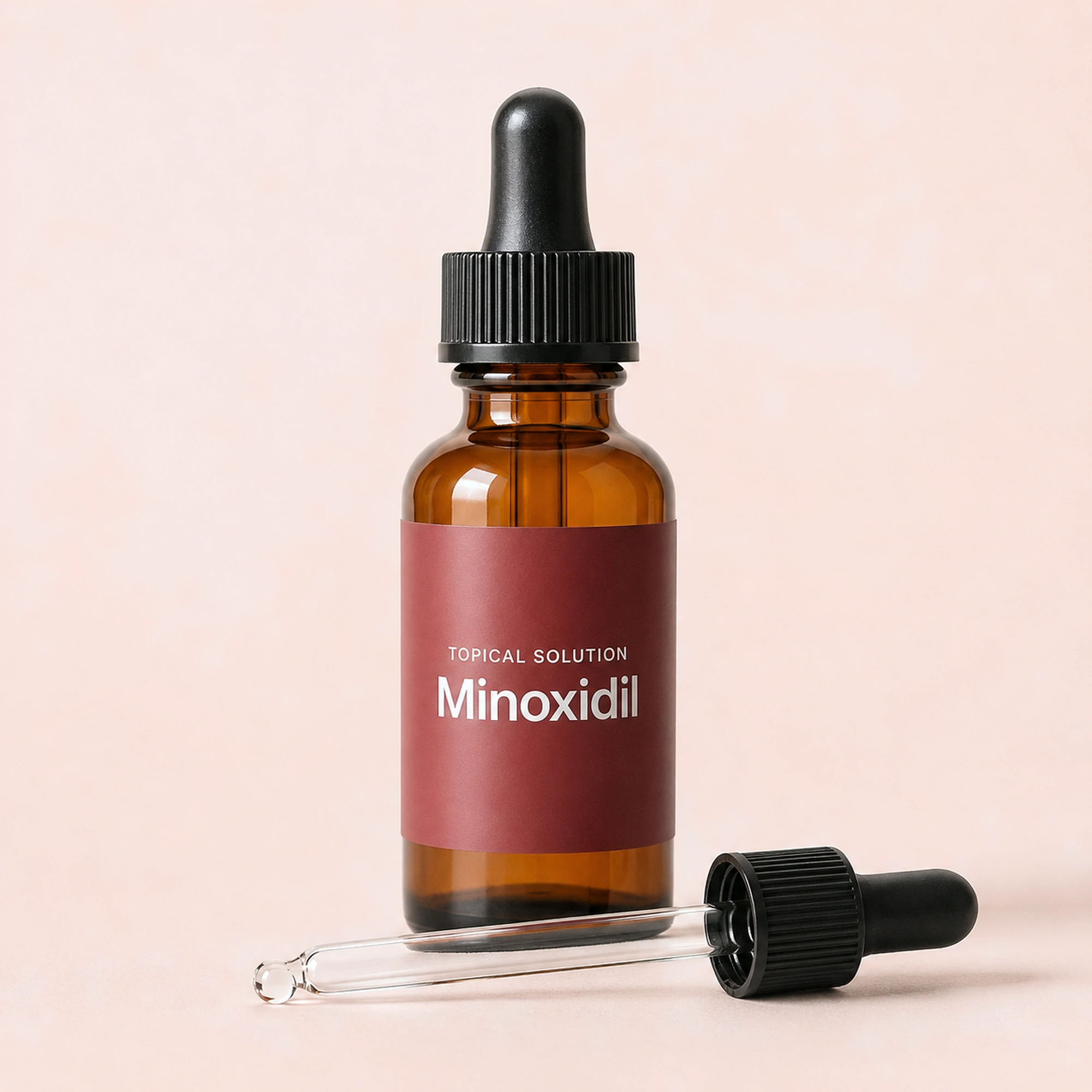
Topical minoxidil can speed recovery. It shortens the telogen phase and nudges follicles back toward growth. It is first-line for pattern hair loss and used off-label to accelerate regrowth after telogen effluvium. Two honest caveats: it will not stop the shed already in motion, and the evidence in effluvium specifically is thinner than in androgenetic alopecia. Treat it as an accelerant, not a cure.
What doesn’t help: biotin, unless you are genuinely deficient — which is rare. Most “hair growth” supplements do nothing for telogen effluvium specifically. Spend the money on protein instead.
When it isn’t telogen effluvium
Diffuse thinning that recovers is the expected pattern. Discrete bald patches, or shedding that is still worsening past month eight, is a different problem — androgenetic alopecia, thyroid disease, or something else — and the GLP-1 is likely a bystander. That is the point to get evaluated rather than wait it out. If you’re weighing whether to start or adjust treatment, our clinicians review every case and can build the taper around a side effect like this.
The question nobody’s answered yet
Staying on the drug is what keeps the weight off — in STEP 4, people who stopped semaglutide at week 20 regained substantial weight while those who continued kept losing. So the low-weight, easy-to-underfuel state isn’t a phase; for many people it is the new baseline for years. Whether that chronic state leaves a subtler, longer signature on hair — thinner regrowth, slower cycles — in people who lose a fifth of their body weight and hold it is something nobody has tracked yet. For the reversible month-three shed in front of you, the answer is well understood: feed the follicle and give it two seasons.