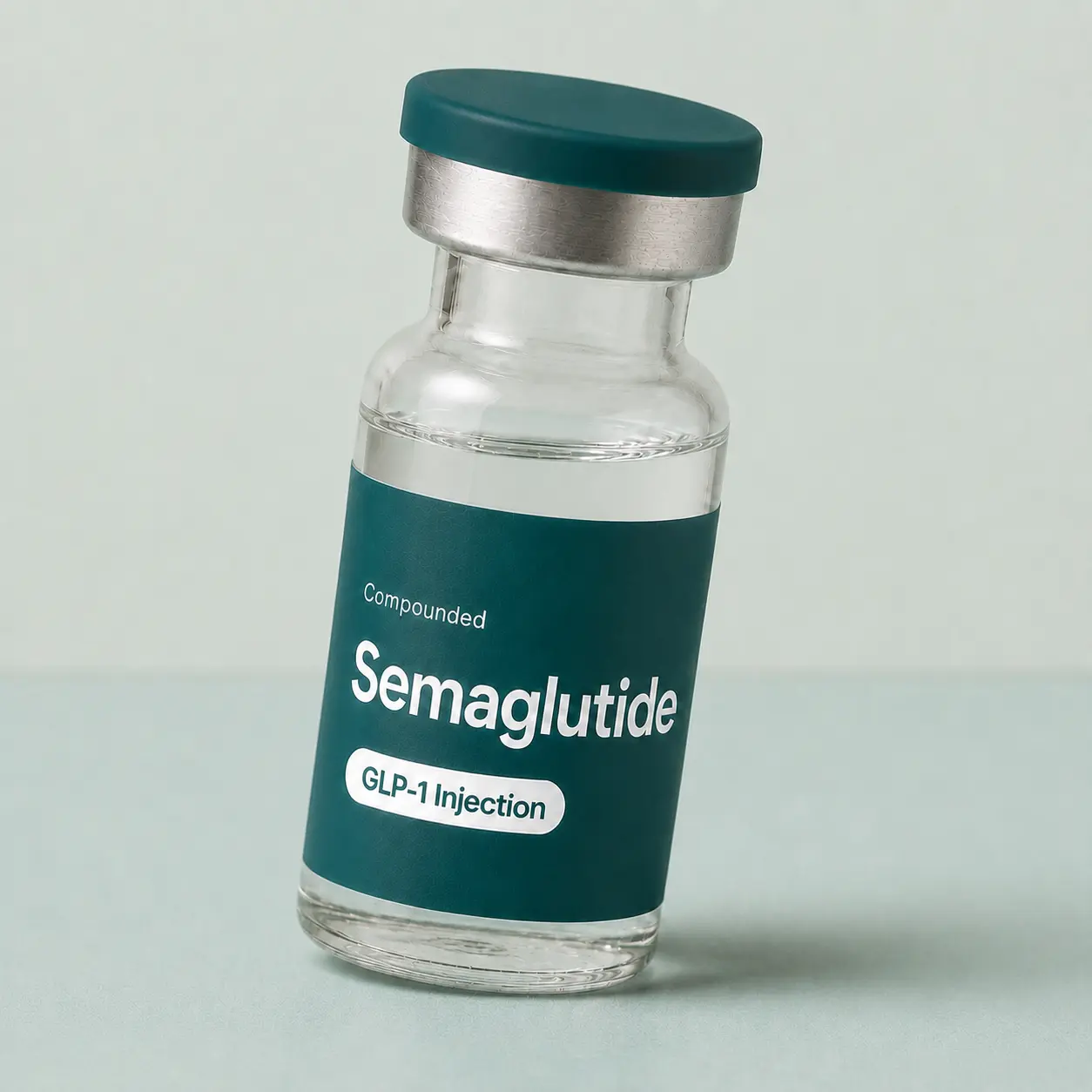
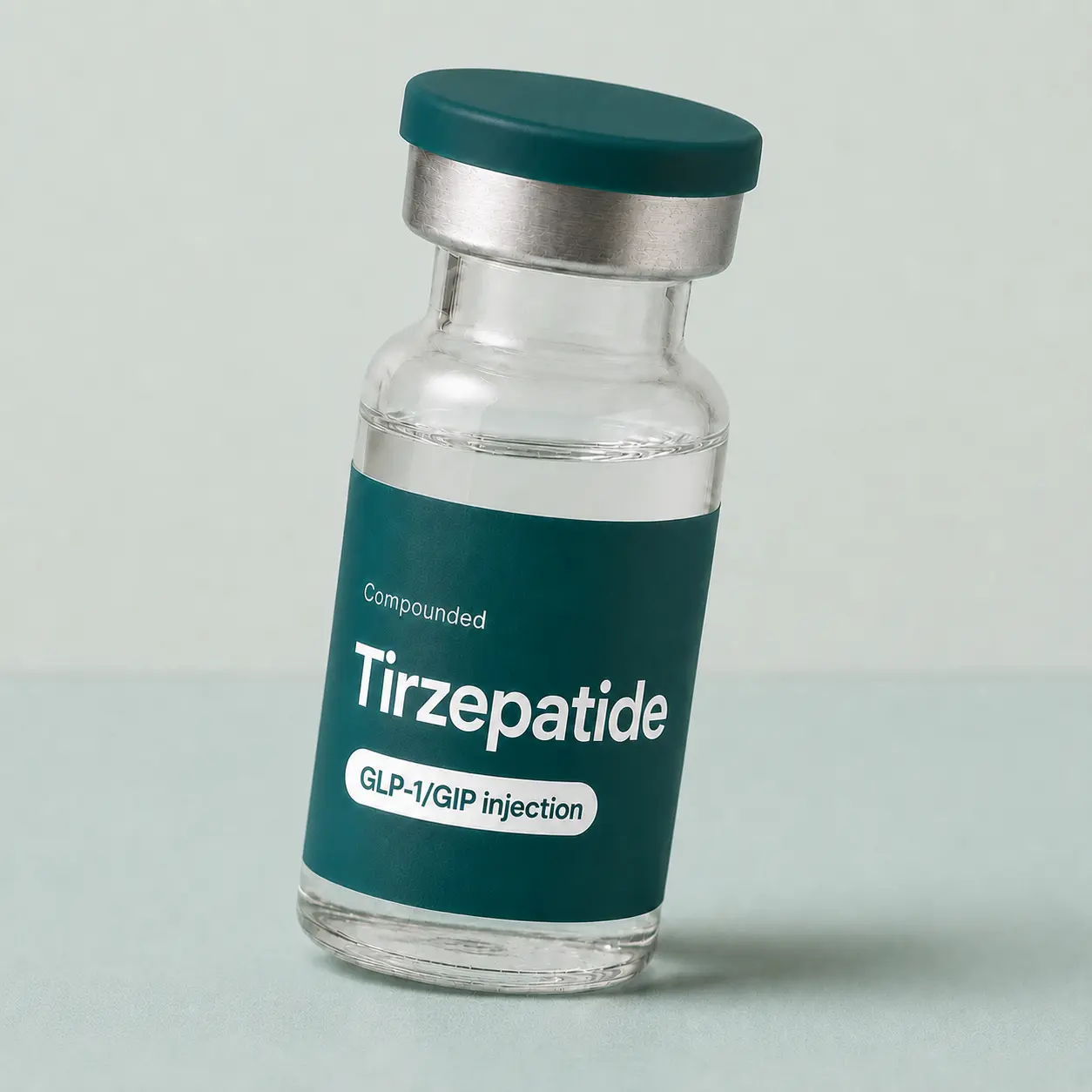
Eat protein first, lift twice a week, and drop liquid calories — in that order. On a GLP-1, the drug does the calorie-cutting for you; the job with food is to keep the weight you lose from coming off your muscle.
Why the drug rewrites the diet question
GLP-1 receptor agonists slow gastric emptying and act on appetite circuits in the hypothalamus and hindbrain; tirzepatide adds GIP receptor agonism. You eat less without fighting yourself for it. In STEP 1 (Wilding et al., NEJM 2021, 1,961 adults with obesity and no diabetes), semaglutide 2.4 mg produced −14.9% mean body weight at 68 weeks versus −2.4% on placebo. In SURMOUNT-1 (Jastreboff et al., NEJM 2022, n=2,539), tirzepatide reached −15.0% at the 5 mg dose and −20.9% at 15 mg versus −3.1% placebo. When appetite is suppressed that hard, the old playbook — count every calorie, slash carbs — is mostly redundant. The restriction happens on its own. What does not happen on its own is the composition of the weight you lose.
Protecting muscle is the whole game
DXA substudies of these trials show a meaningful fraction of the weight lost is lean mass, not just fat. That is expected — fast weight loss of any kind takes some muscle with it. What we do not yet know is how much it matters over years: long-term strength and physical-function outcomes on these drugs are not well characterized. Call that tier 2 — a consistent signal, incomplete data.
The countermeasure is not a supplement. It is two things: resistance training and protein. Clinicians commonly target 1.2–1.6 g/kg/day — for a 200-lb man, roughly 110–145 g of protein a day. Hit that floor before you think about anything else on the plate.
The plate, and a default day
- Protein: the floor above, spread across the day, not stacked into one meal.
- Carbs: 100–200 g/day, scaled to how much you train. Whole sources.
- Fat: whatever balances your calories. Do not fear it, do not chase it.
- Vegetables: a fist-sized portion at each meal.
A default day on a GLP-1:
- Morning: 4 eggs, cottage cheese, sourdough toast, coffee.
- Lunch: a big salad with a real protein source — chicken, salmon, steak — plus olive oil, beans, vegetables.
- Afternoon: Greek yogurt or jerky.
- Dinner: protein, a starch, a vegetable.
That is about 150 g protein, 130 g carbs, 80 g fat — roughly 1,900 calories. Adjust to your numbers.
The catch on a GLP-1 is that suppressed appetite makes the protein floor the hardest part, not the easiest. Eat the protein first, while you still want to eat at all.
Drop liquid calories first
In order: liquid calories first — juice, soda, sweetened coffee. Then alcohol. Then refined snacks. Then sweetened dairy. If you change one thing, change the first one. It is the highest-leverage cut on the food side, and the drug will not do it for you.
Food supports the drug, it does not replace it
Here is the part the diet cannot fix. In STEP 4 (Rubino et al., JAMA 2021), patients who stopped semaglutide at week 20 regained substantial weight; the loss held only while they stayed on the drug. SURMOUNT-4 (Aronne et al., JAMA 2024) was blunter — after 36 weeks on tirzepatide, patients switched to placebo regained about 14% of body weight over the next year, while those who continued lost another 5.5%. This is maintenance treatment, not a cleanse. The food supports the drug. It does not replace it.
And the loss is worth protecting for more than the mirror. In SELECT (Lincoff et al., NEJM 2023, 17,604 adults with established cardiovascular disease and no diabetes), semaglutide 2.4 mg cut major adverse cardiovascular events by 20% relative — HR 0.80.
About the nausea
Nausea is the common early side effect, and in STEP 1 it clustered during dose escalation — slowed gastric emptying doing exactly what it is designed to do. It fades as titration slows (the standard step-up is 0.25 mg weekly, moving roughly every 4 weeks to 0.5, 1.0, 1.7, then 2.4 mg, slower if side effects bite). Smaller, protein-forward meals eaten slowly help more than any anti-nausea trick. If it is severe or not settling, that is a reason to talk to your clinician about holding the dose — not to quit.
The open question
The honest open question is functional. We can measure fat and lean mass on DXA, but we do not yet have long-term data on whether men who train and eat enough protein on these drugs keep the strength and physical function the mechanism predicts they should. That trial has not reported. Until it does: lift, eat the protein, stay on the dose your clinician set. The downside of doing all three is zero.