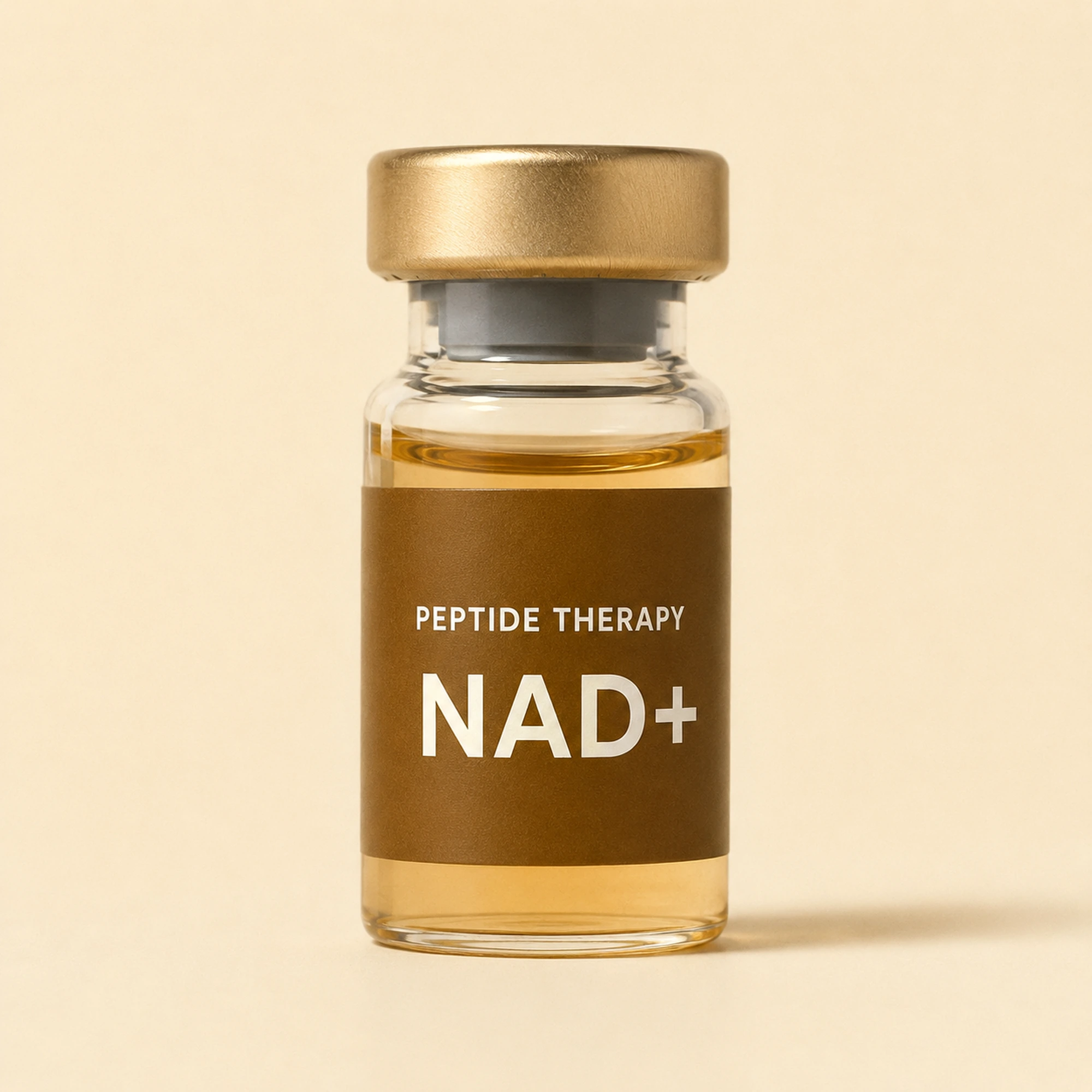
No test says you’re deficient
No lab confirms NAD+ deficiency. There’s no FDA-approved NAD+ blood test in routine use, so “deficiency” describes a pattern of symptoms, not a number on a report. Keep one asymmetry in mind the whole way down: getting a precursor into your blood and watching NAD+ climb is the easy, well-documented part. Getting your fatigue to lift is the part nobody has pinned down.
What NAD+ does, and where the story breaks
What NAD+ actually does is settled biochemistry. Nicotinamide adenine dinucleotide is a coenzyme every cell uses to shuttle electrons through metabolism — glycolysis, the TCA cycle, oxidative phosphorylation — and it’s the substrate sirtuins and PARP enzymes burn during DNA repair and stress response. Tissue NAD+ falls with age. That much is textbook.
What does not follow automatically is the marketing leap: that topping tissue NAD+ back up reverses the symptoms people pin on low NAD+. That inference is where the evidence thins, and where you should keep your skepticism.
The pattern people mean
Treat “deficiency” as a pattern, not a diagnosis:
- Persistent fatigue not explained by sleep, thyroid, or iron
- Poor exercise recovery — workouts feel harder than they should
- Brain fog, particularly mid-day
- Sleep that doesn’t restore — you wake up tired
- Slow recovery from minor illness
Three or more is reasonable to discuss. One or two, and the money is better spent ruling out the ordinary causes first: thyroid, ferritin and iron, B12, sleep apnea, depression. Every one of those is testable and treatable, and each is a more common reason to feel this way than an NAD+ shortfall. NAD+ is a diagnosis of exclusion, not a first move.
What works is the number — not, yet, the fix
The part that genuinely works is the biomarker. Oral nicotinamide riboside (NR) and nicotinamide mononucleotide (NMN) raise NAD+ metabolite levels in whole blood — the precursor gets in, the number goes up. That much has good human data behind it — most robustly for NR, and more thinly for NMN.
Whether that rise translates into less fatigue, faster recovery, or clearer thinking is a different and much weaker claim — and it’s the one you actually care about. The human trials on those endpoints are small, short, and mixed. For the symptoms people buy NAD+ to fix, benefit in otherwise healthy adults is unproven. We’d rather say that plainly than sell you certainty we don’t have.
A two-month experiment, run like one
Given a low downside and a plausible mechanism, an eight-week oral trial is defensible — as an experiment, run like one:
- NR (e.g., Tru Niagen): 300–600 mg daily, about $50/month
- NMN: 500–1000 mg daily, about $60/month
Before you start, pick the two symptoms that bother you most and rate each one today. Re-rate at eight weeks. If neither has moved, stop — don’t escalate on hope, and don’t let a subscription auto-renew a null result. An honest n-of-1 is the whole point of trying the cheap route first.
When a shot is worth it
Injectable NAD+ is the reasonable next step in a narrow set of cases: oral precursors did nothing in eight weeks, you want faster onset for a specific reason like jet lag or a recovery push, or weekly injection simply fits your life better than a daily capsule. Injection bypasses the gut, which is a real pharmacokinetic difference. What it is not is a proven upgrade — there’s no head-to-head human trial showing injected NAD+ beats oral precursors on symptoms. Choose it for convenience or onset, not because you’ve been told it’s stronger. A clinician should set the route and dose, especially if the fatigue workup above isn’t clean.
What would change our mind
No trial has yet shown that correcting an age-related NAD+ decline produces a durable, functional benefit in symptomatic but otherwise healthy adults. Until that trial exists, our clinical read is simple — NAD+ is a low-risk experiment with a plausible mechanism and an unproven payoff. Worth trying cheaply. Not worth big money. If a well-run RCT lands showing oral precursors move fatigue or recovery on hard endpoints, we’ll change this page the week it publishes. Not sure where to start?