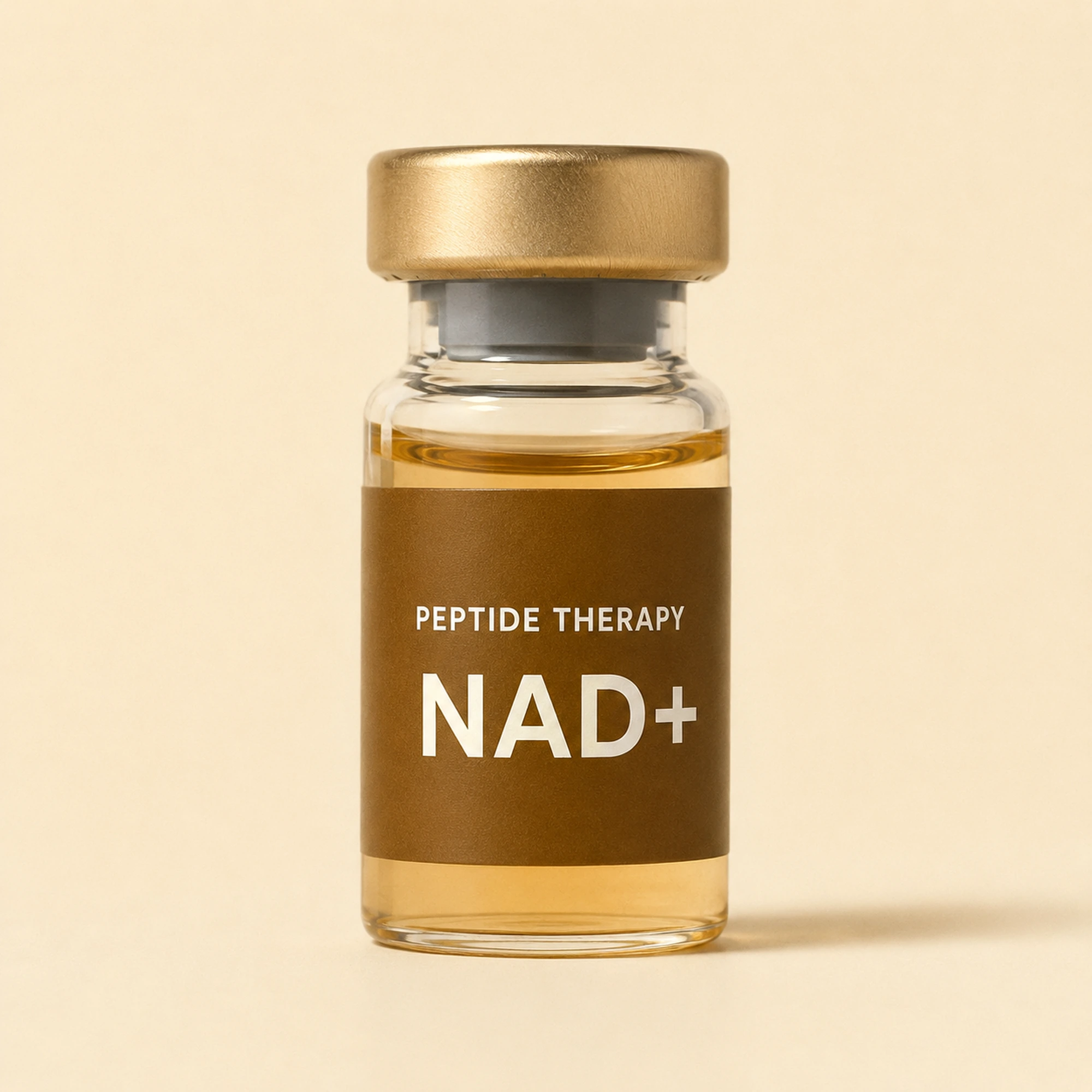
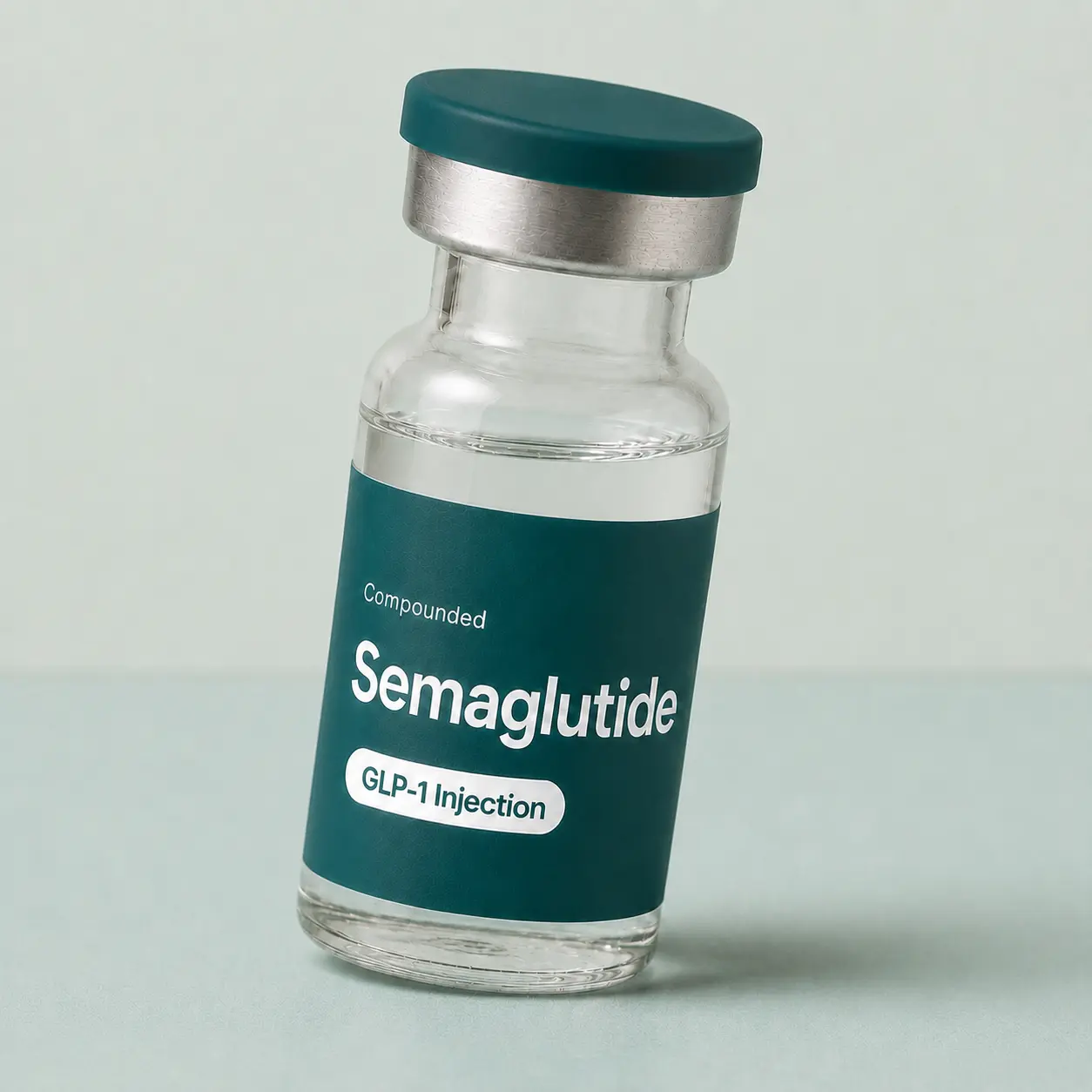
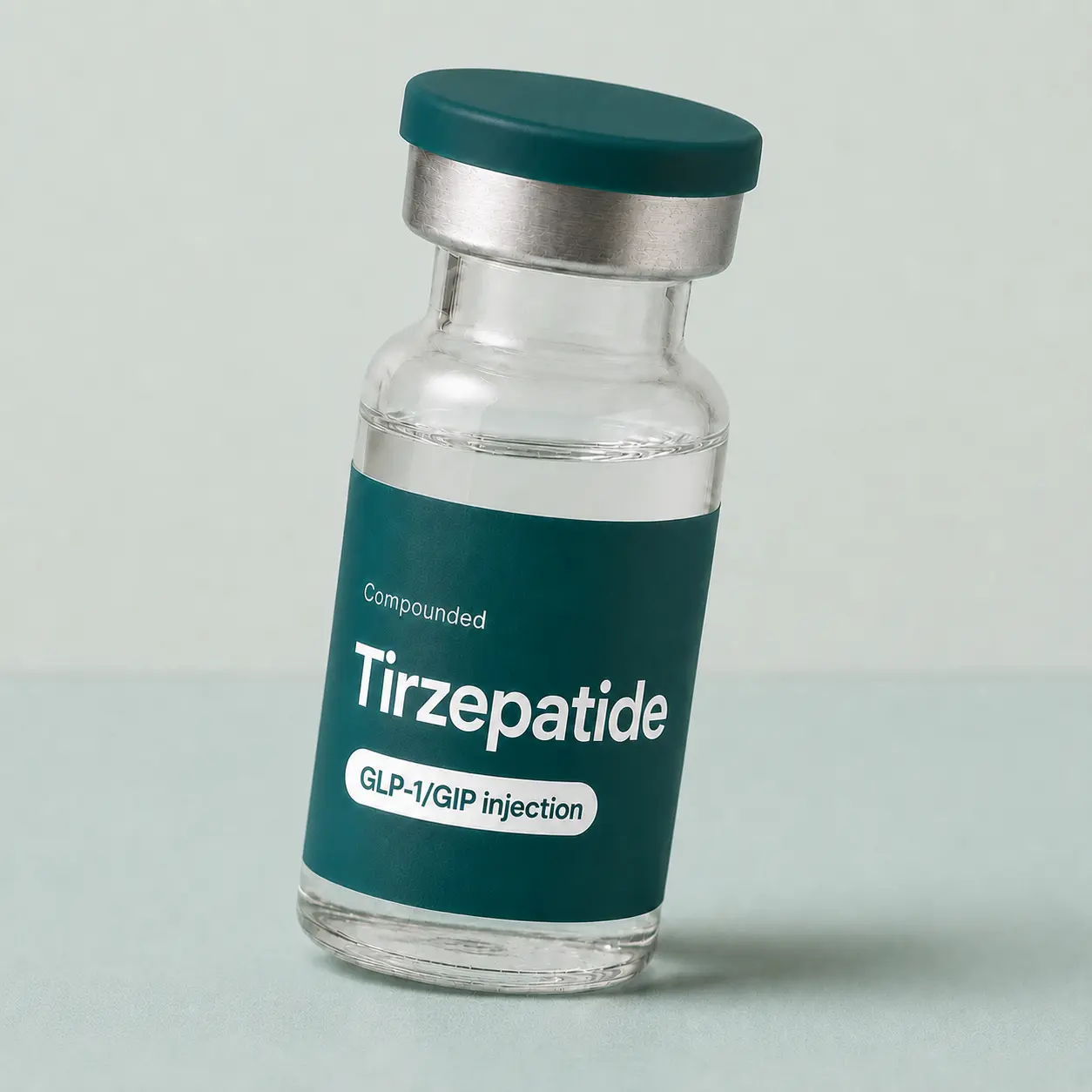
The weight loss is the GLP-1’s job, and that part is settled. NAD+ is an optional add-on for one narrow problem — the energy crash some members hit around month two — and it has no trial evidence behind it, so treat it as a clinic observation, not a second drug.
What the drug actually does
In STEP 1, 1,961 adults with obesity and no diabetes lost a mean 14.9% of body weight on semaglutide 2.4 mg weekly at week 68, versus 2.4% on placebo. SURMOUNT-1 tested tirzepatide in 2,539 adults: −15.0%, −19.5%, and −20.9% at 5, 10, and 15 mg over 72 weeks, versus −3.1% on placebo. Those are the numbers the whole stack is built around. NAD+ moves none of them.
The mechanism is settled textbook pharmacology. GLP-1 receptor agonists slow gastric emptying, act on hypothalamic and hindbrain appetite circuits, and improve insulin secretion; tirzepatide adds GIP receptor agonism. Nausea is the most common side effect, and it follows directly from delayed gastric emptying — which is why it clusters during dose escalation and fades as titration slows. Standard titration starts at 0.25 mg weekly and steps roughly every four weeks (0.25 → 0.5 → 1.0 → 1.7 → 2.4 mg), slower if side effects bite. At Zappy the semaglutide and tirzepatide are compounded by LegitScript-verified 503A US pharmacies under physician oversight; compounded preparations are not FDA-approved and are not FDA-approved generics or equivalents of the branded drugs, and a US-licensed clinician reviews every case and sets your titration.
The benefit isn’t only cosmetic. In SELECT, 17,604 adults with overweight or obesity and established cardiovascular disease but no diabetes had 20% fewer major adverse cardiovascular events on semaglutide 2.4 mg (HR 0.80).
The month-two wall
Around week 4–8 of titration, some members hit a fatigue wall — calories are down, and they feel flat. Part of that is ordinary adaptation to eating less. Whether it reflects a genuine NAD+ deficit is not established: there’s no data on that, and we won’t pretend otherwise.
Where NAD+ fits — and where it doesn’t
The honest version: NAD+ does not drive weight loss. If you’re looking for an accelerator, this isn’t one, and we’ll say so before you buy it. We use it for one thing — the energy limiter during escalation. The protocol we run:
- NAD+ 100 mg subcutaneous, 2× weekly for 4 weeks during the escalation phase.
- Then 100 mg weekly while you’re in active weight loss.
- Paired with a B-complex.
Every line of that is clinic experience, not trial evidence. There’s no randomized trial of NAD+ for GLP-1-associated fatigue, so rank it tier 3: try it, judge it on your own two-week response, and drop it if nothing changes. If energy isn’t your limiter, skip it entirely — you don’t need it.
Don’t lose the muscle, and don’t stop the drug
Two things matter more than any add-on.
First, protect lean mass. DXA substudies of GLP-1 trials show a meaningful fraction of the weight lost is lean mass. The standard countermeasure is resistance training plus protein, commonly targeted at 1.2–1.6 g/kg/day. Long-term functional outcomes aren’t yet well characterized, so this is a probable-benefit measure, not a proven one — but it’s where recoverable workouts actually come from, not from an injection.
Second, the loss holds only while you’re on the drug. In STEP 4 (Rubino et al., JAMA 2021), people randomized to stop semaglutide at week 20 regained substantial weight while those who continued kept losing. SURMOUNT-4 (Aronne et al., JAMA 2024) showed the same shape: after 36 weeks on tirzepatide, switching to placebo regained about 14% of body weight over the next year, while continuing lost about 5.5% more. That’s why the NAD+ taper is tied to “active weight loss” — but the drug, not the NAD+, is what maintains the result. Any plan to come off semaglutide or tirzepatide is a conversation to have with your clinician first, because stopping without a maintenance plan usually reverses the loss.
Bottom line
The GLP-1 is doing the work, and it’s well-evidenced work. NAD+ is a comfort-and-adherence tool for a specific month-two problem, offered with the caveat that its benefit is anecdotal, not trial-backed. The open question we’re actually watching: whether the lean-mass lost during rapid titration translates into worse long-term function. That’s the data that would change how aggressively we titrate — and it isn’t in yet.