The mistake, and the fix
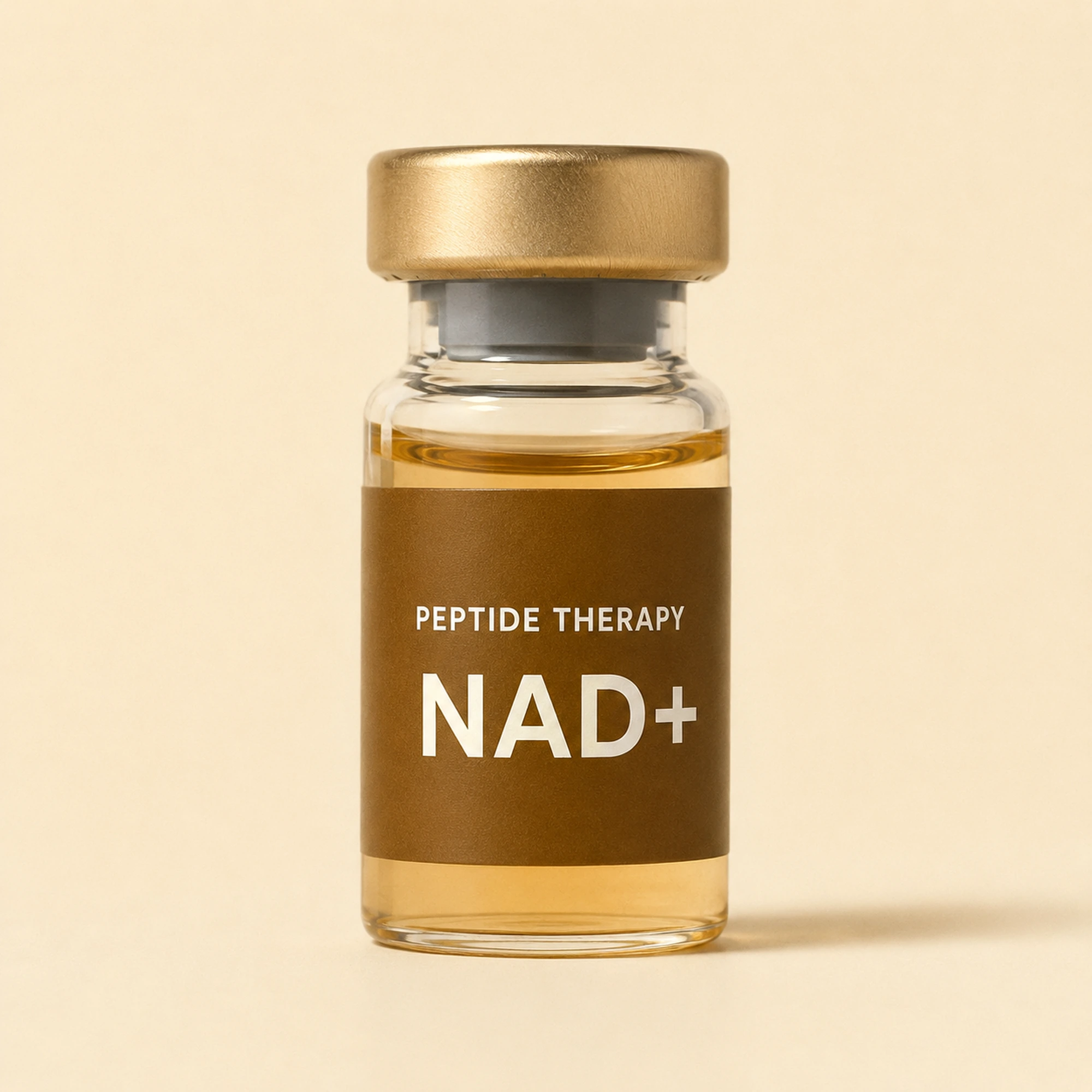
Most people slam 250–500 mg of NAD+ subcutaneously in their first session, flush hard, get a pounding headache, feel queasy for hours, and decide NAD+ “isn’t for them.” It’s the rate, not the molecule. The same dose delivered slowly is usually uneventful.
Why you’re reaching for it in the first place
People add NAD+ on a GLP-1 because the weight is coming off fast and they feel flat. “Fast” is real: in STEP 1, semaglutide 2.4 mg produced −14.9% mean body weight at 68 weeks versus −2.4% on placebo, and in SURMOUNT-1, tirzepatide reached −20.9% at the 15 mg dose. Weight leaves quickly, and not all of it is fat. DXA substudies of GLP-1 trials show a meaningful fraction of the loss is lean mass, though the long-term functional consequences aren’t well characterized.
Here is the part that runs against our own product: whether that lean-mass loss is what makes you feel run down — the feeling NAD+ is sold to fix — has not been established, and NAD+‘s subjective energy benefit isn’t backed by trial-grade evidence. So set expectations before you buy vials.
The flush is rate-dependent
The reaction — flushing, head pressure, nausea, a racing feeling — tracks how fast NAD+ enters your circulation, not only how much you take: the same dose pushed fast can flush hard, and pushed slowly can pass almost unnoticed. It reads like the niacin flush — a transient vasodilation you feel as warmth and pressure in the face and chest — but the exact pathway for subcutaneous NAD+ hasn’t been pinned down, so treat the mechanism as inference, not settled fact. Either way, the practical rule holds: the fix for a bad reaction is a slower plunger, not a smaller number.
The ramp we actually use
- Week 1: 50 mg SC, pushed slowly over 10–15 minutes. Twice in the week.
- Week 2: 100 mg SC, same slow push. Twice in the week.
- Week 3+: 100–200 mg, dosed to tolerance. Twice weekly while loading, then weekly for maintenance.
This is our protocol, not a trial-validated schedule — there is no published dose-finding study for subcutaneous NAD+ to point you to.
If you flush anyway
- Lie down and raise your feet.
- The niacin-style flush usually clears in 20–30 minutes.
- Water and electrolytes.
- Next dose: go slower, not lower.
If the needle intimidates you, ask your clinician about a nasal-spray form instead — gentler to start, at the cost of slower onset.
The mistake underneath the mistake
The dosing error is easy to fix. The one worth more of your attention is treating NAD+ as the answer to how you feel on a GLP-1. The lever with actual evidence behind it is protecting lean mass while you lose weight: resistance training plus protein, roughly 1.2–1.6 g/kg/day — the range clinicians commonly target. That is where the effort belongs. NAD+, dosed sanely, is comfort, not a substitute for it.
What we genuinely don’t know: whether NAD+ repletion does anything measurable for the fatigue people report on a GLP-1, or whether the benefit is mostly the fifteen quiet minutes lying still with a slow needle. No trial has tested subcutaneous NAD+ against placebo in people actively losing weight on a GLP-1. Until one does, ramp it the way above, keep your protein up, and don’t expect it to do the work the barbell is supposed to. A clinician reviews your case either way and can adjust the ramp if the flush won’t settle.