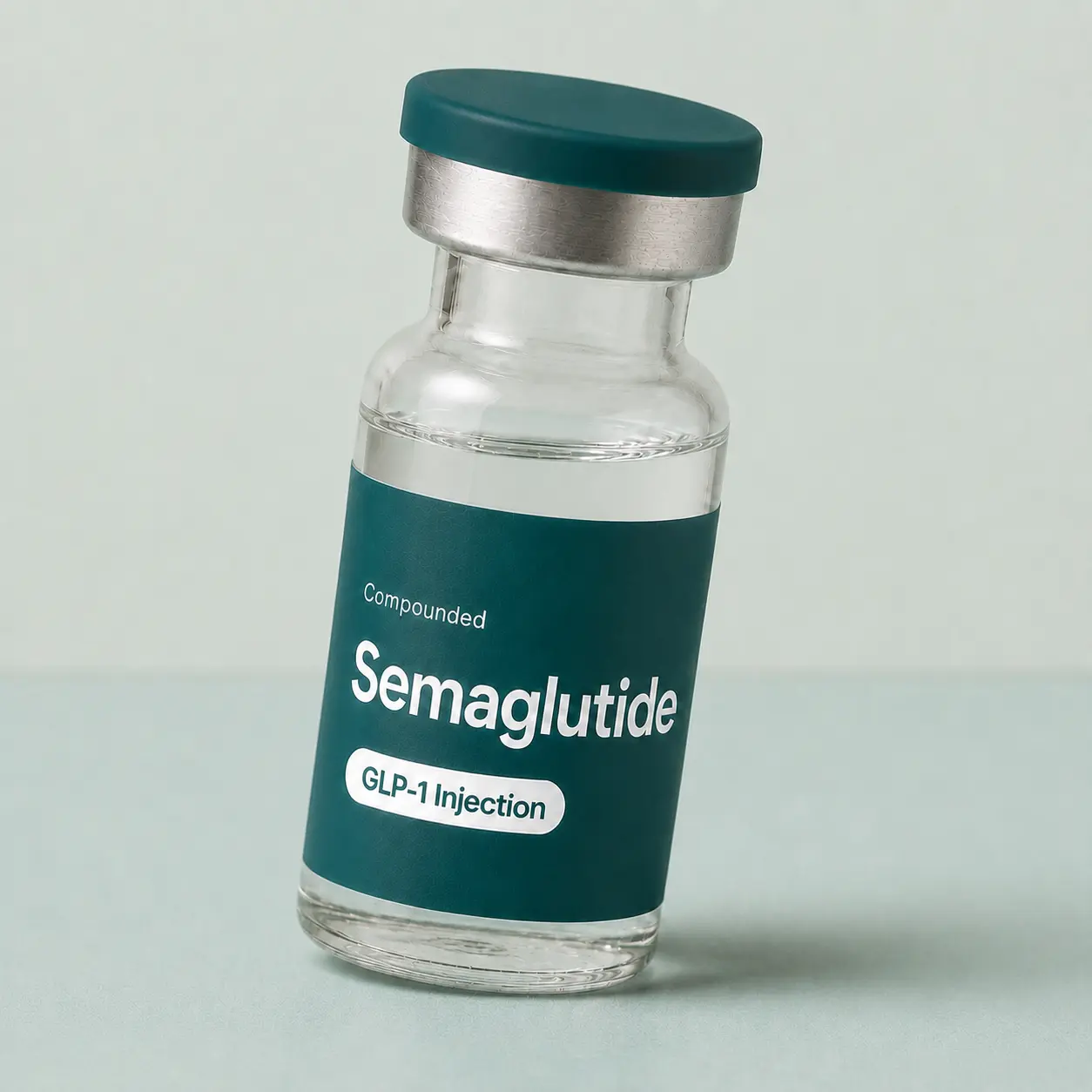
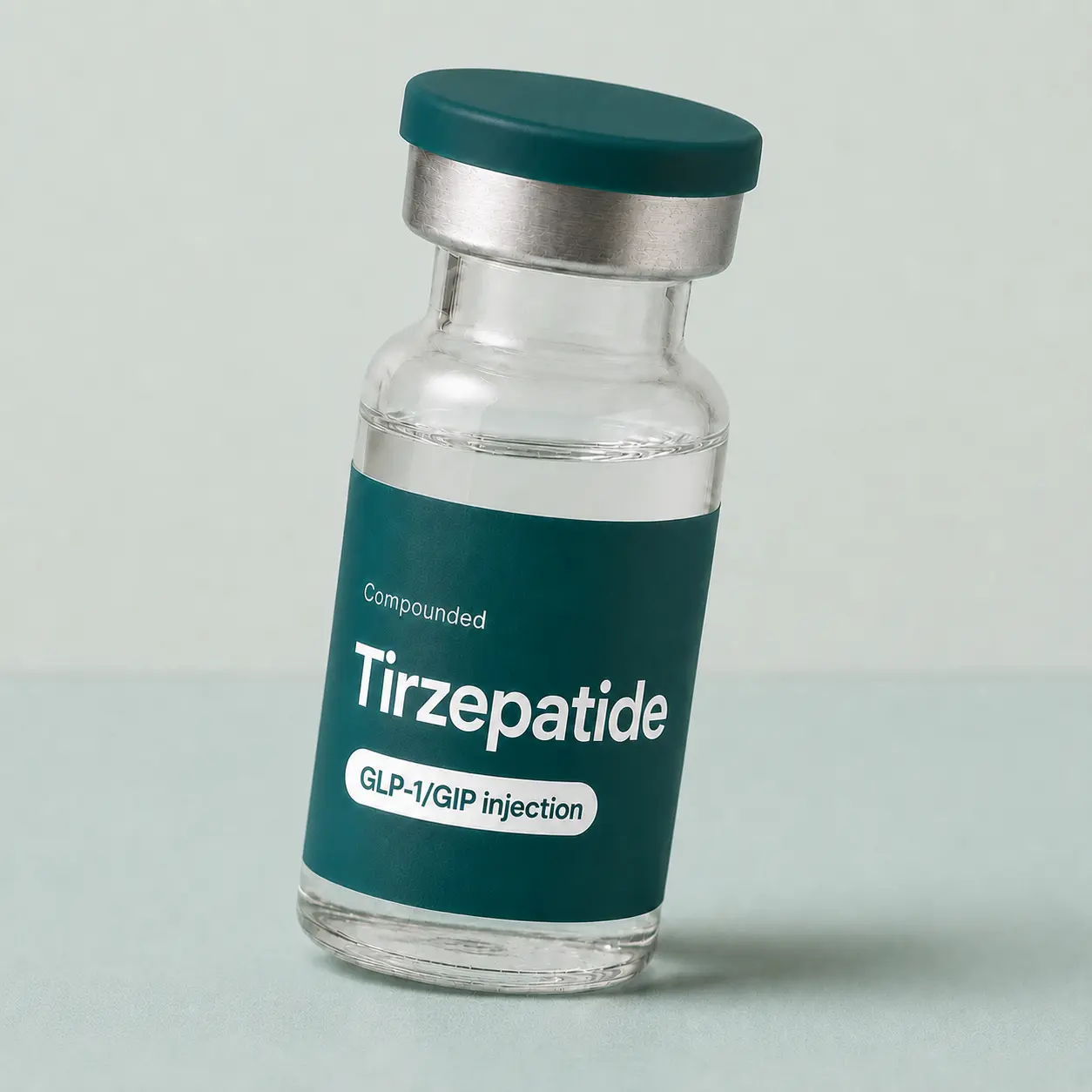
GLP-1 medications take weight off in the double digits — 14.9% of body weight over 68 weeks for semaglutide, up to 20.9% for tirzepatide — and the abdominal fat that defines a “PCOS belly” comes down with it. What makes that fat worth targeting is what it is: insulin-driven visceral fat, the most metabolically dangerous depot you carry.
Why the fat sits there
PCOS runs on insulin resistance. The pancreas compensates by pushing out more insulin, and insulin is a storage signal that acts hardest on the visceral fat around your organs. The same hyperinsulinemia lowers SHBG, which frees up testosterone — the hormonal signature of PCOS. So the midsection weight and the high free testosterone share one root cause. That is settled endocrinology, not a GLP-1 claim.
What the drugs actually do
Semaglutide 2.4 mg weekly produced a −14.9% mean change in body weight at 68 weeks versus −2.4% on placebo in STEP 1 (n=1,961 adults with obesity, no diabetes). Tirzepatide did more in SURMOUNT-1 (n=2,539): −15.0%, −19.5%, and −20.9% at 5, 10, and 15 mg over 72 weeks, versus −3.1% on placebo. The mechanism is settled. Both slow gastric emptying and act on hypothalamic and hindbrain appetite circuits, so you eat less without white-knuckling it; both improve insulin secretion; tirzepatide adds GIP receptor agonism on top of GLP-1.
One honest caveat: neither trial enrolled a PCOS population. These were general obesity cohorts. The weight-loss numbers are rock-solid, and extrapolating them to PCOS is reasonable — but reasonable is not the same as proven.
Does the waist really move before the scale?
This is the popular claim, and it is softer than it sounds. Visceral fat is metabolically active and insulin-sensitive, so an early response is plausible — but the pivotal trials tracked total body weight, not serial visceral-fat imaging in women with PCOS. Treat “the waist shrinks before the scale moves” as a clinical observation, not a trial result.
The side effect you will actually meet
Nausea, and it is mechanical. Delayed gastric emptying is how the drug blunts appetite, and it is also what makes you queasy — which is why nausea was the most common side effect in STEP 1 and why it clustered during dose escalation. Standard titration climbs slowly for exactly this reason: 0.25 mg, then 0.5, 1.0, 1.7, and 2.4 mg, stepping up roughly every four weeks, and slower if your gut protests. If nausea is severe or not settling as the dose holds, that is a real reason to call your clinician before the next step up.
Protect the muscle
Not all of the loss is fat. DXA substudies of GLP-1 trials show that a meaningful fraction of the weight lost is lean mass. The countermeasure is unglamorous and it works: resistance training plus protein in the range of 1.2–1.6 g/kg/day. The long-term functional consequences of that lean-mass loss are not yet well characterized — that is an open question, and we are not going to pretend it is closed.
It works while you take it
The loss is held by staying on the drug. In STEP 4, people who stopped semaglutide at week 20 regained substantially, while those who continued kept losing. SURMOUNT-4 was starker: after 36 weeks on tirzepatide, switching to placebo gave back about 14% of body weight over the next year, while staying on it added roughly 5.5% more loss. Plan for a maintenance dose, not a finish line.
What to track
- Waist tape, weekly — at the navel, exhaling fully.
- Belly photo, monthly — same light, same time of day.
- Free testosterone + SHBG, every 12 weeks — as weight and insulin fall, SHBG should rise and free testosterone should drop; the lab shift can show before the mirror does.
If eight weeks of consistent dosing move nothing on the tape, that is a conversation for your clinician about the dose or the plan — not a month-one failure.
The piece nobody has nailed down is PCOS-specific: no large trial has yet made visceral fat, ovulation, and testosterone the primary endpoints under GLP-1 therapy, long enough to say how much of the benefit is weight loss and how much is the drug acting on PCOS physiology directly. That trial has not been run.