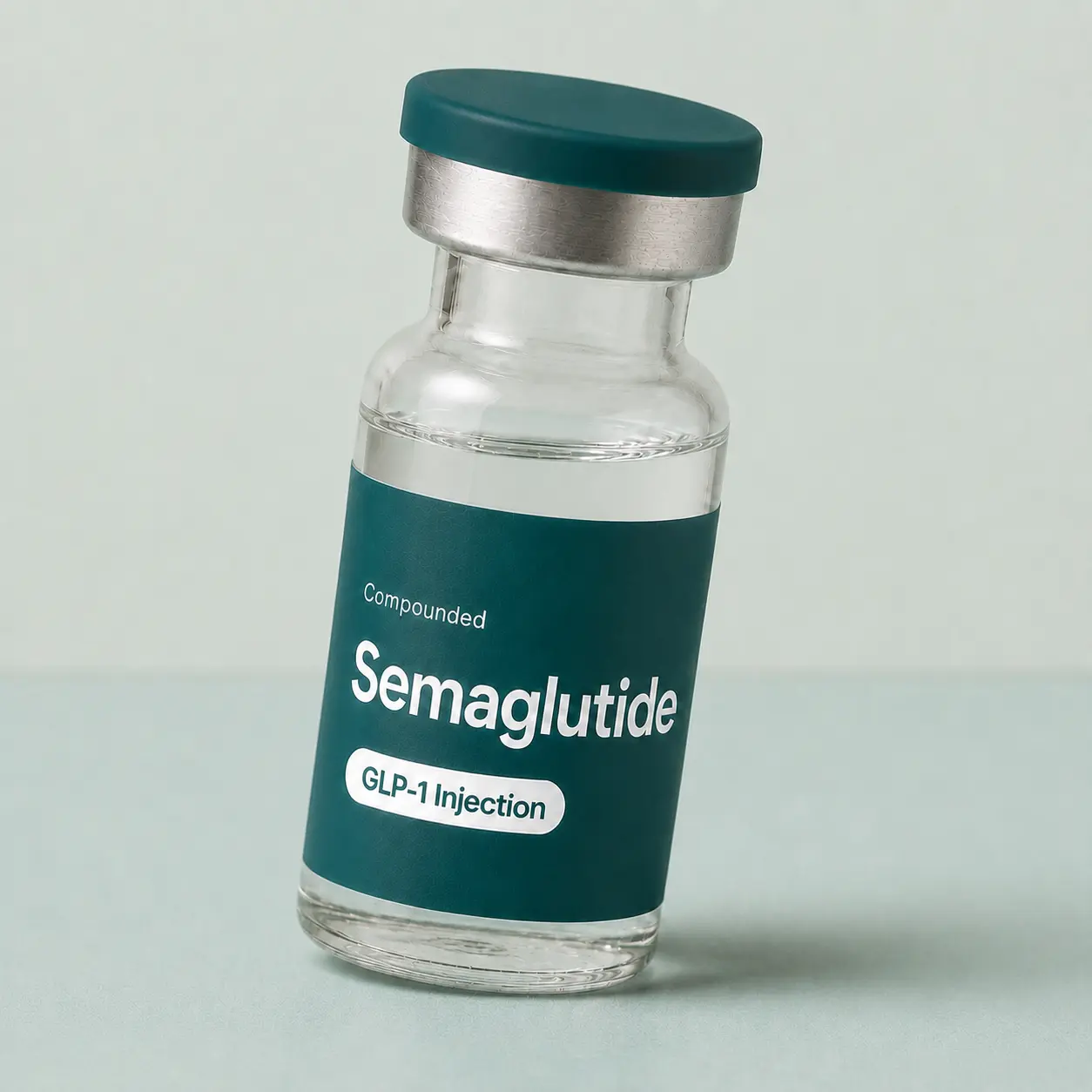
No trial supports microdosing GLP-1s for weight loss. Every published weight-loss result — semaglutide’s −14.9% in STEP 1, tirzepatide’s −20.9% in SURMOUNT-1 — came from full therapeutic doses, and the study that would tell us what a fraction of a dose does has never been run.
“Microdosing” in GLP-1 circles means deliberately staying below the approved range: holding semaglutide at 0.25 or 0.5 mg indefinitely, or drawing tiny fractions from a vial, hoping to keep most of the appetite effect with less nausea and a smaller bill. It is being marketed hard right now — for weight, “inflammation,” longevity, craving control — and in every one of those categories the claims have outrun the evidence.
What the trials actually tested
STEP 1 (Wilding et al., NEJM 2021, n=1,961) titrated semaglutide to 2.4 mg weekly: −14.9% mean body weight at week 68, against −2.4% on placebo. SURMOUNT-1 (Jastreboff et al., NEJM 2022, n=2,539) tested tirzepatide at 5, 10, and 15 mg: −15.0%, −19.5%, and −20.9% at week 72, against −3.1% on placebo. How these drugs work end to end is covered in our GLP-1 guide.
Two things about those numbers matter. There is a dose-response — SURMOUNT-1’s 5 mg arm lost less than its 15 mg arm. And every arm in every major trial was a full therapeutic dose. Below the approved range, the curve is unmeasured. Whether 0.5 mg of semaglutide as a destination dose produces 8% weight loss, 3%, or nothing durable is not a matter of interpretation. We don’t know.
What people are actually chasing
Two things: fewer side effects and a smaller bill. Both are rational. Neither requires leaving the studied dose range.
The side-effect logic is mechanically sound as far as it goes. Nausea, reflux, early fullness, and constipation follow directly from what the drug does — slowed gastric emptying, reduced intake. Less drug, less of that. The catch: the weight loss rides on the same mechanism, plus the same hypothalamic and hindbrain appetite circuits. Dial the dose down far enough and you are not taking a gentler treatment. You are taking less treatment. Where the floor sits — the lowest dose that still moves weight — no trial has measured.
Cost is the quieter driver. Weight-loss GLP-1s are a cash purchase for most Americans: Medicare Part D is barred by statute from covering drugs for weight loss, and commercial plans often exclude them. When the bill lands on you, stretching a vial into quarter-doses is understandable arithmetic. But it buys a quarter of an unstudied treatment. Compounded semaglutide — prepared by LegitScript-verified 503A US pharmacies, not FDA-approved as a compounded preparation — is priced on the treatment page. We would rather prescribe a studied dose at that price than sell a microdosing protocol we cannot back with a trial.
The label already starts you on a microdose
Semaglutide’s approved schedule is a ladder: 0.25 → 0.5 → 1.0 → 1.7 → 2.4 mg weekly, stepping about every four weeks, with slower steps explicitly allowed when side effects demand them. The first month is sub-therapeutic on purpose. These drugs also carry a boxed warning for thyroid C-cell tumors and are contraindicated with a personal or family history of medullary thyroid carcinoma or MEN 2, and are not used in pregnancy — which is why the starting decision belongs to a clinician, not a self-set dose. The difference between titration and microdosing is not this week’s syringe. It is that titration has a destination.
That flexibility already delivers most of what microdosing promises. Struggling at 1.0 mg? Your clinician can hold you there longer, or step back down — that is precisely the individual call a prescriber exists to make. Managing the symptoms themselves — food pacing, hydration, when a symptom needs a call — is in our side-effects guide.
What would change our answer
A randomized trial of sub-therapeutic maintenance — say, 0.5 mg semaglutide weekly versus the standard ladder — with weight, side-effect, and 12-month durability endpoints. If a low-dose arm held, for example, two-thirds of the weight loss at half the nausea, prescribing would change everywhere, ours included. No such trial has been published. Until one is, “microdosing works” is a marketing sentence, not a medical one.
The practical next step: if side effects are pushing you toward microdosing, the studied fix is pace — a slower climb under a clinician who adjusts the schedule to you, not a permanent sub-therapeutic hold. If cost is the driver, a full studied dose is already within cash-pay reach. Start with the two-minute quiz; a clinician reviews every case within 24 hours and sets the titration pace around your history.