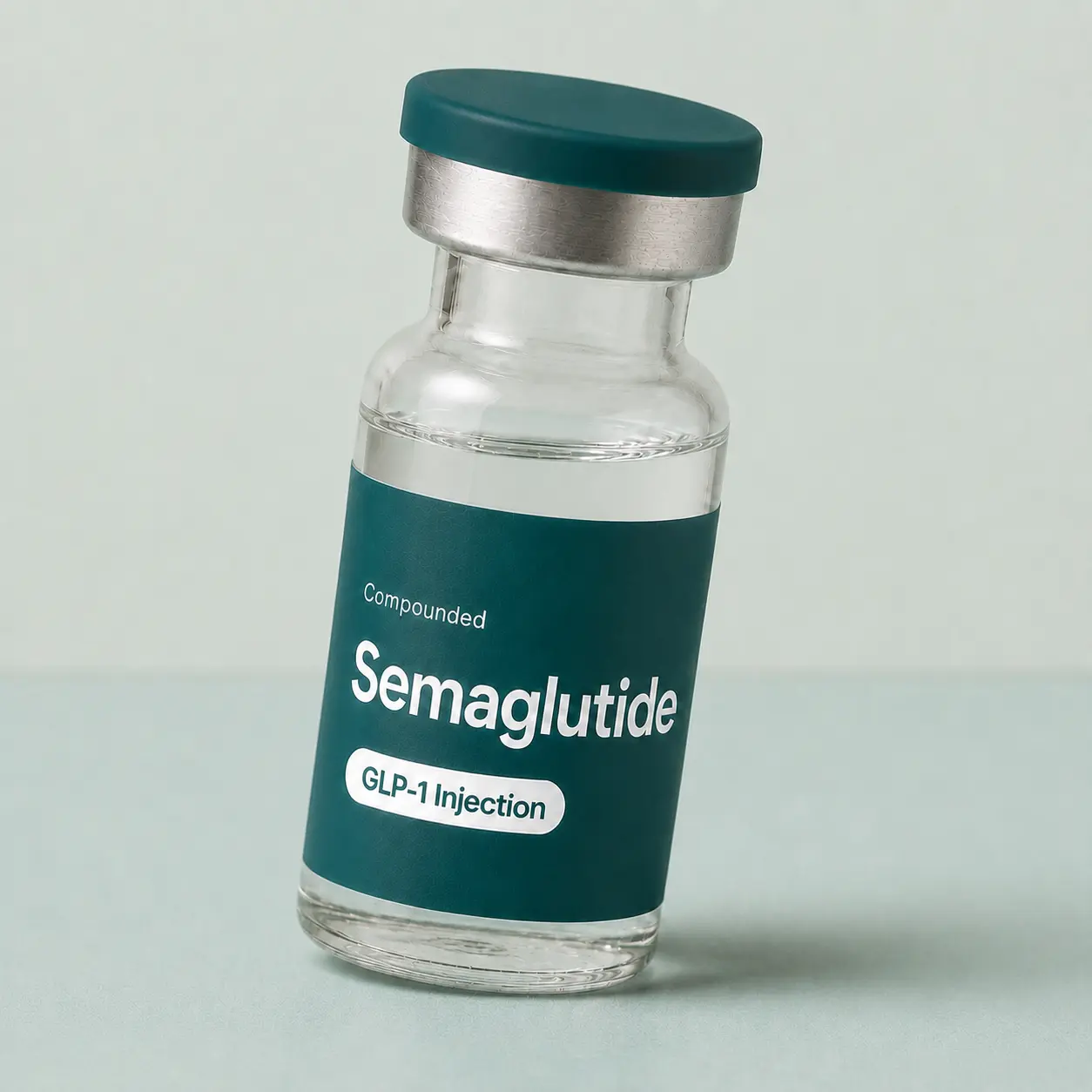
For weight loss, take the injection. The weekly shot beats the daily pill on trial evidence, on absorption, and on the doses you can actually fill — and the gap is wide enough to settle the question for most people.
The evidence gap is wide
The injectable case. STEP 1 (Wilding et al., NEJM 2021) randomized 1,961 adults to weekly semaglutide 2.4 mg or placebo: −14.9% mean body weight at 68 weeks versus −2.4%. SELECT (Lincoff et al., NEJM 2023) followed 17,604 people with cardiovascular disease and no diabetes for more than three years on the same weekly injection and found 20% fewer major cardiovascular events. It is also the largest long-term safety dataset this drug class has. Tirzepatide, the molecule with the biggest weight-loss result (SURMOUNT-1: −20.9% at 15 mg over 72 weeks), exists only as an injection. Nearly everything we know about GLP-1 weight loss was learned through a needle.
The oral case is much thinner. A daily 50 mg oral semaglutide has been tested for weight loss, but that evidence base is a small fraction of the injectable record: the two headline injectable trials alone randomized close to 20,000 people. And no oral trial has shown the cardiovascular protection SELECT demonstrated in people without diabetes. That trial hasn’t been run.
One practical catch. The oral semaglutide on US pharmacy shelves since 2019 is Rybelsus, a type 2 diabetes drug dosed at 3, 7, and 14 mg. Those are diabetes doses; at that level the weight change reported in the diabetes program was modest — on the order of a few kilograms, not fifteen percent of body weight.
A pill has to survive your stomach
Semaglutide is a peptide — a chain of amino acids, which is exactly what your stomach exists to digest. The tablet works only because it is co-formulated with an absorption enhancer (SNAC) that carries a fraction of the dose across the stomach lining before enzymes destroy the rest — roughly on the order of 1% of what you swallow reaches your blood.
Engineering around that low absorption produces rules: take it every morning on an empty stomach, with no more than 4 ounces of water, then wait 30 minutes before you eat, drink, or take any other medication. That is 365 fasting windows a year. The injection goes under the skin of the abdomen, thigh, or upper arm once a week — any time of day, fed or fasted. Fifty-two doses a year, no window to miss. Same molecule, same receptor, a different delivery problem. The mechanism, titration schedule, and side-effect map live in our GLP-1 guide.
Where the pill still fits
Needle aversion is real, and a medication you will take beats a better one you won’t. If a daily tablet is the difference between treatment and no treatment, the pill is a defensible choice, made with a clinician who is explicit about the thinner evidence and lower dose ceiling you are accepting. For scale: the injection uses a short, fine subcutaneous needle, and site reactions are usually mild and local.
The practical answer
- The evidence: injectable semaglutide carries STEP 1 and SELECT — nearly 20,000 randomized patients, 3+ years of follow-up. The oral weight-loss record is a small fraction of that.
- The labels: Rybelsus, the long-available oral, is approved for type 2 diabetes — not weight loss.
- Our position: unless needles are a hard no, start with the injection.
At Zappy that means compounded semaglutide — prepared by LegitScript-verified 503A US pharmacies (compounded preparations themselves are not FDA-approved), weekly, cash-pay, FSA/HSA eligible, with current pricing on the treatment page. The two-minute quiz tells you whether you are a candidate, and a clinician reviews every intake within 24 hours. That screen matters: GLP-1s carry a boxed warning for thyroid C-cell tumors, are contraindicated with a personal or family history of medullary thyroid carcinoma or MEN 2, warrant caution with a history of pancreatitis, and are not used in pregnancy. The dose decision happens with the clinician — not with a marketing page, ours included.
Two things could change this answer. Higher-dose oral semaglutide has been working toward a weight-loss approval, and availability is shifting fast enough that where it stands this month is a question for your prescriber. And small-molecule oral GLP-1s are in late-stage trials; if they post injectable-grade results at scale, the math here changes. They haven’t yet.