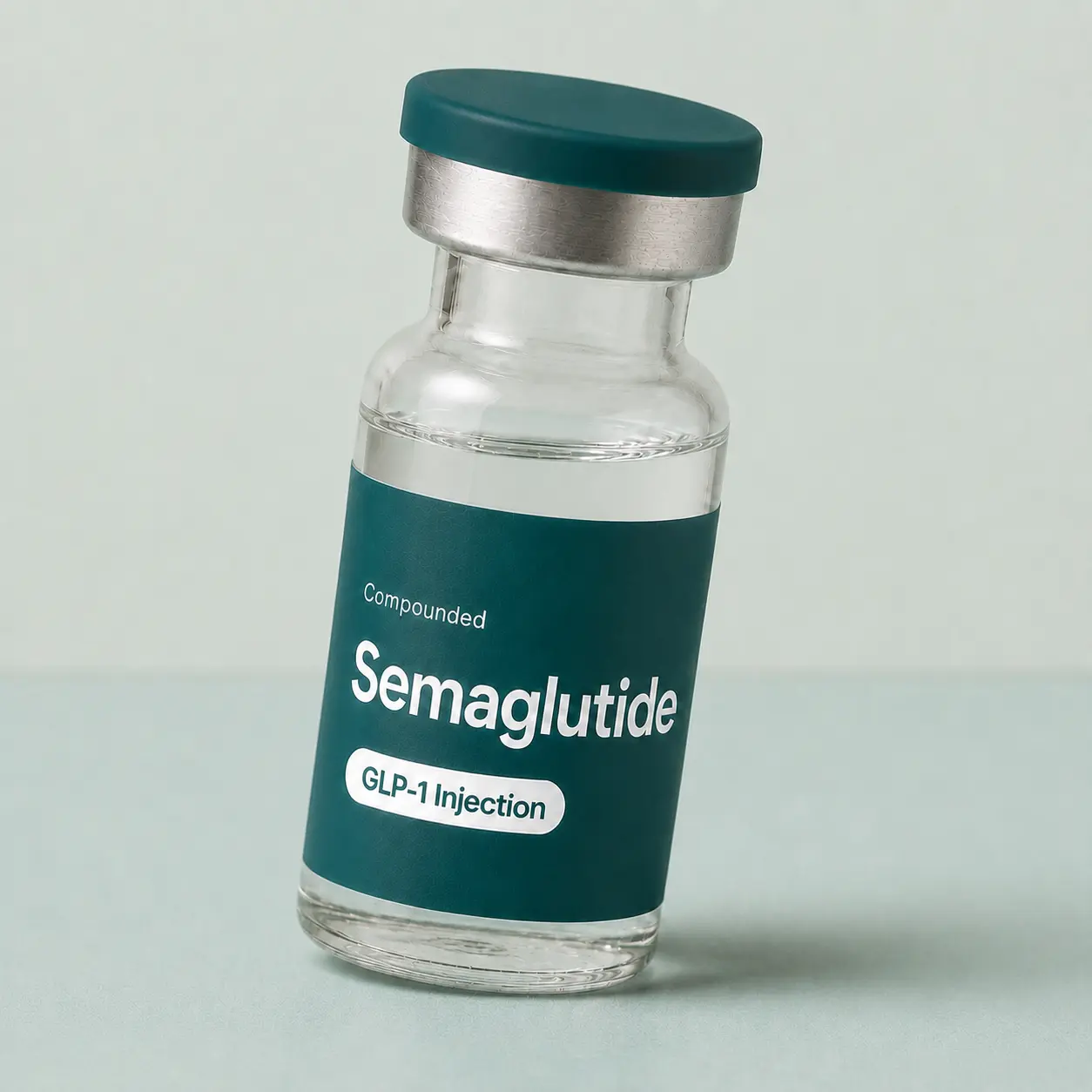
Compounded semaglutide is billed as one flat monthly rate at Zappy — the current figure is on the treatment page — and that rate is the whole number: clinician visit, medication, and shipping included. Zappy is cash-pay, no insurance involved; FSA and HSA cards work.
“Compounded” means semaglutide prepared per-prescription by a US compounding pharmacy rather than a finished FDA-approved product made by Novo Nordisk.
What the monthly rate buys
- The visit. A licensed clinician reviews your intake within 24 hours and either writes the prescription or tells you no. The no’s are specific, straight from the label: medullary thyroid carcinoma or MEN 2 in you or your family (contraindicated), pregnancy (not for use), a pancreatitis history (caution, decided case by case).
- The medication. A 30-day supply of semaglutide, compounded with B12 and glycine by a LegitScript-verified 503A pharmacy in the US.
- Shipping. Included.
- Ongoing adjustments. Semaglutide titrates from 0.25 mg to 2.4 mg weekly in roughly four-week steps, slower when side effects push back. The clinician time behind those changes sits inside the price, not billed per message.
Paying from an FSA or HSA makes it pre-tax money. At a 24% marginal rate that is roughly a quarter of the bill in tax you don’t pay. Arithmetic, not a discount.
What it doesn’t buy
FDA approval. The compounded preparation is not FDA-approved, and it is not an FDA-approved generic or equivalent of Wegovy. The STEP 1 result people cite (Wilding 2021, n=1,961) was generated on the branded product; it is Wegovy’s evidence, and it does not carry over to a compounded preparation. The pharmacy operates under state and federal compounding rules; the finished vial never goes through an FDA application. You also skip the manufacturer’s fixed-dose pen — compounded ships as vials and syringes — and Novo Nordisk’s supply chain. That trade-off is its own page: compounded vs branded.
If your insurance covers Wegovy, take Wegovy. A covered brand beats a cash compound. The cash-compound case exists because most plans say no.
The branded math
Coverage is the first thing to check: Medicare Part D is barred by statute from covering drugs for weight loss, and commercial plans often exclude weight-loss GLP-1s outright. If your plan does cover it, you pay a copay, not the retail counter price — check your formulary before doing any cash math. If it doesn’t, Novo Nordisk sells Wegovy directly through its own cash-pay program, NovoCare® Pharmacy, and that rate is the one to compare against. The wider landscape — insurance, savings programs, every route — is the GLP-1 cost guide.
Where the number moves
- Plan length. Multi-month plans bill more upfront and lower the effective monthly rate.
- Dose doesn’t move it. The listed price is flat across titration: month one at 0.25 mg costs what maintenance at 2.4 mg costs.
- The molecule. If you and your clinician switch to compounded tirzepatide, it carries its own monthly rate.
- Time. This is maintenance medication, so the honest budget line is annual. In STEP 4 (Rubino 2021), participants who stopped semaglutide at week 20 regained weight; those who continued kept losing. Budget twelve months, not one.
Before checkout
Eligibility gates all of it: broadly, BMI 30+, or 27+ with a weight-related condition. Start with the qualification quiz; a clinician reads your answers within a day, and if semaglutide fits, the first 30-day supply ships at the rate on the treatment page. The one thing to check first is the thing this page can’t see: your formulary.