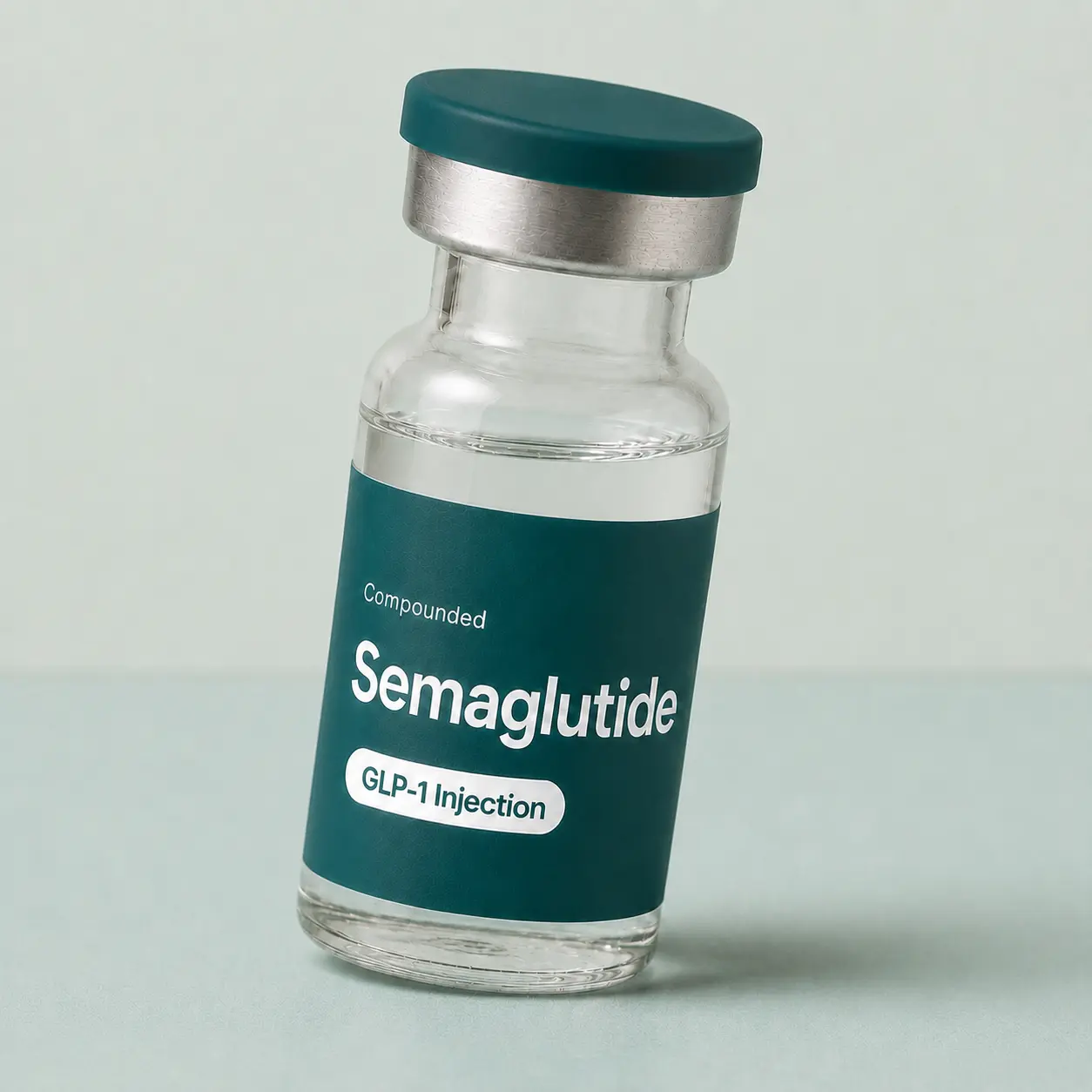
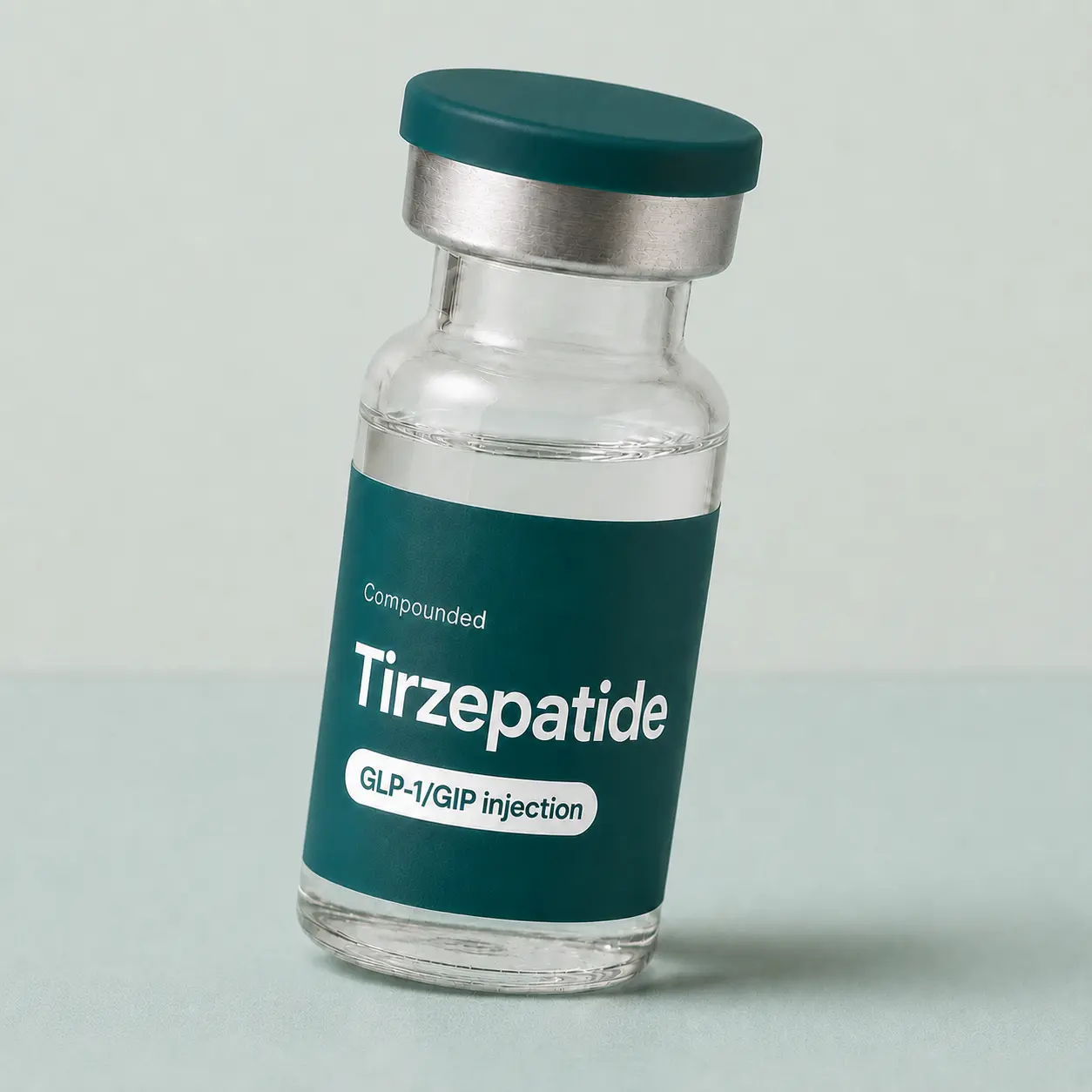
No — you don’t need keto on a GLP-1, and for most people you shouldn’t try it. Semaglutide and tirzepatide already do, pharmacologically, what keto does behaviorally: make you eat less. Stacking them stacks the side effects without any proven gain in results.
One lever, pulled twice
GLP-1 receptor agonists slow gastric emptying, act on appetite circuits in the hypothalamus and hindbrain, and improve insulin secretion; tirzepatide adds GIP receptor agonism. For most people that means less hunger, earlier fullness, and quieter food noise. Whatever else ketosis does, keto takes weight off the same way: you eat less. Pulling the same lever twice doesn’t move it twice as far — the medication is already suppressing appetite, so carb restriction has little left to work on.
The trial numbers didn’t need keto
In STEP 1 (Wilding et al., NEJM 2021 — 1,961 adults with obesity, no diabetes), semaglutide 2.4 mg weekly produced 14.9% mean weight loss at 68 weeks versus 2.4% on placebo. In SURMOUNT-1 (Jastreboff et al., NEJM 2022, 2,539 participants), tirzepatide at 72 weeks delivered 15.0% at 5 mg, 19.5% at 10 mg, and 20.9% at 15 mg, versus 3.1% on placebo. Neither protocol prescribed a ketogenic diet.
The stacked version is untested — we know of no comparable-size trial of strict keto on either drug, so whether it adds anything is genuinely unknown. What is documented is what each half costs on its own — and both bills come due in the same window: the first four months.
The first four months are where stacking bites
In STEP 1, nausea was the most common side effect and clustered during dose escalation. That’s mechanism, not bad luck: the drug delays gastric emptying, so nausea tracks each dose step and fades as titration slows. Standard semaglutide titration takes about four months — 0.25 mg weekly, stepping roughly every 4 weeks through 0.5, 1.0, and 1.7 to 2.4 mg, slower if side effects push back.
Keto adaptation lands in the same window. The first weeks of strict carb restriction commonly bring fatigue, headache, and lightheadedness, partly because emptying glycogen stores sheds water and sodium. Stack that on a slowed stomach and reduced fluid intake, and constipation can go from footnote to a genuinely limiting side effect.
A US-licensed clinician reviews every Zappy case and adjusts titration; when side effects flare, the fix is a slower dose step, not a stricter diet.
Spend your appetite on protein
The strongest argument against keto here is body composition. DXA substudies of the GLP-1 trials show a meaningful fraction of the weight lost is lean mass, not fat. The caveat: long-term functional consequences — strength, mobility — are not yet well characterized. The standard countermeasure is resistance training plus protein at 1.2–1.6 g per kilogram per day.
Here’s the collision: on a suppressed appetite every meal is small, and a diet built around fat spends that limited capacity on the macronutrient that does the least to protect muscle. Our working targets: protein first, at the same 1.2–1.6 g/kg. Carbs at 50–150 g a day, mostly vegetables and whole grains, enough to keep training tolerable. Fat lands where it lands — don’t fear it, don’t chase it. Push fluids; constipation is the real risk of lower-carb on a GLP-1.
The exception is lower carb, not keto
Type 2 diabetes, diagnosed insulin resistance, or PCOS changes the target, not the principle: your clinician may want you nearer 75–100 g of carbohydrate a day — moderate restriction, tolerable on a GLP-1. The drug already works that axis — GLP-1 agonism improves insulin secretion — weakening the case for going further.
One warning that matters: if you take insulin or a sulfonylurea, don’t cut carbs sharply without your clinician adjusting doses. That combination can cause true hypoglycemia.
Strict keto — under 30 g a day — is almost never the right move on a GLP-1. That’s our position. What would change it: a randomized trial showing keto plus a GLP-1 beats the drug alone on fat loss, with equal lean-mass retention and no worse dropout. We know of none.
Pick a diet with the drug’s shelf life
In STEP 4 (Rubino et al., JAMA 2021), participants who stopped semaglutide at week 20 regained substantially, while those who continued kept it off. SURMOUNT-4 (Aronne et al., JAMA 2024) repeated the lesson: after 36 weeks of tirzepatide, those switched to placebo regained about 14% of body weight over the next year; those who stayed on lost roughly 5.5% more. The weight stays off by staying on treatment, so the eating pattern needs the same durability. A diet you can hold for six weeks is the wrong partner for a medication you take for years.
What to do, plainly
- The evidence: 14.9% mean loss in STEP 1, up to 20.9% in SURMOUNT-1 — no ketogenic diet involved, and keto on top is untested at scale.
- Standard practice: protein at 1.2–1.6 g/kg/day plus resistance training to protect lean mass; hydrate hard; slow titration when nausea flares.
- Our opinion: skip keto. 50–150 g of carbs a day from vegetables and whole grains; closer to 75–100 g if your clinician is managing insulin resistance, type 2 diabetes, or PCOS.
The open question is the trial nobody has run: randomize GLP-1 users to different macronutrient strategies and measure fat versus lean mass — and strength — at two years. Until it exists, keto on a GLP-1 is a cost without a measured benefit.