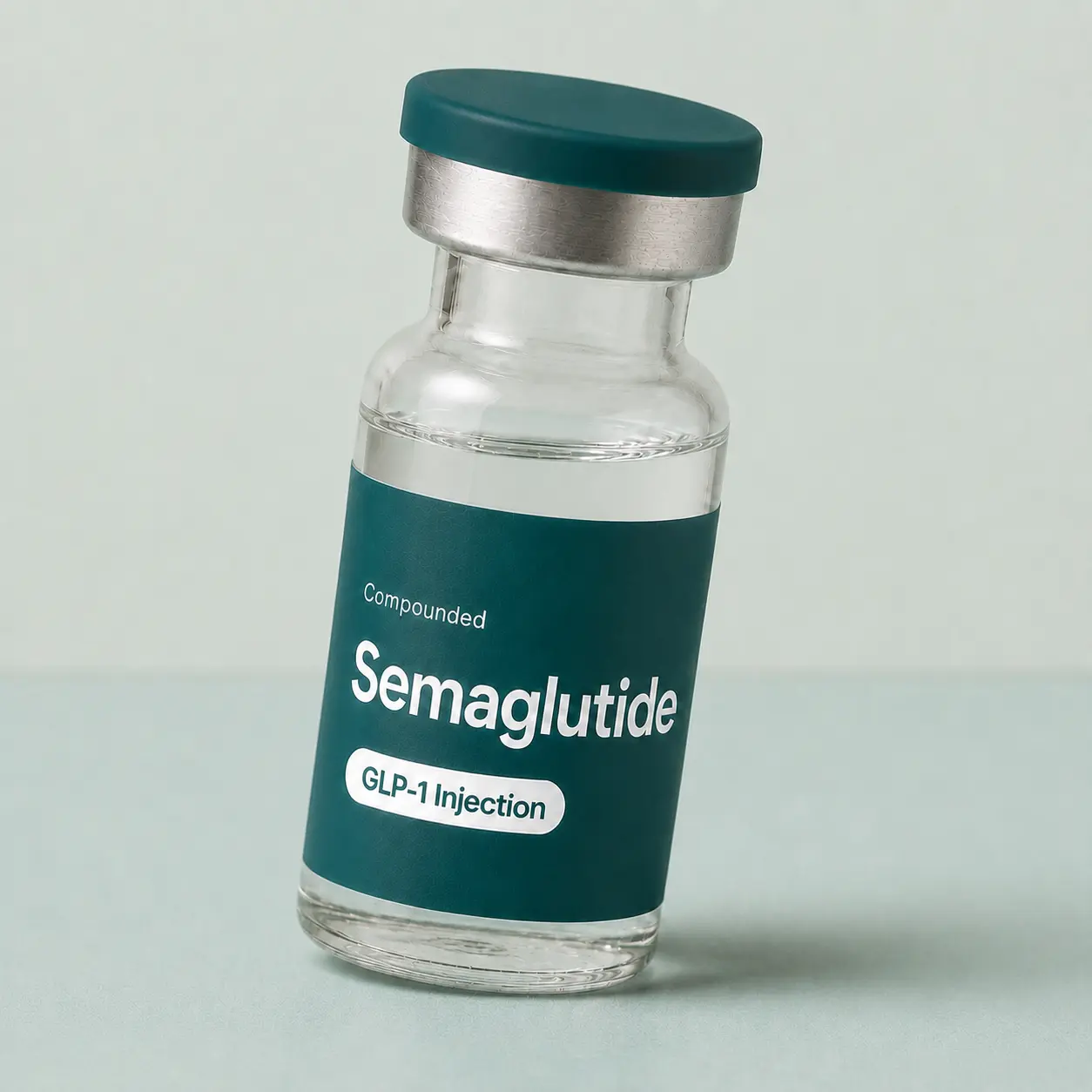
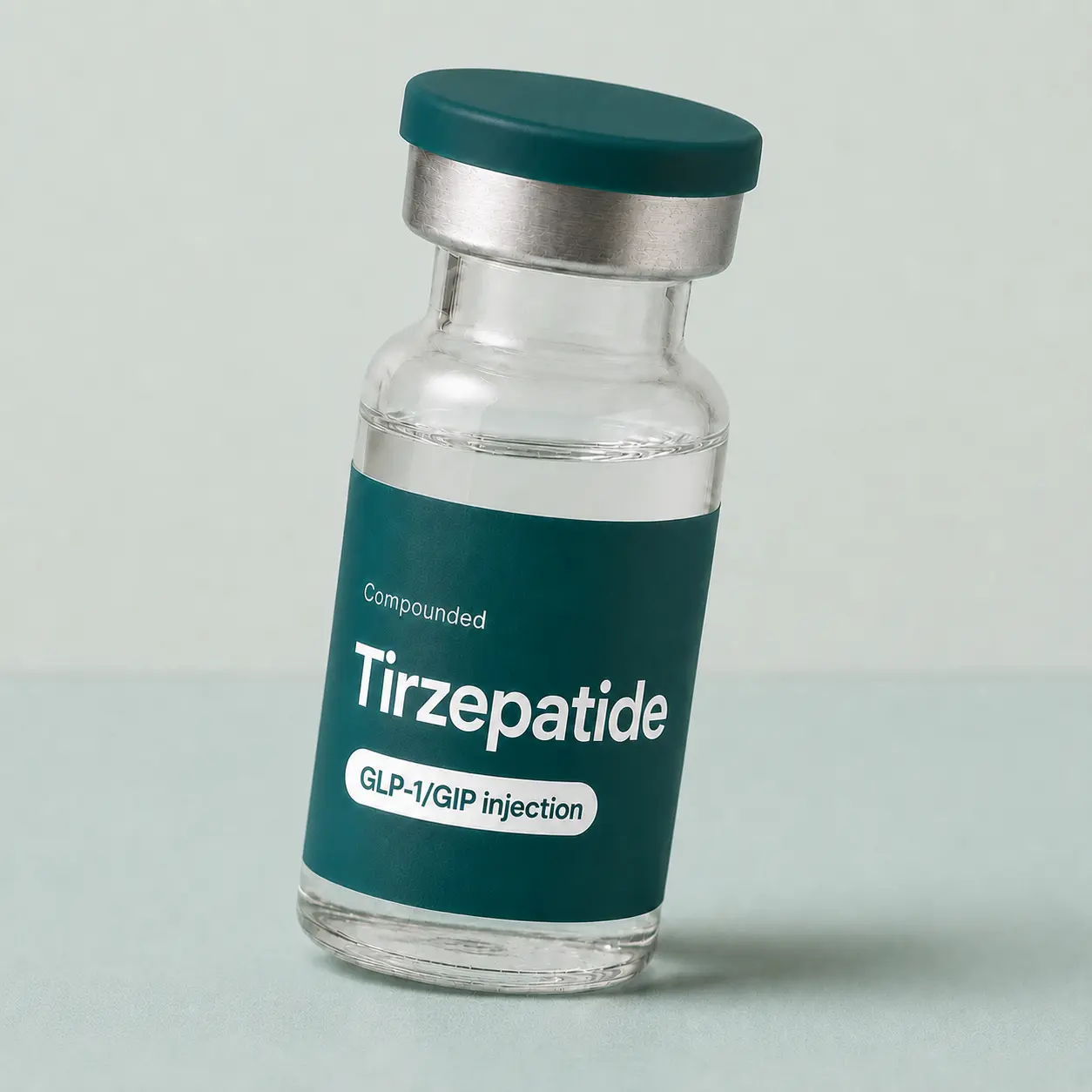
The short answer: the constant thinking about food usually quiets, often within the first few weeks — for many members the first change they report, before the scale moves at all. That isn’t willpower. GLP-1 medications act directly on the hypothalamic and hindbrain circuits that generate appetite, so the thought loop loses its trigger.
What “food noise” actually is
Food noise is the involuntary, repetitive thinking about food — what to eat, when, how to get it, whether you’re allowed to want it. It isn’t quite hunger; it’s the background process that keeps reopening the question, most of the day, every day.
Why the quiet happens
GLP-1 receptor agonists do three things, all settled pharmacology: slow gastric emptying, act on appetite circuits in the hypothalamus and hindbrain, and improve insulin secretion. Tirzepatide adds a fourth mechanism, GIP receptor agonism.
The food-noise effect is best explained by the appetite-circuit piece: the signaling that generates food-seeking thought appears to be turned down at its source. The experience is one of reduced food-seeking thought rather than fullness. The thoughts aren’t suppressed. The prompt stops arriving.
What the trials measured — and what they didn’t
STEP 1 (Wilding et al., NEJM 2021) randomized 1,961 adults with obesity and no diabetes to semaglutide 2.4 mg weekly or placebo. At week 68: −14.9% mean body weight versus −2.4% on placebo. Nausea was the most common side effect and clustered during dose escalation — exactly where the gastric-emptying mechanism predicts it, and why it fades once titration slows.
SURMOUNT-1 (Jastreboff et al., NEJM 2022) randomized 2,539 adults to tirzepatide or placebo. At 72 weeks: −15.0% at 5 mg, −19.5% at 10 mg, −20.9% at 15 mg, versus −3.1% on placebo.
The honest part: neither trial measured food noise. Weight was the endpoint. The quiet is what members consistently report and what the mechanism predicts — but no randomized trial has made food noise a primary endpoint, and we’d rather say so than inflate the claim.
When it kicks in
Standard semaglutide titration starts at 0.25 mg weekly and steps up roughly every 4 weeks — 0.25 → 0.5 → 1.0 → 1.7 → 2.4 mg — slower if side effects push back. Many members report the noise dropping in the first weeks, at doses well below the trial target. Others don’t feel it until a later step. Both are normal.
If nothing has changed by mid-titration, that’s a dose conversation, not a failure: in SURMOUNT-1, weight loss scaled with dose — −15.0% at 5 mg, −20.9% at 15 mg. Every Zappy case is reviewed by a US-licensed clinician who sets the pace. Our compounded semaglutide and tirzepatide come from LegitScript-verified 503A US pharmacies; compounded preparations are not FDA-approved.
The catch: eating is now something you do on purpose
When the prompt stops arriving, meals stop happening automatically. That’s the drug working, and it has a cost. DXA substudies of the GLP-1 trials show a meaningful fraction of the weight lost is lean mass, not fat — and whether that matters functionally at year five is unknown. The follow-up doesn’t exist.
Until it does, the countermeasure is unglamorous: resistance training, plus protein in the 1.2–1.6 g/kg/day range clinicians commonly target. Schedule both. The noise won’t remind you.
Stop the drug, and the noise comes back
In STEP 4 (Rubino et al., JAMA 2021), participants who stopped semaglutide at week 20 regained substantially, while those who continued kept losing. In SURMOUNT-4 (Aronne et al., JAMA 2024), after 36 weeks of tirzepatide, people switched to placebo regained about 14% of body weight over the next year; those who stayed on lost about 5.5% more. Both trials tracked weight, not thoughts — but the regain curve is what returning appetite looks like on a chart.
Our opinion — against interest for a company that sells these medications: if you won’t treat this as ongoing therapy, don’t start it for a deadline. What would change our mind: a trial showing a taper protocol that preserves the loss off-drug. It hasn’t been run.
What it doesn’t fix
The emotional pull — eating when sad, bored, anxious — doesn’t disappear. The volume drops; the patterns underneath stay. GLP-1 quiets appetite-driven thought, and emotional eating is driven by more than that. If it’s a large part of your eating, the medication alone is unlikely to be enough. Our guide on emotional eating after GLP-1 covers what actually helps.
The takeaways
- Trial-measured: −14.9% body weight on semaglutide at 68 weeks (STEP 1); −20.9% on tirzepatide 15 mg at 72 weeks (SURMOUNT-1); about 14% of body weight regained in the year after switching to placebo (SURMOUNT-4, same pattern in STEP 4).
- Settled mechanism: appetite-circuit action is the most likely source of the quiet; delayed gastric emptying explains the nausea and its timing.
- Reported, not measured: the food-noise drop itself — consistent, often early, never a trial endpoint.
- Our opinion: plan for long-term use; schedule protein and resistance training from week one.
The trial nobody has run
Food noise is the effect members mention first and the one the literature has quantified least. None of the trials above measured it. The study worth waiting for is specific: a validated food-preoccupation scale as a primary endpoint, against placebo, with a discontinuation arm to time how fast the noise returns. Until someone runs it, the strongest evidence for these drugs’ most-talked-about effect is the kind that can’t go in a table: what members keep telling us.