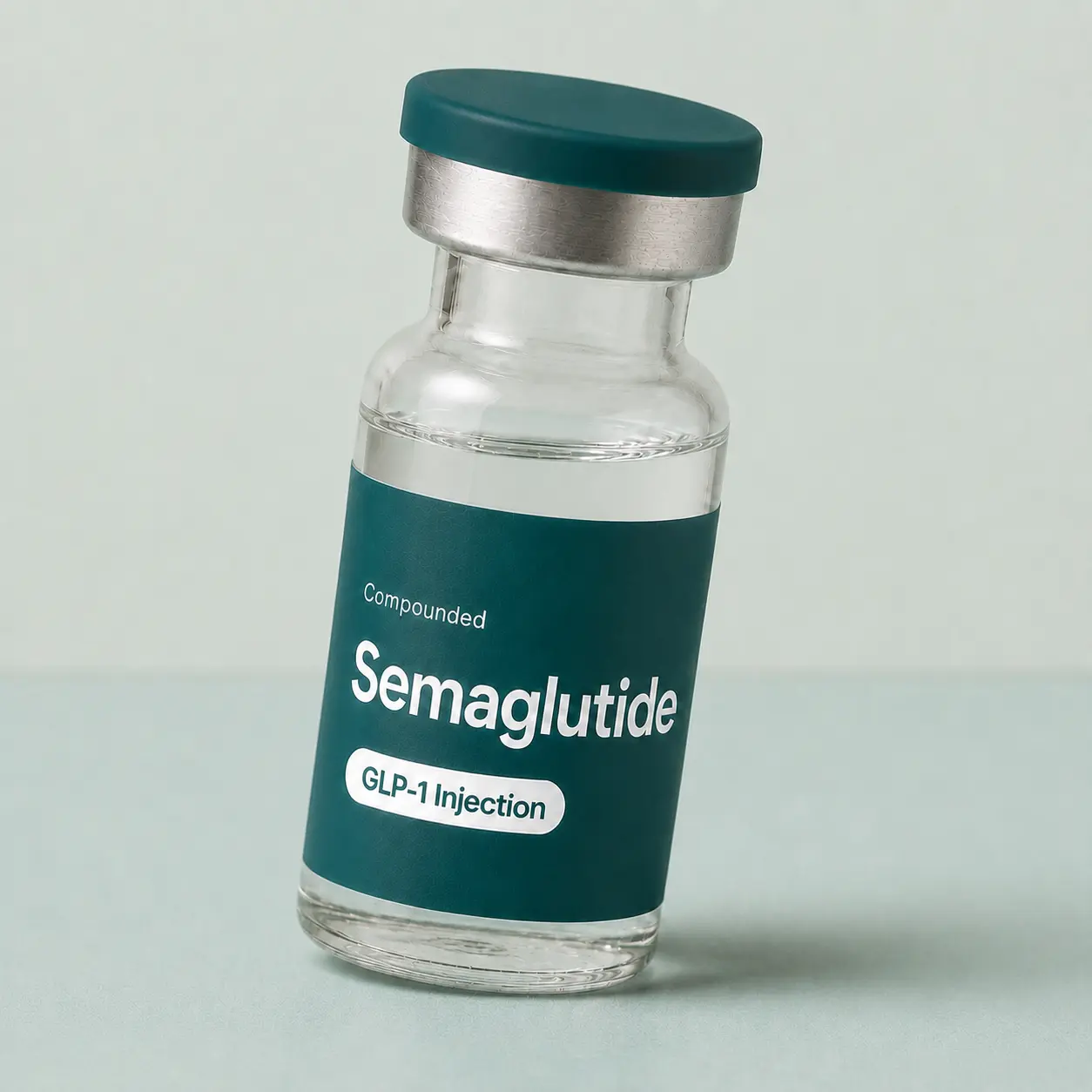
Heartburn on semaglutide is common, and it is mechanical: the drug slows stomach emptying, so food and acid sit longer and have more chances to wash back up into the esophagus. The fixes are mostly mechanical too: smaller meals, an earlier dinner, gravity while you sleep. When those aren’t enough, the pattern of your heartburn tells your clinician something specific about your dose.
Everything below applies to tirzepatide as well. It adds GIP receptor agonism, but the gastric slowdown — the part that matters for reflux — is shared.
Why a slower stomach refluxes
GLP-1 receptor agonists delay gastric emptying. That is part of the design: a stomach that empties slowly keeps you full on less food. But a fuller stomach also spends more hours pressing food and acid against the lower esophageal sphincter, the valve between stomach and esophagus. Enough pressure for enough hours, especially lying flat, and the valve loses. Heartburn, regurgitation, the sour 2 a.m. taste: all downstream of the same delay that quiets your appetite.
Nausea, early fullness, and constipation ride the same mechanism; the GLP-1 side-effects guide covers the full set.
Smaller meals, earlier dinner
You can’t speed the stomach back up, so give it less to hold and more time to drain.
- Cut meal size first. A half portion that clears the stomach beats a full plate that camps there.
- Move dinner earlier. Standard reflux advice is to stop eating three hours before lying down. On a slowed stomach, treat three hours as the minimum, not the target.
- Watch fat at night. Fat delays gastric emptying on its own and relaxes the sphincter, so a heavy, fried dinner stacks a second slowdown on top of the drug’s.
- Alcohol counts double. It relaxes the sphincter, and on a slowed stomach it lingers. Many people on GLP-1s find they want it less anyway.
Raise the bed, not the pillow count
Put the head of the bed up six to eight inches on blocks, or use a foam wedge. Extra pillows don’t substitute: they bend you at the waist, which raises pressure on the stomach and can make reflux worse. Sleeping on your left side puts the stomach below the esophageal junction; it helps some people and costs nothing.
Antacids are fine. A pattern is a signal.
Occasional calcium carbonate (Tums) or famotidine (Pepcid) for a rough evening is reasonable for most people. The thing to watch is frequency. If you’re reaching for antacids daily, or you’ve started over-the-counter omeprazole — whose own label caps a course at 14 days — tell your clinician instead of restocking. Persistent reflux on a GLP-1 usually has a better lever than escalating acid suppression: the dose.
For occasional heartburn, calcium carbonate when it happens. If it is predictable — one specific meal, or the nights after your injection — famotidine 20 mg about thirty minutes ahead beats chasing it afterward. On demand, though, not daily: scheduled famotidine loses effect within a couple of weeks, and that fade is usually the real story behind “my famotidine stopped working.”
The bar for a prescription PPI is deliberately high. Reflux on a GLP-1 is a pressure problem — a slow stomach under a full meal — not a failing valve. Acid suppression treats the burn and leaves the cause in place. If you need something every day for more than two weeks, the conversation is about the dose.
A few symptoms skip the antacid aisle entirely: trouble swallowing, vomiting that won’t stop, black or bloody stools, or chest pain you can’t confidently call heartburn. Those get evaluated promptly, not self-treated.
Heartburn as a dose signal
Semaglutide titrates 0.25 → 0.5 → 1.0 → 1.7 → 2.4 mg weekly in roughly four-week steps; tirzepatide starts at 2.5 mg and climbs 2.5 mg every four weeks. Both labels say the same thing about side effects: go slower if they demand it. So put your heartburn on the calendar. Flaring in the week after a step-up and fading as you adapt is the expected shape. Arriving with a step-up and staying is a reason to hold the current dose longer, or step back one, before climbing again.
That call belongs to your clinician, and it goes better with specifics: which dose, which week, what makes it worse, what you’ve tried. The full titration schedule is on our semaglutide page.
Two weeks. A few days after a step-up is mostly noise — gastrointestinal effects peak in the days right after the increase and then settle as the stomach accommodates. Four weeks means suffering through a full cycle to learn something two weeks would have told us. The exception is nocturnal: waking with it, or needing to sleep propped up, does not get two weeks. That is volume and pressure, and it will not adapt away.
The long game runs the other way
Excess abdominal weight presses on the stomach and the sphincter, which is why GERD guidelines list weight loss as a first-line measure. In STEP 1 (Wilding et al., NEJM 2021, n=1,961), semaglutide 2.4 mg produced a mean 14.9% body-weight loss at 68 weeks. So the drug that provokes heartburn in month two is also driving the single change most likely to relieve it by month twelve. No trial has cleanly measured how that trade nets out for people who start with GERD. If that’s you, say so at intake and track symptoms against your dose schedule.
The practical next step: tonight, a smaller dinner three hours before bed and something under the head of the mattress. This week, if your heartburn tracks the dose calendar, tell your clinician before the next step-up, not after. If you haven’t started yet, a reflux history isn’t an automatic no. Note it in the intake quiz and a clinician reviews your case within 24 hours.