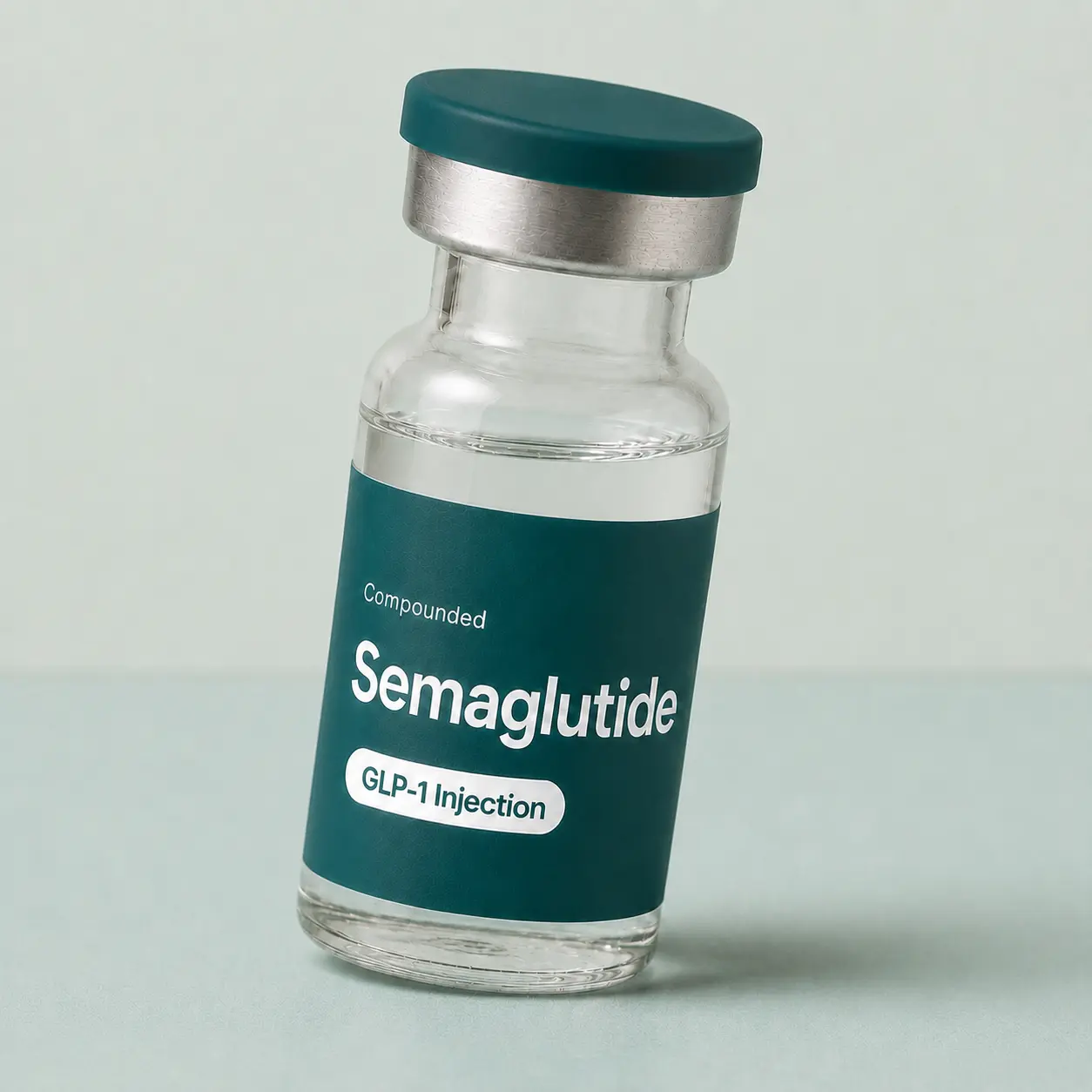
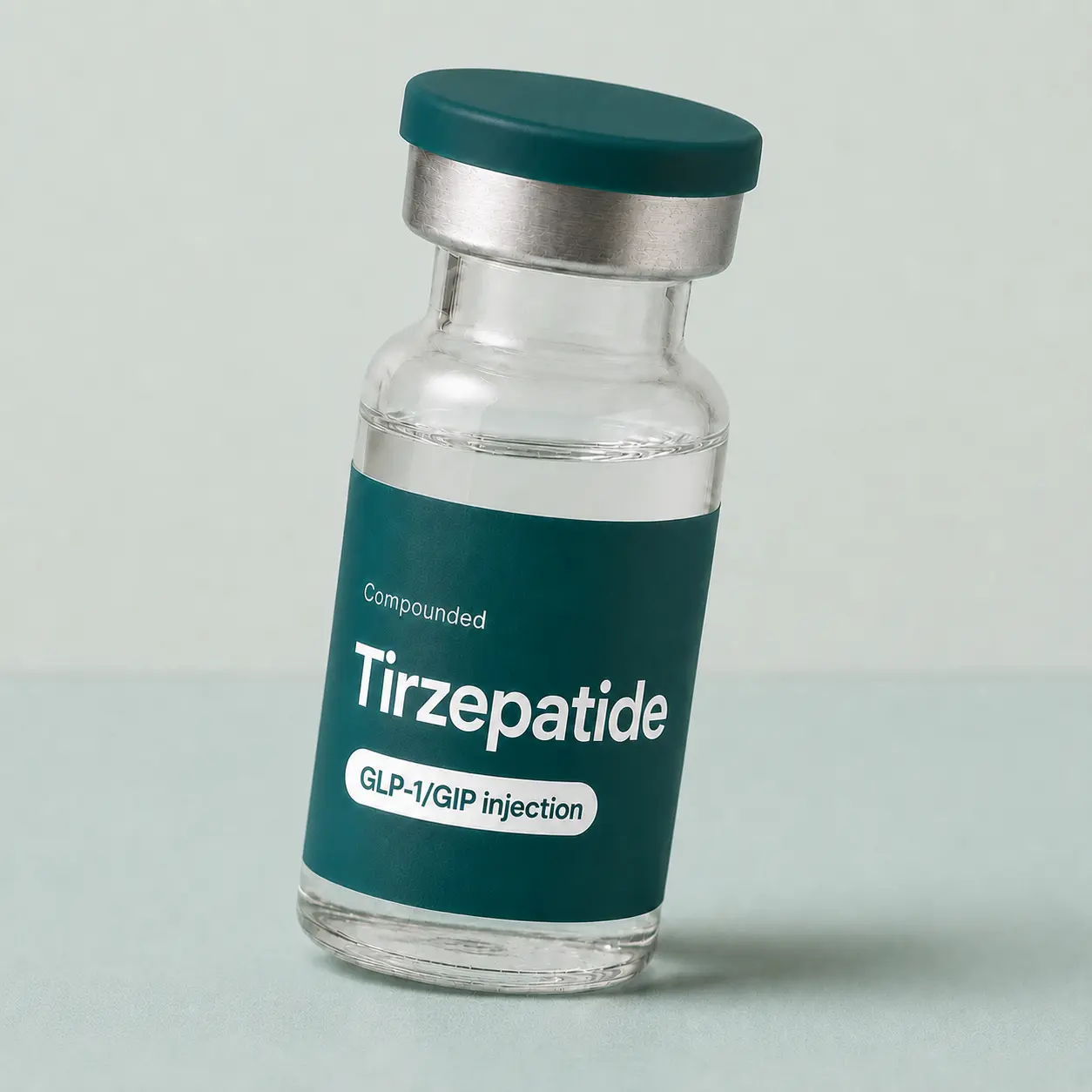
Bariatric surgery still produces more total weight loss than any medication: roughly 25–30% of body weight for gastric bypass, 20–25% for a gastric sleeve, with losses that hold beyond five years. Semaglutide, at −14.9% in trials, still sits below a sleeve. But tirzepatide at its top dose landed inside the sleeve’s range — −20.9% at week 72 in SURMOUNT-1 — with no operation. That overlap is why the decision now belongs in a clinician’s office rather than a comparison chart.
Two different kinds of numbers
The drug numbers are trial numbers. STEP 1 (Wilding et al., NEJM 2021; 1,961 participants) randomized semaglutide 2.4 mg weekly against placebo: −14.9% mean body weight at week 68, versus −2.4% on placebo. SURMOUNT-1 (Jastreboff et al., NEJM 2022; 2,539 participants) did the same for tirzepatide: −15.0% at 5 mg, −19.5% at 10 mg, −20.9% at 15 mg by week 72, versus −3.1% on placebo.
The surgical numbers are a different kind of evidence. The 25–30% figure for bypass and 20–25% for the sleeve come from decades of cohort and registry data — consensus ranges, not randomized endpoints. No large head-to-head trial of surgery versus a modern GLP-1 has been run. Every comparison you will read, including this one, puts trial-grade evidence on one side and observational consensus on the other.
Still, bypass out-loses every drug on average. The matchup people actually search — semaglutide versus gastric sleeve — goes to the sleeve: −14.9% sits below the 20–25% consensus range. Tirzepatide at 15 mg versus the sleeve is the close call: the ranges overlap.
Reversibility cuts both ways
A weekly injection can be stopped. The withdrawal trials show what stopping costs: in STEP 4 (Rubino et al., JAMA 2021), participants who stopped semaglutide at week 20 regained substantial weight over the following year while those who continued kept losing. SURMOUNT-4 (Aronne et al., JAMA 2024) is starker — after tirzepatide withdrawal, participants regained about 14% of body weight over the next year; those who stayed on lost a further 5.5%. The mechanism doesn’t linger: appetite signaling returns as the drug clears. “Reversible” really means “open-ended.”
Surgery is the mirror image. A sleeve removes most of the stomach permanently; a bypass reroutes the intestine around it. That permanence is the point: results that don’t depend on a weekly decision to continue. The same permanence is the cost if your health or your plans ever need the choice undone.
The risks don’t line up neatly
Surgery’s risks are front-loaded: anesthesia, operative complications, then lifelong micronutrient supplementation and monitoring.
The drugs’ risks are spread out and mostly mechanical. Slowed gastric emptying produces the nausea, reflux, constipation, and early fullness, concentrated during dose escalation. The boxed warning is real but narrow: thyroid C-cell tumors in rodents, human relevance unknown — anyone with a personal or family history of medullary thyroid carcinoma or MEN 2 is ruled out, and so is pregnancy.
The drugs also hold one card surgery doesn’t: a randomized cardiovascular outcomes trial. SELECT (Lincoff et al., NEJM 2023) followed 17,604 people with established cardiovascular disease and no diabetes for more than three years on average; semaglutide cut major adverse cardiovascular events by 20% in relative terms. It is also the largest long-term safety dataset these drugs have. Surgery has decades of observational follow-up; nothing randomized at that scale exists.
Who qualifies — and who decides
The label criteria for GLP-1s: BMI 30+, or 27+ with a weight-related condition. The guideline consensus for surgery has long drawn the line at BMI 40, or 35 with a condition like diabetes or sleep apnea, and newer surgical-society guidance argues for lower thresholds. That leaves a wide overlap zone — a BMI of 36 with hypertension qualifies for both.
Inside the overlap, the deciding variables aren’t in any table: diabetes severity, reflux history, pregnancy plans, what you have already tried, and how you weigh permanent anatomy against indefinite medication. The paths aren’t mutually exclusive either — GLP-1s are increasingly prescribed after surgery when weight returns, though practice there is ahead of the data.
Money is part of candidacy in the US. Medicare Part D is barred by statute from covering drugs for weight loss, and commercial coverage often excludes them. Coverage for bariatric surgery is a separate question that varies by plan — check both before assuming. Zappy is cash-pay and FSA/HSA eligible: compounded semaglutide and tirzepatide are prepared by LegitScript-verified 503A US pharmacies, not FDA-approved as compounded preparations, with current pricing on each treatment page.
Where to start
Make both options concrete instead of arguing them in the abstract. For the medication path, our GLP-1 guide covers how titration and the first months actually go, and the two-minute quiz tells you whether you would qualify — a clinician reviews every case within 24 hours. If your BMI is 35 or higher, ask your primary care doctor for a bariatric surgery consult in parallel. A surgeon who has examined you and a prescribing clinician who has seen your labs will settle the question better than any chart — and until someone runs the head-to-head trial, better than the literature can.