Semaglutide works. That sentence needs no hedge: in the trial that defined its weight-loss effect, people lost a mean of 14.9% of their body weight over 68 weeks. The honest complications come after that sentence — how slowly the dose climbs, what the first month costs you in comfort, what happens to muscle, and the fact that stopping usually undoes the result.
Our position up front: semaglutide is the right first molecule for most people starting a GLP-1. It has the longer track record, and it is — so far — the only drug in this class with a completed cardiovascular outcomes trial in people with overweight or obesity and no diabetes. Tirzepatide’s trial numbers are bigger. If those two sentences seem to be in tension, the rest of this guide resolves them.
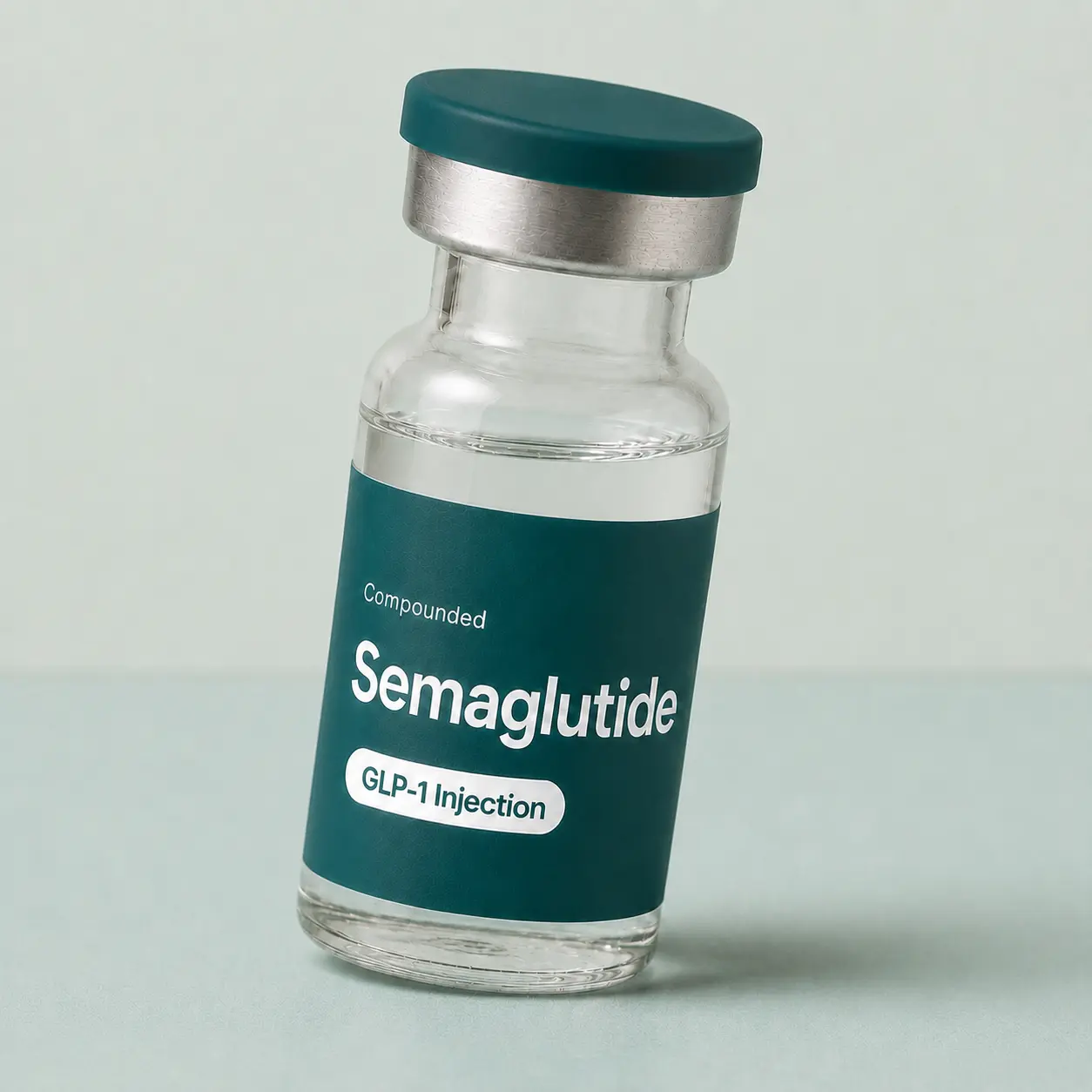
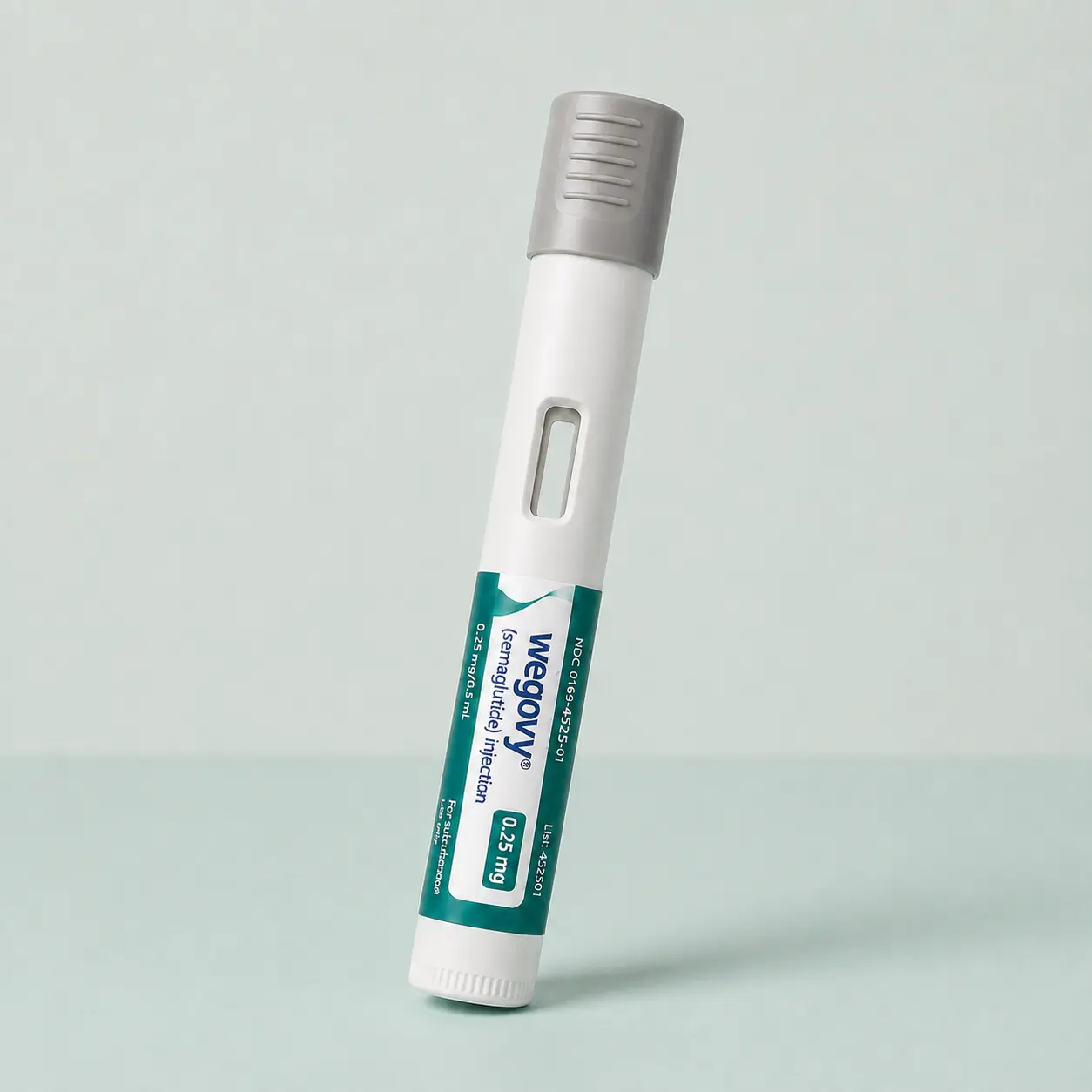
One mechanical fact before the evidence: semaglutide is the active ingredient in three FDA-approved products — Wegovy and Ozempic (once-weekly injections) and Rybelsus (a daily tablet) — which differ by label, dose, and price. Compounded semaglutide is a separate category: prepared by a 503A pharmacy, not FDA-approved, and not an FDA-approved generic or equivalent of any of them. The trial evidence below is the branded products’.
How much weight, exactly
STEP 1 (Wilding et al., NEJM 2021) is the anchor trial: 1,961 adults with obesity and no diabetes, randomized to semaglutide 2.4 mg weekly or placebo. At week 68, the semaglutide group had lost a mean of 14.9% of body weight. Placebo lost 2.4%. The 12.5-point gap is the drug effect. For scale, 14.9% of a 250-lb person is about 37 lb.
SURMOUNT-1 (Jastreboff et al., NEJM 2022) is the equivalent trial for tirzepatide: 2,539 adults, 72 weeks. Loss scaled with dose — 15.0% at 5 mg, 19.5% at 10 mg, 20.9% at 15 mg, against 3.1% on placebo.
The tempting move is subtraction: tirzepatide’s top dose sits six points above semaglutide’s result. But the numbers come from different trials, in different populations, over different lengths (68 vs 72 weeks). Treat the gap as an estimate, not a measurement.
The result that isn’t about weight
SELECT (Lincoff et al., NEJM 2023) is the trial that moved semaglutide from a weight drug to a cardiovascular one. It enrolled 17,604 adults with overweight or obesity and established cardiovascular disease — none with diabetes — and randomized them to semaglutide 2.4 mg or placebo. Major adverse cardiovascular events (a composite of cardiovascular death, heart attack, and stroke) fell by 20% relative to placebo, hazard ratio 0.80.
Be careful with that 20%: it is a relative reduction, and your absolute benefit depends on your starting risk. The result is strongest exactly where SELECT looked — people who already have cardiovascular disease. If that is you, this is the strongest argument in this guide for semaglutide specifically rather than the class in general. Tirzepatide has no completed cardiovascular outcomes trial in this population yet.
Where the appetite goes
Semaglutide is a GLP-1 receptor agonist — a synthetic mimic of a gut hormone your intestine releases after meals. The mechanism is settled physiology. It slows gastric emptying, so food sits longer and fullness arrives earlier. It acts on appetite circuits in the hypothalamus and hindbrain, which is why food takes up less of your attention between meals. And it improves insulin secretion when glucose is high. Tirzepatide does all of the above and adds agonism at a second receptor, GIP.
The same mechanism produces the main side effect. Nausea is delayed gastric emptying, felt. In STEP 1, nausea was the most common side effect and it clustered during dose escalation — each step up slows the stomach further before the gut adapts. That is why it fades when titration slows, and why the countermeasure is mechanical rather than mysterious: smaller meals, eaten slowly, with less fat — because fat delays gastric emptying on its own and stacks with the drug.
The schedule, and why it’s slow on purpose
The standard path is 0.25 mg weekly, then 0.5, 1.0, 1.7, and 2.4 mg, stepping up roughly every 4 weeks. That is about four months to full dose if nothing slows you down — and side effects are a legitimate reason to slow down. Holding a dose an extra month is not failure; it is the protocol flexing the way it was designed to.
The 0.25 mg start is a tolerability dose. It exists to train your gut, not to move the scale. If week three feels underwhelming, that is the plan working, not the drug failing.
If we hold someone an extra cycle, it tends to happen early — the first steps above the starting dose, where the gut is being asked to adapt fastest. Which step, though, is genuinely individual. We cannot tell you in advance where you will need to slow down, and anyone who claims a specific rung is describing an average you may not belong to.
Two different things put people on a hold, and they call for different responses. The common one is tolerability: nausea that has not settled into the background, or a week where food simply stopped fitting. Another four weeks at the same dose is the whole fix. That is the label working as designed, not a setback.
The second reason gets less airtime. Sometimes the dose you are on is already doing the job — appetite is manageable, the scale is moving, and the only thing another rung buys is more gastrointestinal burden for a benefit you are already getting. There is no prize for reaching the top of the ladder. The dose that works is the dose that works.
A dose change is one of the few places “talk to your clinician” carries real content: titration speed is the main lever for side effects, and it should be adjusted per person, not endured.
What month one is actually like
STEP 1 measured weight at week 68, not how week one feels. What the mechanism predicts: the earliest change most people notice is appetite — meals ending sooner, less pull from food between them — and nausea, if it comes, tracks the days after an injection and the weeks after a dose increase.
Two symptoms should trigger a message to your clinician the day they appear, not at the next check-in: severe, persistent abdominal pain, and being unable to keep fluids down. Both are uncommon. Neither is a ride-it-out situation.
What happens when you stop
The least popular fact in this guide: the weight comes back. STEP 4 (Rubino et al., JAMA 2021) randomized people who had taken semaglutide for 20 weeks to either continue or switch to placebo. Stopping led to substantial regain; staying on maintained the loss. SURMOUNT-4 (Aronne et al., JAMA 2024) ran the same design with tirzepatide after 36 weeks: those switched to placebo regained about 14% of body weight over the next year, while those who continued lost roughly 5.5% more.
The interpretation is consensus, not controversy: obesity behaves like a chronic condition, and these drugs treat it rather than cure it. Off drug, the appetite signaling the drug had quieted comes back, and regain follows the physiology.
So, from a company that sells semaglutide: if your plan is twelve weeks before a wedding and then stopping, do not start. You will spend the money, take the nausea, and most likely hand the weight back. Start if you are prepared to treat this for years — or with an explicit maintenance plan for coming off.
What would change that advice: STEP 4 and SURMOUNT-4 both tested an abrupt switch to placebo. Whether a slow, supervised taper plus resistance training and diet scaffolding preserves meaningfully more of the loss has not been settled in a trial. If it ever is, the calculus for short-term use changes.
Some of what you lose is muscle
The evidence here is a grade weaker than the trials above — probable, incomplete. DXA substudies of the GLP-1 trials (body-composition scans run on subsets of participants) show that a meaningful fraction of the weight lost is lean mass, not fat. How much that matters for strength and function years out — we don’t know. Distrust anyone who quotes you a precise “muscle percentage” as if it were settled.
The countermeasure is unglamorous and standard: resistance training while you lose, and protein at roughly 1.2–1.6 g per kilogram of body weight per day — the range clinicians commonly target. Start both before the scale moves, not after.
When tirzepatide is the better call
Three situations, in descending order of evidence.
If you have plateaued at semaglutide’s full dose with weight left to lose, the cross-trial numbers above are the argument for switching: SURMOUNT-1’s top dose landed six points beyond STEP 1’s result. Different trials, same direction. No trial has tested that switch directly. Switching molecules is a reasonable next move, not a desperate one.
If you are chasing maximum total loss from day one, same logic.
If you have insulin resistance or prediabetes, you will hear that tirzepatide’s added GIP agonism makes it the better fit. That is mechanistic reasoning, not completed outcome data — plausible, unproven.
And the reverse case: with established cardiovascular disease, SELECT makes semaglutide the one with the outcomes trial behind it. The full comparison is at semaglutide vs tirzepatide.
How this works at Zappy
Zappy is cash-pay — no insurance required, FSA/HSA eligible. We offer compounded semaglutide and tirzepatide prepared by LegitScript-verified 503A pharmacies in the US. Compounded preparations are not FDA-approved. That is a fact about the regulatory category, and it belongs up front.
A US-licensed clinician reviews every case and adjusts titration as you go — which, since titration speed is the main side-effect lever, is the part of the service that actually matters. Screening is also where the hard exclusions live — for example, a personal or family history of medullary thyroid carcinoma or MEN 2 rules out this entire drug class. To find out whether — and where — you’d start, take the intake quiz.
Takeaways
Evidence: semaglutide 2.4 mg averaged −14.9% body weight at 68 weeks (STEP 1); tirzepatide reached −20.9% at its top dose over 72 weeks (SURMOUNT-1); in people with cardiovascular disease, semaglutide cut major cardiovascular events by 20% relative (SELECT); stopping reversed the loss — in SURMOUNT-4, about 14% of body weight came back within a year of switching to placebo, and STEP 4 showed the same pattern.
Consensus: obesity is treated as a chronic condition; titration moves slowly and flexes for side effects; resistance training plus 1.2–1.6 g/kg/day of protein is the standard guard for lean mass.
Our opinion: semaglutide first if you have cardiovascular disease or want the longer track record; tirzepatide if you are maximizing total loss or have stalled at 2.4 mg; and nobody should start either without deciding, in advance, what year two looks like.
The question nobody has answered yet
The open question in this literature is not whether the drugs work — the trials above settle that. It is what the lost weight is made of, and what that means a decade out. The DXA substudies say lean mass goes down; long-term functional outcomes — strength, mobility, fracture risk — are not yet well characterized, and no trial has followed them in people who stay on a GLP-1 for years versus those who cycle off and regain. That trial has not been run. Until it is, resistance training and 1.2–1.6 g/kg/day of protein remain the best available answer — a countermeasure, not proof.
Second on the watch list: whether tirzepatide’s own cardiovascular outcomes trial, when it reports, matches SELECT. If it does, semaglutide’s strongest specific advantage narrows to its track record.