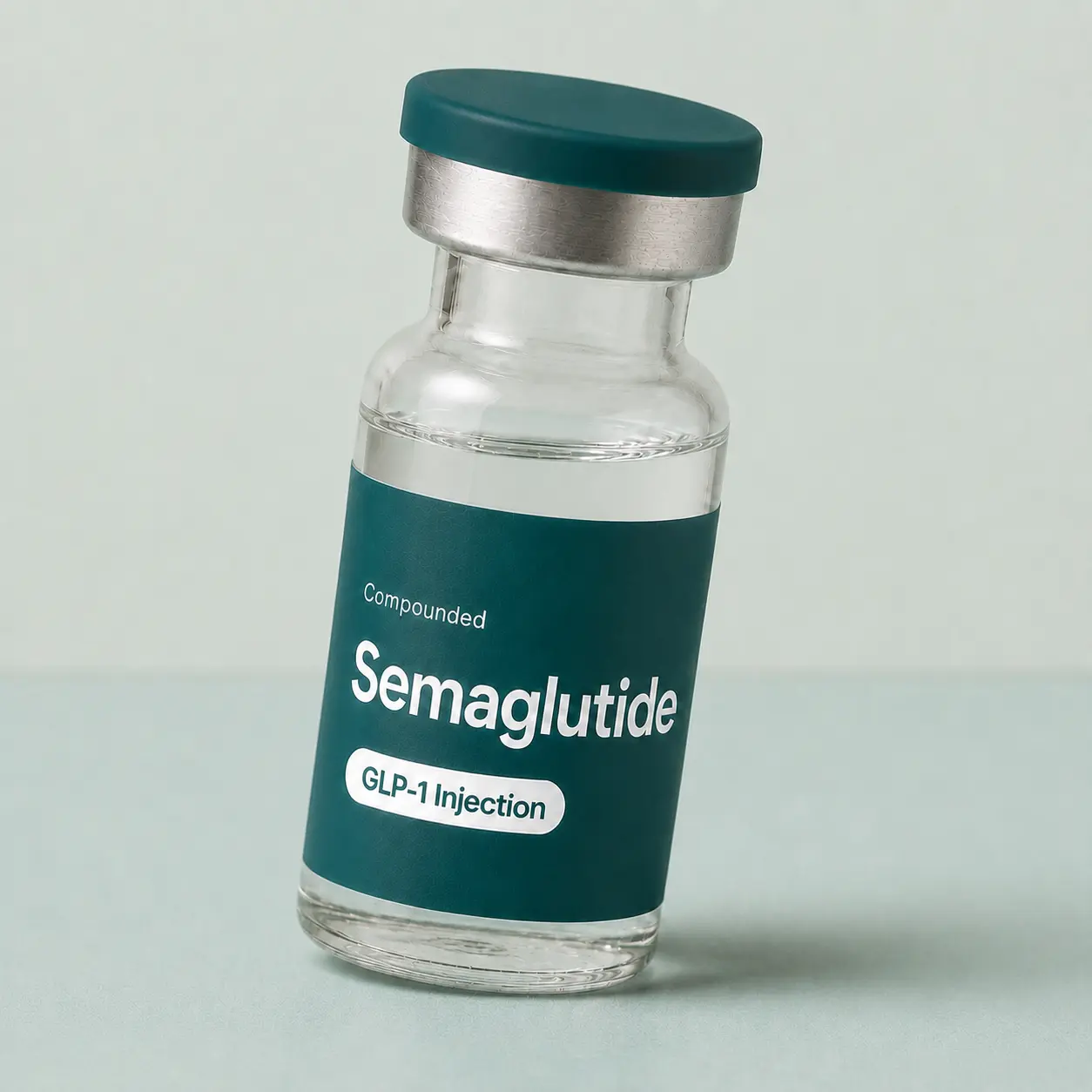
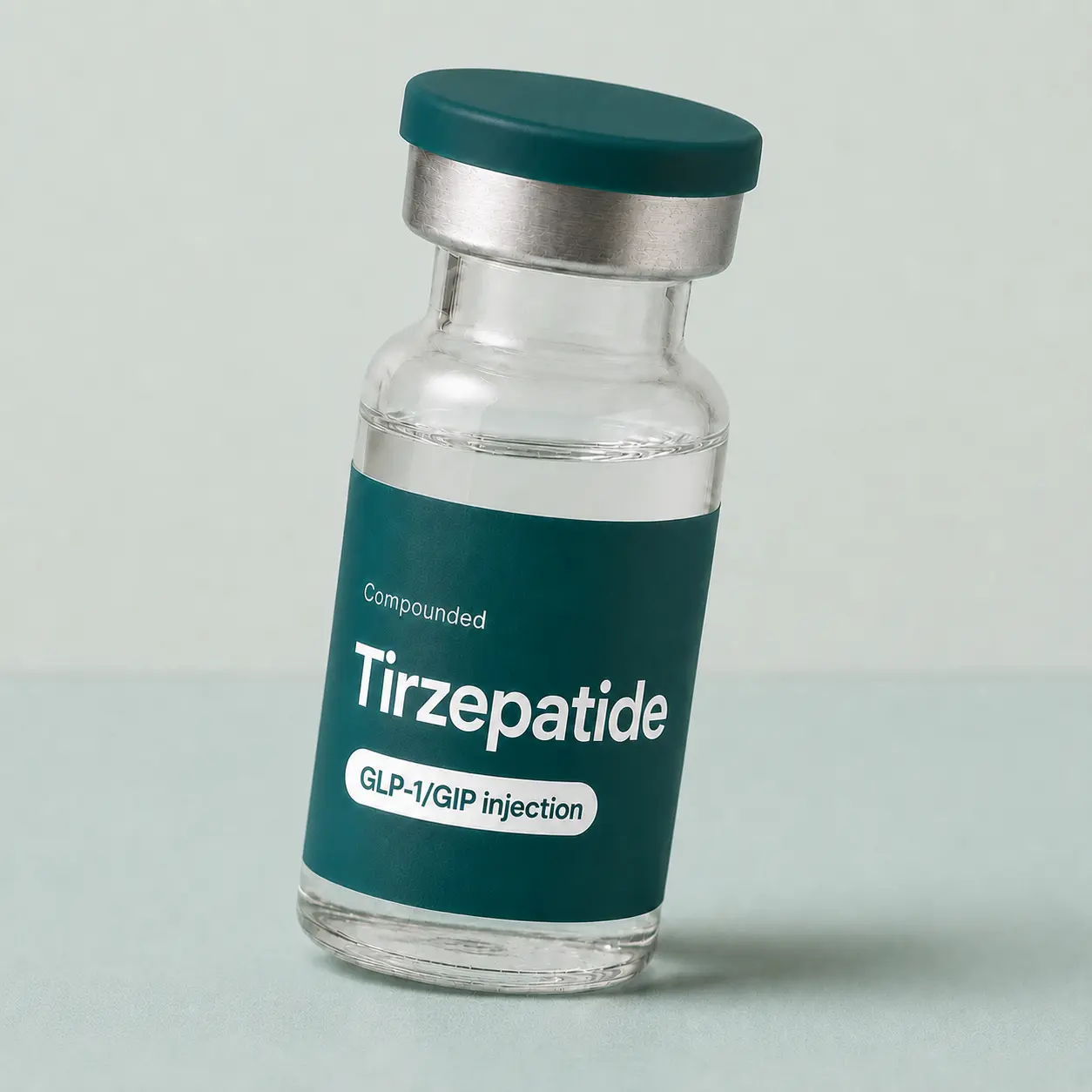
Weigh weekly, tape your waist weekly, test grip monthly, and let one fixed waistband tell you the truth slowly. The scale still matters — but during titration it mostly measures your dose schedule, and the results these drugs are known for were read at weeks 68 and 72, not week 6.
Why the scale is noisiest exactly when you watch it hardest
Standard semaglutide titration starts at 0.25 mg weekly and steps up roughly every four weeks — 0.25 → 0.5 → 1.0 → 1.7 → 2.4 mg, slower if side effects object. At week 6 you are on 0.5 mg, about a fifth of the study dose. In STEP 1 (Wilding et al., NEJM 2021 — 1,961 adults with obesity, no diabetes), semaglutide 2.4 mg produced a mean 14.9% body-weight loss versus 2.4% on placebo — at week 68. Week 6 grades a dose you are not on yet, not even a tenth of the way into the timeline.
The pharmacology adds its own noise. GLP-1 receptor agonists slow gastric emptying and act on hypothalamic and hindbrain appetite circuits; the slowed emptying is why nausea was STEP 1’s most common side effect, why it clustered during dose escalation, and why each dose step can shift what you eat for days. Add fluid, glycogen, sodium, and gut contents, and a Tuesday-to-Wednesday reading says almost nothing about fat.
The weekly weigh-in, done properly
Same scale, same morning, after the bathroom, before food or coffee. Log it and compare months, not weeks — the month line tracks tissue actually lost, while day to day mostly tracks water moving around. Daily weighing samples that noise at its highest frequency and tends to convert it to mood.
The tape and the waistband
Waist, weekly: at the navel, normal exhale, snug not digging in, same spot every time. Waist circumference is the standard clinical proxy for visceral fat — guideline consensus, not a trial endpoint — and tape technique wobbles, so consistency beats precision.
Clothes, monthly: one fixed waistband, one shirt. Not a trial endpoint either, obviously; it is still a slow average of everything else on this list.
Grip strength — the one everyone skips
Not everything you lose on these drugs is fat: in DXA substudies of the GLP-1 trials, a meaningful fraction of the weight lost was lean mass. Whether that costs function long-term, we don’t know yet — but muscle kept beats muscle rebuilt.
The countermeasure is boring and standard: resistance training plus protein around 1.2–1.6 g/kg/day — roughly 110–145 g for a 200-lb person. The monthly grip test checks whether it is working: a $25 dynamometer is crude, and grip is a proxy for strength rather than a lean-mass measurement — but grip that holds while the scale falls is reasonable evidence you are keeping strength. Grip that slides means fix protein and training first.
Resting heart rate: expect a small rise, not a fall
Resting heart rate looks like the obvious wearable metric to add — fitness improves, resting heart rate falls. On semaglutide the safety data point the other way: average resting heart rate rises a few beats per minute, and the rise is on the US label. Why it happens is not settled. A small, stable rise is expected; a rise you can feel — pounding or racing at rest — is a reason to contact your clinician now, not a note to save for the next visit.
A small rise in resting heart rate is expected and on the label. The one that matters is the one you can feel. Pounding or racing while you are sitting still — not after stairs, not after coffee — is a reason to contact us the same day, not a note for your next visit. Chest pain, fainting, or nearly fainting does not go through us at all; that is emergency care.
The real cardiovascular evidence is not on your watch. In SELECT (Lincoff et al., NEJM 2023 — 17,604 adults with overweight or obesity, established cardiovascular disease, no diabetes), semaglutide 2.4 mg cut major adverse cardiovascular events by 20% relative (HR 0.80). Proven in people who already had heart disease; extrapolate with care.
Week 12 is a titration review, not a verdict
By week 12 on the standard schedule you have had about four weeks at 1.0 mg; the full dose arrives around week 17 at the earliest. A proper week-12 review asks three questions.
One: is the side-effect pattern following the mechanism? Nausea that spikes at a dose step and fades between steps is delayed gastric emptying doing what it does. Nausea that is not fading — or vomiting that keeps fluids from staying down — means contact your clinician before the next step, not after. At Zappy, a US-licensed clinician reviews every case and sets the pace.
Two: do the numbers agree? Scale line, tape, waistband, grip. Direction matters more than any single reading.
Three: is the dose right? Tirzepatide, which adds GIP receptor agonism to the GLP-1 effect, showed dose-dependent weight loss in SURMOUNT-1 (Jastreboff et al., NEJM 2022 — 2,539 adults, 72 weeks): 15.0% loss at 5 mg, 19.5% at 10 mg, 20.9% at 15 mg, 3.1% on placebo. Dose is a lever; week 12 is when you and your clinician decide whether to pull it.
What week 12 is not: a moment to quit because the number looks modest. In STEP 4 (Rubino et al., JAMA 2021), participants taken off semaglutide at week 20 regained substantial weight; continuers did not. SURMOUNT-4 (Aronne et al., JAMA 2024) is starker: after 36 weeks of tirzepatide, those switched to placebo regained about 14% of body weight over the next year; those who stayed on lost roughly 5.5% more. The loss is maintained by staying on the drug; stopping without a maintenance plan usually reverses it.
The question no trial has answered
The scale, tape, and waistband measure mass; none measures what your body can do with it. The missing trial: does the lean mass lost on GLP-1s cost real function at year five — and does training plus 1.2–1.6 g/kg/day of protein fully buy it back? Until it exists, the $25 dynamometer is the closest thing you have — a crude instrument pointed at the most important question.