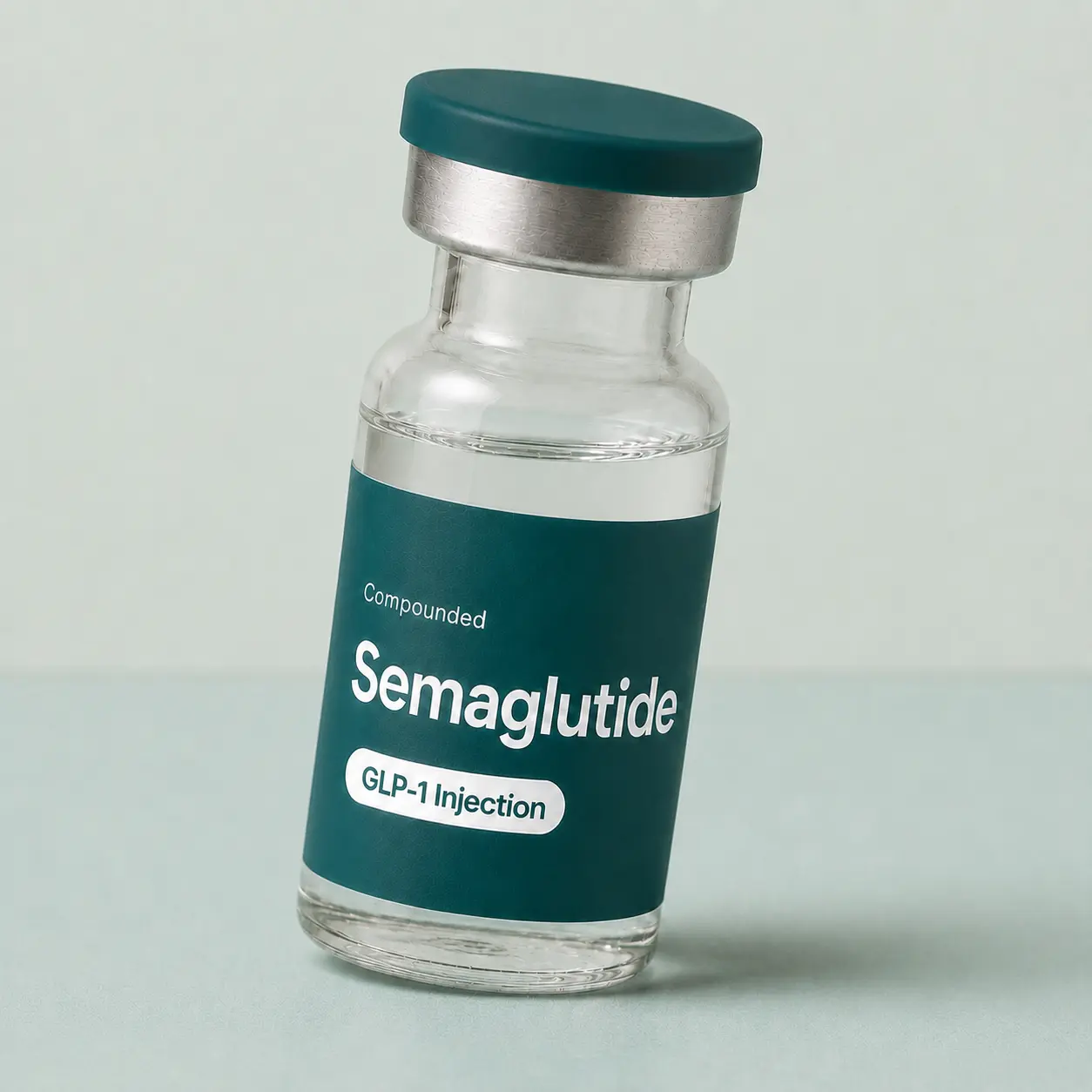
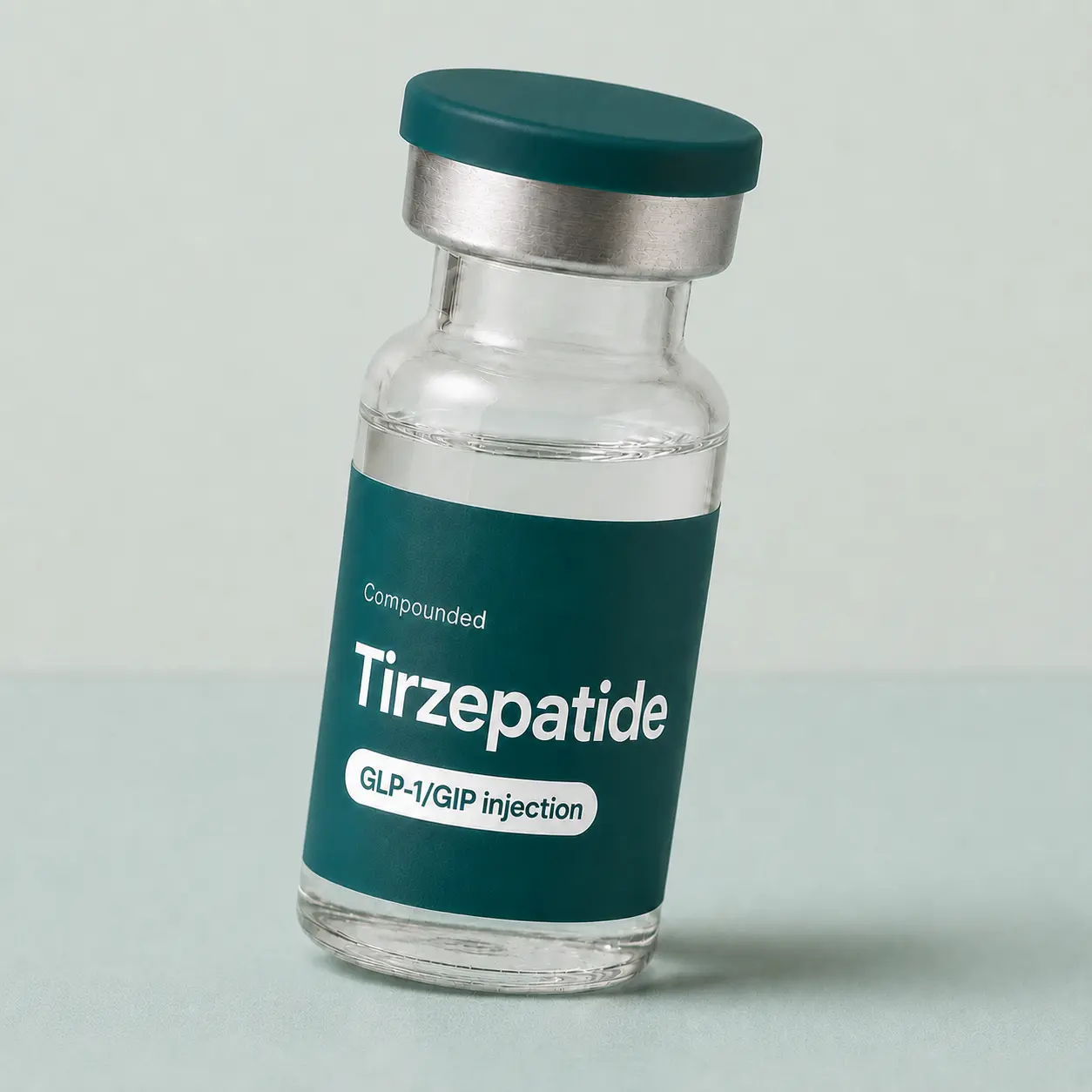
The short answer
Yes, you can drink on semaglutide or tirzepatide. There’s no direct drug interaction between alcohol and either one, and the label doesn’t tell you to abstain. What changes is everything around the drink. It lands harder. It spends calories you no longer have to spare. And for a lot of people, the urge quietly fades on its own.
Many people simply want it less
A common, unprompted report from people on GLP-1s: the Friday glass of wine sits half-finished. Beer stops sounding interesting.
Is it a real drug effect? Plausible, unproven. GLP-1 receptor agonists act on hypothalamic and hindbrain appetite circuits, and that circuitry is wired into the same reward machinery alcohol works on. The evidence so far is small human studies and secondary analyses of weight-loss trials, all pointing the same direction. No large randomized trial has tested it. How common, how big, how durable: we don’t know.
That cuts both ways. If you’re hoping a GLP-1 will treat heavy drinking, that trial hasn’t been run either, and it’s not what these drugs are approved for.
Drinks land harder on a slowed stomach
This part is mechanical. Semaglutide and tirzepatide slow gastric emptying — it’s part of how they work — and you’re eating less overall. Alcohol now arrives on less food and empties unpredictably, so one drink can do the work of two.
Alcohol also aggravates the two most common GLP-1 stomach complaints. Reflux gets worse, because alcohol relaxes the lower esophageal sphincter, the valve that keeps stomach contents down — on top of food already sitting there longer. And nausea tends to be worst in the days after a dose, especially the week of an increase; drinking inside that window is how a manageable side effect becomes a bad night.
Three practical rules: pour half of what you used to, drink with food rather than instead of it, and skip alcohol for the two days after a dose increase.
Every drink spends your scarcest budget
Appetite is the capped resource on a GLP-1. Total intake drops, but the protein target doesn’t: roughly 1.2–1.6 g per kilogram of body weight per day, the standard countermeasure for the muscle that comes off alongside the fat.
Alcohol competes with that budget and contributes nothing to it. A regular beer is about 150 calories, a glass of wine about 120, a shot about 100 — before the mixer. Two glasses of wine is roughly the calories of a chicken breast, with none of the ~50 grams of protein. When you can only eat so much, that trade is expensive. Spending a limited appetite well is its own topic; the GLP-1 food guide covers it.
Water counts double now
Alcohol is a diuretic. Constipation on a GLP-1 is a slowed-transit problem that dehydration makes worse, and next-day nausea is always uglier dehydrated. A glass of water per drink is the floor, not the target.
When the answer is actually no
A history of pancreatitis changes the conversation. Heavy alcohol use is one of the leading causes of pancreatitis, and a pancreatitis history already calls for caution with GLP-1s. Put the two together and it’s a clinician decision before the first dose, not after. Same if you drink daily or heavily: say so at intake, because it changes monitoring and may change whether a GLP-1 is the right tool at all. And if you take insulin or a sulfonylurea alongside a GLP-1, alcohol can push blood sugar low — that combination is its own clinician conversation.
What to actually do
Not on a GLP-1 yet? The semaglutide page covers dosing, titration, and side effects, and the qualification quiz is how a clinician gets the picture they need, drinking habits included. Answer that part straight: it changes what gets monitored, and sometimes what gets prescribed.
Already on one? Pour half of what you used to for two weeks and see if you miss the rest — many people find the drug already made the decision. The trial that would settle whether the faded urge is real, common, and durable hasn’t been run. For your own Friday glass, two weeks will answer it faster than the literature will.