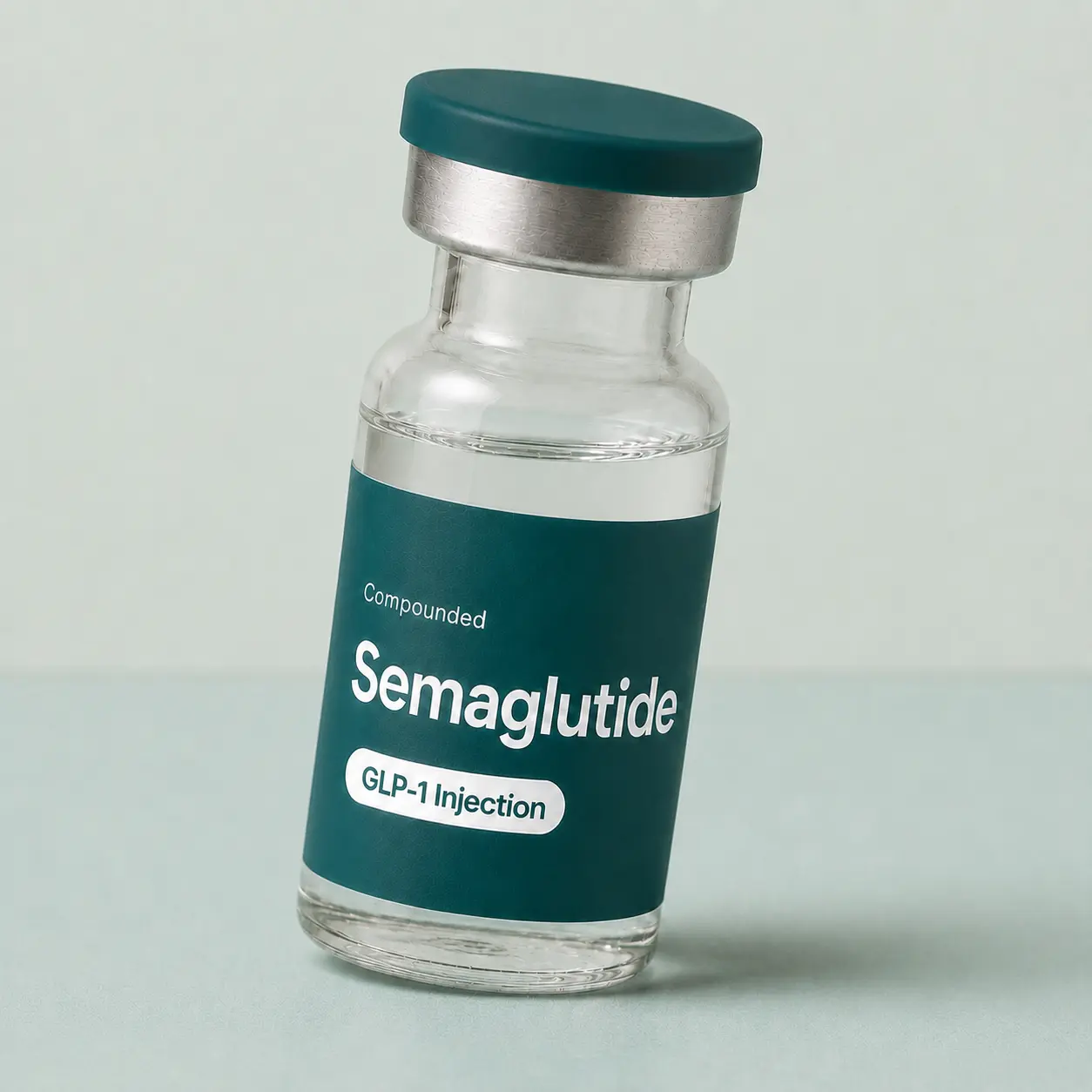
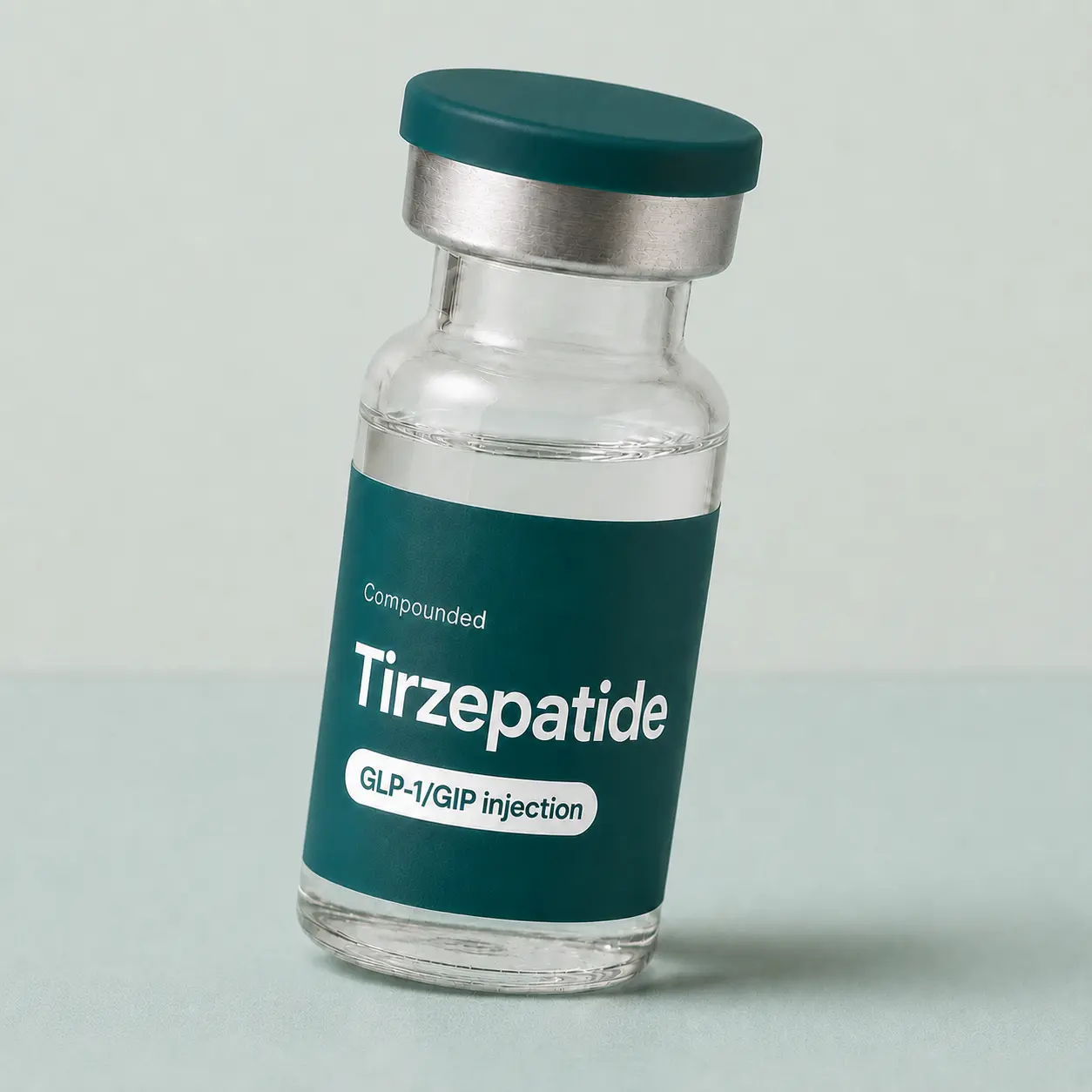
Eat protein first at every meal, and let the medication control how much you eat. That one rule prevents most of what goes wrong nutritionally on semaglutide or tirzepatide. The rest of this guide is supporting detail.
Your appetite will drop. That’s the drug working.
Semaglutide mimics GLP-1, a hormone your gut releases after meals. It slows gastric emptying, dampens appetite signaling in the hypothalamus and hindbrain, and increases insulin secretion only when blood glucose is high. Tirzepatide does the same and adds a second incretin hormone, GIP. What you feel is blunt: food sits longer, fullness arrives sooner, and the background pull toward eating goes quiet.
The size of the effect is why the nutrition question matters at all. In STEP 1 (Wilding et al., NEJM 2021; 1,961 adults), weekly semaglutide 2.4 mg produced 14.9% mean weight loss at 68 weeks versus 2.4% on placebo. In SURMOUNT-1 (Jastreboff et al., NEJM 2022; 2,539 adults), tirzepatide reached 20.9% at the 15 mg dose over 72 weeks versus 3.1%. Both numbers come from the same place: you eat substantially less, for a long time, without fighting for it.
One more thing before the food rules: the appetite drop isn’t static. Both medications titrate upward in roughly 4-week steps — semaglutide from 0.25 mg toward 2.4 mg, tirzepatide from 2.5 mg toward 10–15 mg — and each step usually takes intake down another notch. A nutrition routine that worked at week 4 can quietly stop delivering enough by week 12. Re-check your protein at every dose change, and let your clinician set the schedule.
All of this inverts the problem you’ve probably spent years on. Dieting was restraint against a loud appetite. On a GLP-1, restraint is handled — the failure mode flips to under-eating the things your body can’t skip: protein, fluid, fiber. Everything below is about filling a smaller space well. (Not on a medication yet? The two-minute quiz tells you whether you’re a candidate; a clinician reviews every intake within 24 hours.)
Protein first is the whole rule
Here is the problem it solves. Rapid weight loss is never pure fat loss. DXA body-composition substudies from the semaglutide and tirzepatide trial programs show that part of the weight lost is lean mass — muscle. The fraction varies by study and measurement method, and whether it translates into lost strength or function years later has not been characterized. That is a real gap, not a technicality. What we do have are the two levers known to protect muscle in other rapid-weight-loss contexts: protein and resistance training.
The working targets:
- Protein: 1.2–1.6 g per kilogram of body weight per day. For a 200-lb (91 kg) person, that’s 109–145 g — roughly 30–40 g at each of three meals plus one protein-forward snack.
- Resistance training: twice a week. Muscle you are actively using is muscle your body is reluctant to break down.
The evidence tier, stated plainly: those numbers are extrapolated from muscle-preservation research in dieting and older adults. No trial has randomized GLP-1 users to different protein intakes and measured what happens to their muscle. It is still the best-supported target available, and the cost of hitting it is low.
The rule that makes the target reachable: protein goes in first, literally. Fullness on these medications arrives early and abruptly. If it arrives after the chicken, you’ve lost nothing. If it arrives after the bread, the day’s protein budget is gone. Eat in order — protein, then vegetables, then everything else.
Distribution matters for the same mechanical reason. A stomach that empties slowly cannot fit a 70 g protein dinner, so the old pattern of skipping lunch and eating big at night stops working entirely. Three or four smaller protein doses across the day beat one heroic meal — not because of any metabolic magic, but because smaller doses are the only ones that physically fit.
A practical number to aim at is 100 g a day. The adjusted-weight math is for planning; 100 g is the version you can actually check against yesterday, which is what makes it useful on a Tuesday afternoon.
Treat a run of days well under that as worth mentioning rather than worth hiding. It is not a rule you can fail — it is information your clinician wants before the next dose increase, because a step up lands on top of whatever is already happening, and appetite suppression stacked on an intake that has quietly collapsed is how you lose muscle instead of fat. Sometimes the answer is to fix the protein first; sometimes it is to go up anyway and work on intake alongside. That is a conversation, not a gate.
The detail lives in two companion guides: how to set your exact protein target does the math for your body weight, and high-protein meals under 10 minutes has the recipes.
Fewer bites, higher stakes
Eating markedly less means every remaining bite carries more of the day’s nutritional load. Foods that were neutral at your old intake — a soda, a handful of crackers, a dessert that used to displace nothing — now displace something, and what they displace is usually protein or fiber, the two things you can least afford to lose.
Liquid calories deserve their own paragraph. Liquids leave the stomach faster than solids, so caloric drinks largely slip past the fullness signal the medication creates: a smoothie, a juice, a sweetened latte can add hundreds of calories without touching your appetite. The same physics is useful in reverse — on a rough-stomach day, a protein shake goes down when solid food won’t.
Fiber gets squeezed by the same math. Vegetables, fruit, beans, and whole grains are bulky, and bulk is exactly what you’ve lost room for, which is part of why constipation is so common on these medications. Keep the densest fiber sources you tolerate, and treat the fluffy, low-value carbs as the thing that gives way.
What you don’t need is a supplement stack. Greens powders, “metabolism boosters,” and digestive enzymes marketed at GLP-1 users have no outcome data behind them. Protein, fluid, fiber, and two strength sessions a week cover everything the evidence covers. Two narrow exceptions: plain protein powder counts as food, not supplement — use it freely — and a basic multivitamin is cheap insurance while total intake is low. That last one is our practical judgment, not a trial result.
What a slowed stomach can’t handle
Delayed gastric emptying is the mechanism, so the food problems are predictable. Fat is the strongest natural brake on stomach emptying; put a fried or heavy-fat meal on top of a drug that has already slowed things down and it can sit for hours. That is where the worst nausea and reflux come from. Volume does the same damage by a different route: a large portion stretches a stomach that isn’t making room. Carbonation adds gas to a space that’s already occupied. And a big late dinner followed by lying down is the reliable recipe for overnight reflux on these medications.
Beyond the mechanics, two aggravators are commonly reported, though neither has trial data attached: very spicy or acidic meals worsen reflux that delayed emptying has already set up, and large amounts of dense raw vegetables can sit uncomfortably where cooked ones don’t.
None of this requires a forbidden-foods list taped to the fridge. Smaller portions, earlier dinners, and less fried food solve most of it. The full list, with the reasoning behind each entry and what to order instead, is in foods to avoid on a GLP-1. If nausea is the dominant problem rather than specific foods, that has its own set of fixes.
Water is a scheduled item now
Two mechanical facts: part of your daily fluid normally arrives inside food, and you’re eating less food. Add slower gut transit and you get constipation — one of the most commonly reported side effects in both trial programs. Low fluid makes it worse; so does the fiber drop that comes with smaller meals.
The fix is boring and it works: put water on a schedule instead of waiting for thirst. Sip between meals rather than drinking heavily with them — fluid competes with food for a stomach that is short on space, and that space is spoken for by protein. If plain water isn’t going down well, broth, sugar-free electrolyte mixes, and diluted juice all count.
One situation goes beyond routine: a stretch of repeated vomiting or diarrhea where you can’t keep fluids down. That is dehydration risk, not a food-choice problem, and it’s a same-day message to your clinician. Dose and titration speed are the levers they can actually adjust.
Timing has rules of its own — meal timing and hydration on a GLP-1 covers the full daily schedule, including injection-day adjustments.
Alcohol, briefly
Many patients report wanting to drink less on GLP-1s, and small studies plus secondary analyses point the same direction. But there is no large randomized trial, so treat reduced craving as a plausible bonus, not a promise. Two practical points are more certain: alcohol landing on a slowed stomach tends to hit harder than you’re calibrated for, and its calories compete directly with a protein budget that is already tight. The full picture — social events, tolerance, what to sip instead — is in alcohol on a GLP-1.
The short version
Keeping the registers separate — trial evidence, consensus, and our call:
- Trial evidence: semaglutide and tirzepatide produce 14.9–20.9% mean weight loss (STEP 1, SURMOUNT-1) by cutting intake; DXA substudies show part of that loss is lean mass.
- Consensus, not yet tested in GLP-1 trials: protein at 1.2–1.6 g/kg/day, resistance training twice a week, deliberate fluid and fiber.
- Our clinical position: protein first on every plate, caloric drinks treated as the main quality leak, and meals sized and timed around a slower stomach instead of against it.
What we still don’t know
The honest gap in this playbook is functional. We can measure lean-mass loss on a DXA scan; nobody has published a trial that randomizes GLP-1 patients to protein and training protocols and then follows strength, stair-climbing, or grip over years. Until that trial exists, 1.2–1.6 g/kg and two lifting sessions a week are extrapolation — well-reasoned, cheap to follow, and unproven at exactly the point that matters most. Whenever someone runs it, that trial is the next thing that should change this page.