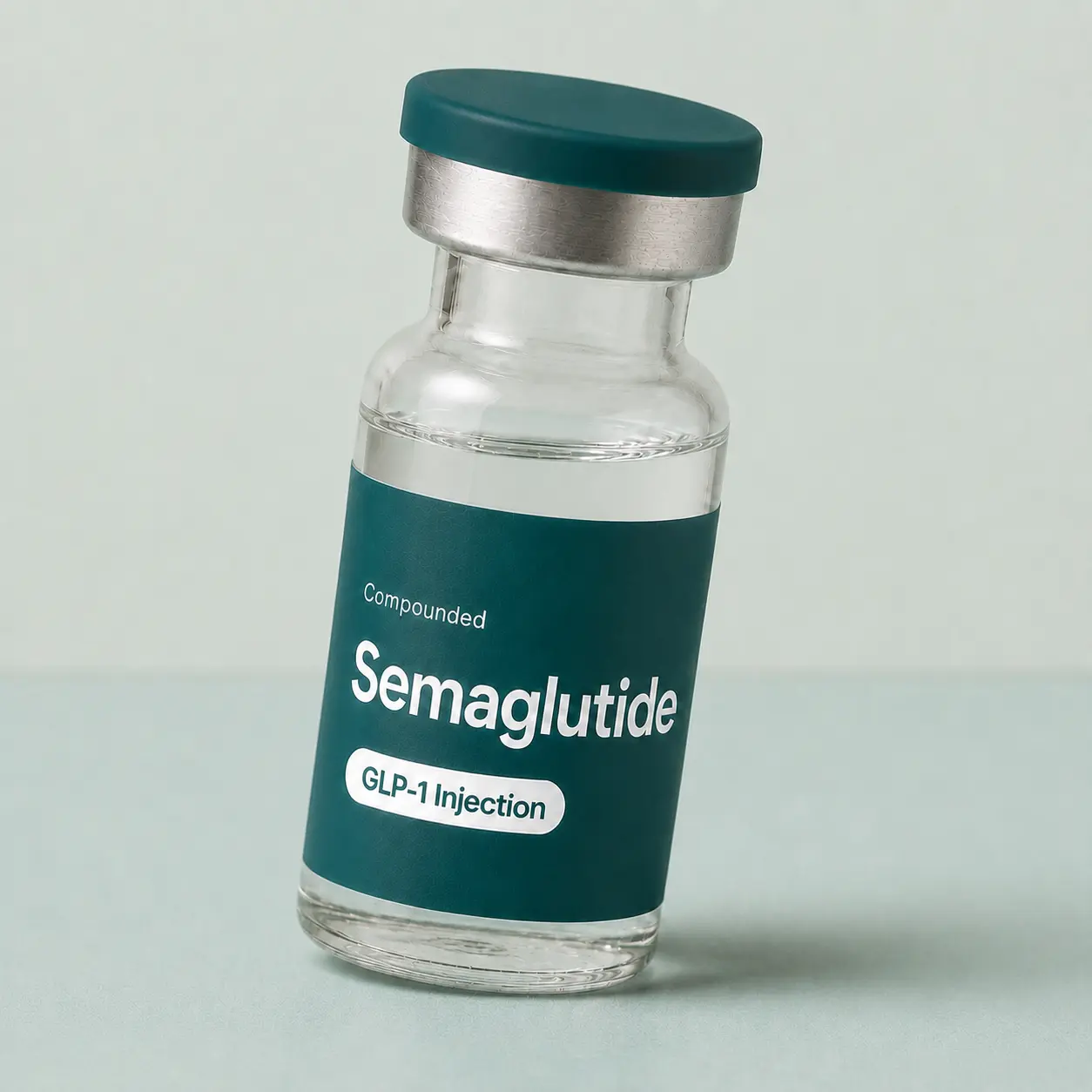
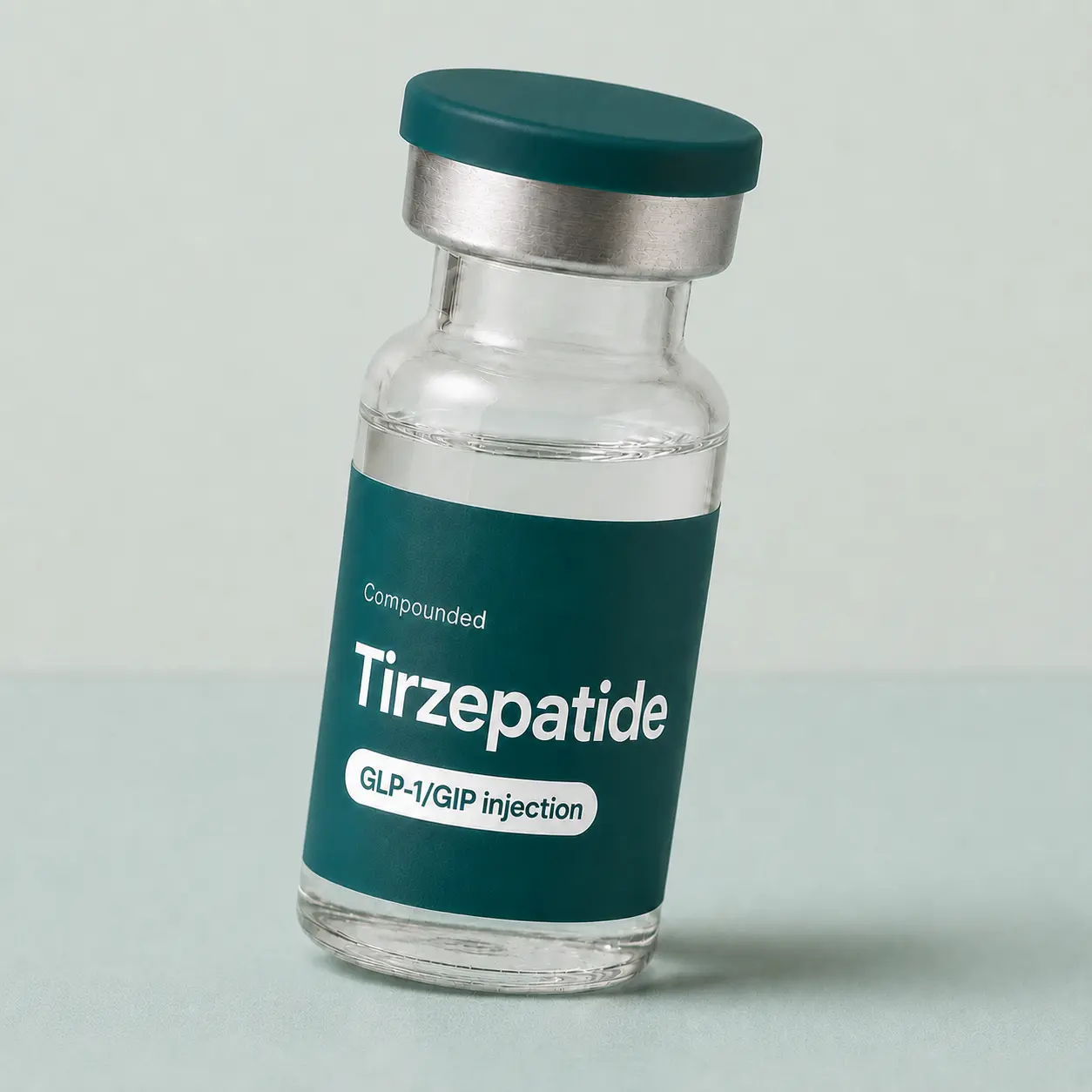
The first week on semaglutide is usually quieter than people expect: appetite fades a little, maybe some nausea, and almost nothing on the scale. That’s by design. The 0.25 mg starter dose exists to let your gut adapt; the doses that drive weight loss come later.
Here’s the week-by-week.
Week one: a deliberately small dose
Semaglutide starts at 0.25 mg once weekly. Tirzepatide starts at 2.5 mg. Both sit at the bottom of a titration ladder that climbs roughly every four weeks (for semaglutide: 0.25 → 0.5 → 1.0 → 1.7 → 2.4 mg). The starter dose has one job: introduce a slower stomach gradually enough that you can keep climbing.
The injection is the easy part. Subcutaneous, into the abdomen, thigh, or back of the upper arm, rotating sites week to week. The usual site reaction is a small red spot that fades on its own.
Feeling nothing at all for the first few days is normal at this dose. So is finding that dinner ends earlier than planned.
Appetite quiets before anything else does
Semaglutide activates GLP-1 receptors in the hypothalamus and hindbrain — the circuits that generate hunger — and slows gastric emptying. The felt version: portions shrink on their own, and the background pull toward food turns down. Reduced appetite is often one of the earliest effects, though how soon it shows up varies from person to person. If the mental-quiet part interests you, we wrote about what happens to food noise separately.
What doesn’t change yet: your weight, mostly. More on that below.
Early side effects follow one mechanism
Every common early side effect traces to the same fact: food sits in your stomach longer. Nausea, reflux, constipation, early fullness — mechanical consequences of delayed gastric emptying and eating less, not signs something is wrong. They’re typically worst in the day or two after injection and after each dose increase, then ease as your gut adapts over the following weeks.
The management playbook — what helps, what doesn’t, and when symptoms justify slowing the titration — is in the GLP-1 side effects guide.
One line that matters: severe abdominal pain, or vomiting you can’t stay ahead of, is not a normal titration side effect. Call your clinician the same day.
A few things the labels flag regardless of dose
These medications carry a boxed warning for thyroid C-cell tumors seen in rodents; whether that risk applies to humans isn’t known. They’re contraindicated if you or a close relative has had medullary thyroid carcinoma or MEN 2, warrant caution with a history of pancreatitis, and are not for use in pregnancy. Your intake review screens for these before you start.
Why the scale is quiet
The headline numbers were not produced at week four. In STEP 1 (Wilding et al., NEJM 2021, 1,961 adults), the 14.9% average weight loss, against 2.4% on placebo, was measured at week 68 on the full 2.4 mg dose. That’s nearly ten times your starter dose, more than a year in. Week four of 0.25 mg is the bottom rung of that ladder.
In practice, meaningful weight change usually comes later, once doses step up over the following weeks — not in the first few. A flat scale in week three doesn’t mean you’re a non-responder. It means you’re on 0.25 mg.
Week four: the first dose decision
Around week four, the label schedule steps semaglutide to 0.5 mg (tirzepatide: 5 mg). The ladder has a slower setting, though. Both labels allow holding a dose longer when side effects need more time, and staying at 0.25 mg for a few extra weeks is standard practice, not failure.
One logistic worth knowing from the semaglutide label: a missed dose can be taken within 5 days; past that, skip it and resume your schedule. Whether you advance at week four is your clinician’s call, not the calendar’s.
Three questions your clinician is weighing at the four-week mark. Is nausea tracking the days after the injection, or has it become background? Are you holding your fluid target most days? Is protein anywhere near where it should be? Comfortable answers on all three and the next step is straightforward. If fluid or protein has slipped, that is worth saying out loud before the dose goes up — a step up lands on top of whatever is already happening, and it may be the reason to wait a cycle. It is a clinical judgement made with you, not a test you sit.
What the first month is actually for
The first four weeks buy tolerability. The phase that produces the trial results comes after, on higher doses, over months. That full arc is in our GLP-1 weight loss guide.
If you’re still deciding whether a GLP-1 fits you at all, start with the online quiz; a clinician reviews every case within 24 hours.