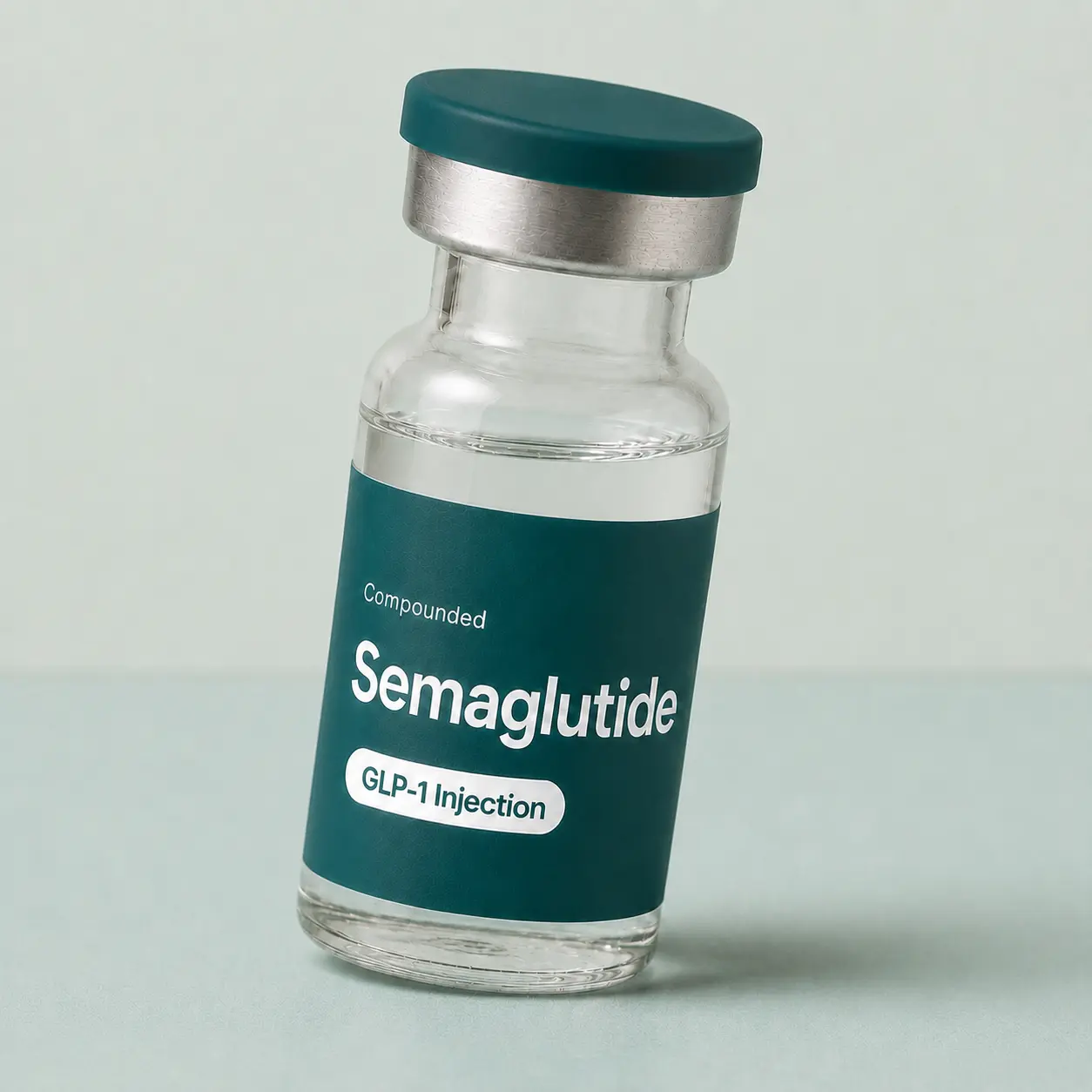
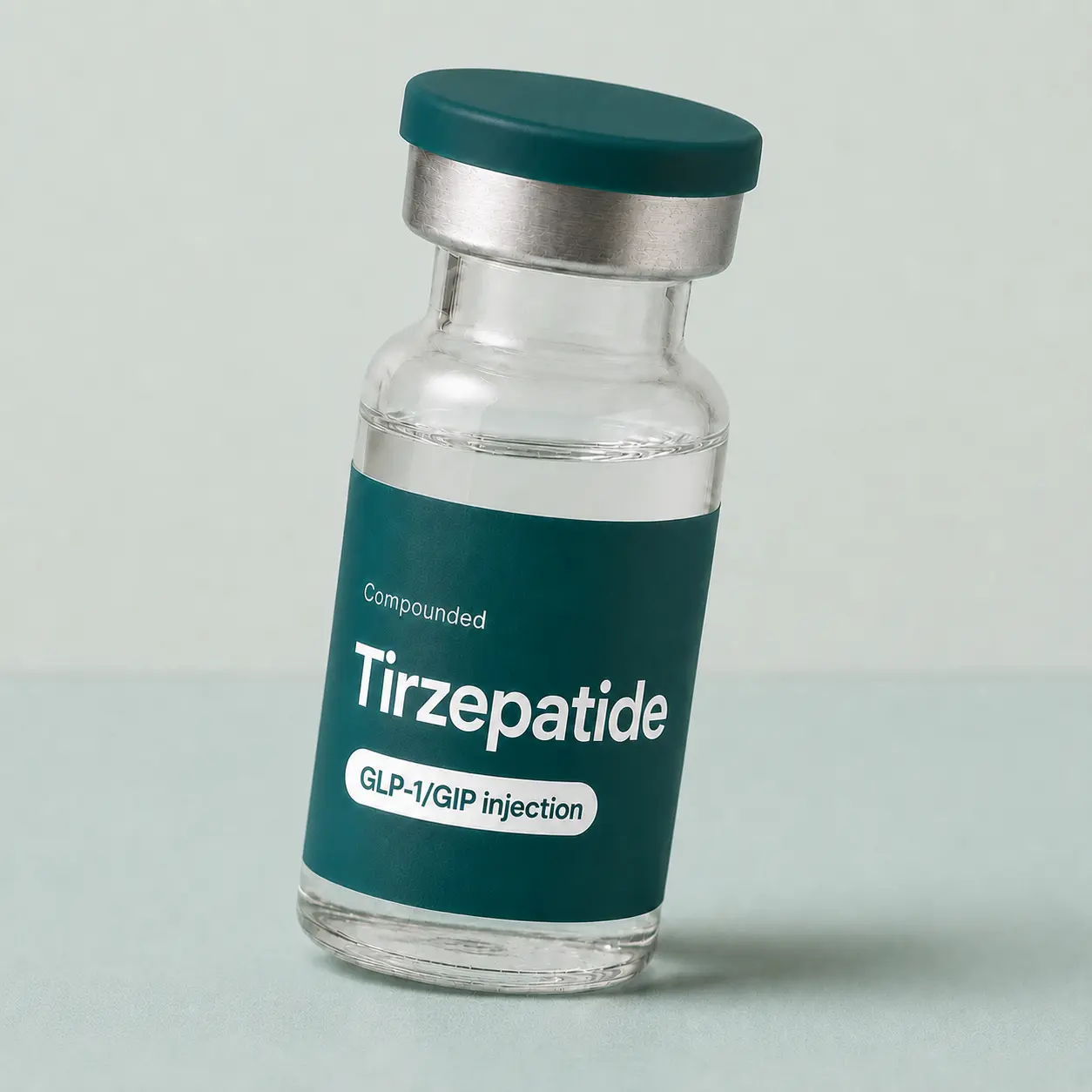
Semaglutide is injected into the fat just under the skin — subcutaneously — at one of three sites: the abdomen, the front of the thigh, or the back of the upper arm. All three work; pick the one you can reach comfortably, then move the exact spot each week.
That’s the whole answer. The rest is mechanics. Everything below applies to tirzepatide too — same route, same three sites — and it holds whether you’re using a branded pen or a syringe of compounded semaglutide.
What each site is like to use
Abdomen. The default: plenty of subcutaneous fat, you can see what you’re doing, and you can pinch a fold with one hand. Stay at least two inches from your navel, and skip scars, moles, and anything still bruised from last time.
Front of the thigh. Sit down and inject into the top of the thigh, midway between hip and knee. Useful when the abdomen is off the table. The fat layer here is thinner on lean bodies — if you can’t pinch much, the abdomen is more forgiving.
Back of the upper arm. On the label, but awkward alone: pinching and injecting the back of your own arm with one hand is a contortion. It’s the site for people who have someone else give the shot.
In all three, the target is the fat layer, not muscle. Needle and syringe specifics vary by product and pharmacy, so follow what ships with your prescription. The full technique (drawing up a dose, needle angle, air bubbles, disposal) lives in our step-by-step injection guide; this article stays on the where.
The site doesn’t change the dose you absorb
That’s the label’s position: absorption is comparable across abdomen, thigh, and upper arm, with no clinically meaningful difference. Site selection is a comfort decision, not a pharmacology decision — choose on lighting, dominant hand, which skin is least irritated this week. Staying loyal to one region forever is fine.
Same region every week is fine — same spot is not
The label asks for one thing: change the exact injection spot each time. You can use your abdomen for years; you shouldn’t use the same square inch of it twice in a row.
The reason is borrowed from insulin, not from GLP-1 trials. Decades of daily insulin use showed that hitting the same patch of skin over and over produces lipohypertrophy — rubbery, thickened fat that absorbs drug erratically. A weekly GLP-1 puts a fraction of that load on your skin: 52 injections a year against insulin’s thousand-plus. No one has trialed rotation schedules for once-weekly drugs, and no one is likely to. But the mechanism carries over, and rotation costs nothing.
A pattern that requires no memory: treat the area around your navel as four quadrants. Week 1, upper right. Week 2, lower right. Week 3, lower left. Week 4, upper left. Each patch of skin sees a needle roughly once a month, and within a quadrant you still land an inch away from any mark you can see. On the thigh, the same logic works with right leg / left leg, upper half / lower half.
Four quadrants of the abdomen, one a week, then back to the start. Week one lower right, week two lower left, week three upper right, week four upper left. Inside a quadrant, land a finger-width from the last mark. Every patch of skin sees a needle about once a month.
The mistake is not picking the wrong quadrant. It is the quiet drift back to the one spot that does not sting — people find it in month two and stay there without deciding to. If you cannot remember where you went last week, you are already doing it. Write the quadrant on the box.
What a normal site reaction looks like
A small red bump, a faint bruise, or an itch that fades within a day or two. Site reactions are usually mild and local; rotation is most of the prevention. Not normal: redness that spreads, skin that gets hotter or more painful over 48 hours, or swelling that grows instead of shrinking. That pattern deserves a same-day message to your clinician, not a week of watching.
Photo, but a useful one. Draw a pen border around the edge of the redness and write the date next to it, then photograph the whole thing in daylight. The border is the point — it turns your next photo into a comparison instead of a second opinion. Spreading past the line over 24–48 hours is the finding that changes what we do; a red patch on its own, without a reference, tells us almost nothing.
The next step
Already injecting? Set your quadrant pattern this week — a ten-second decision you make once. If your first dose is still ahead of you, read the injection guide start to finish before you open the box. And if you haven’t started at all, the two-minute quiz checks whether you’re a candidate; a clinician reviews every intake within 24 hours.