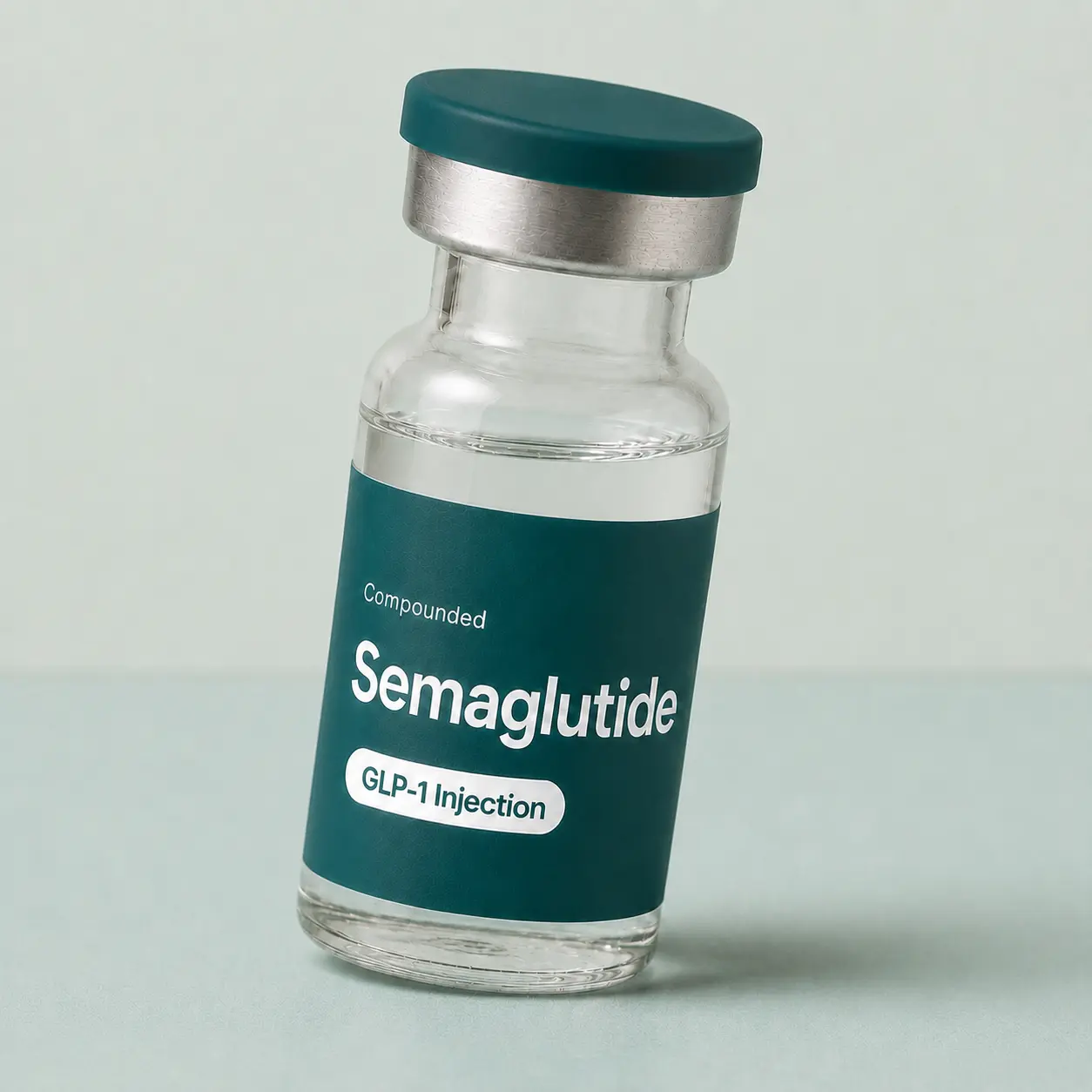
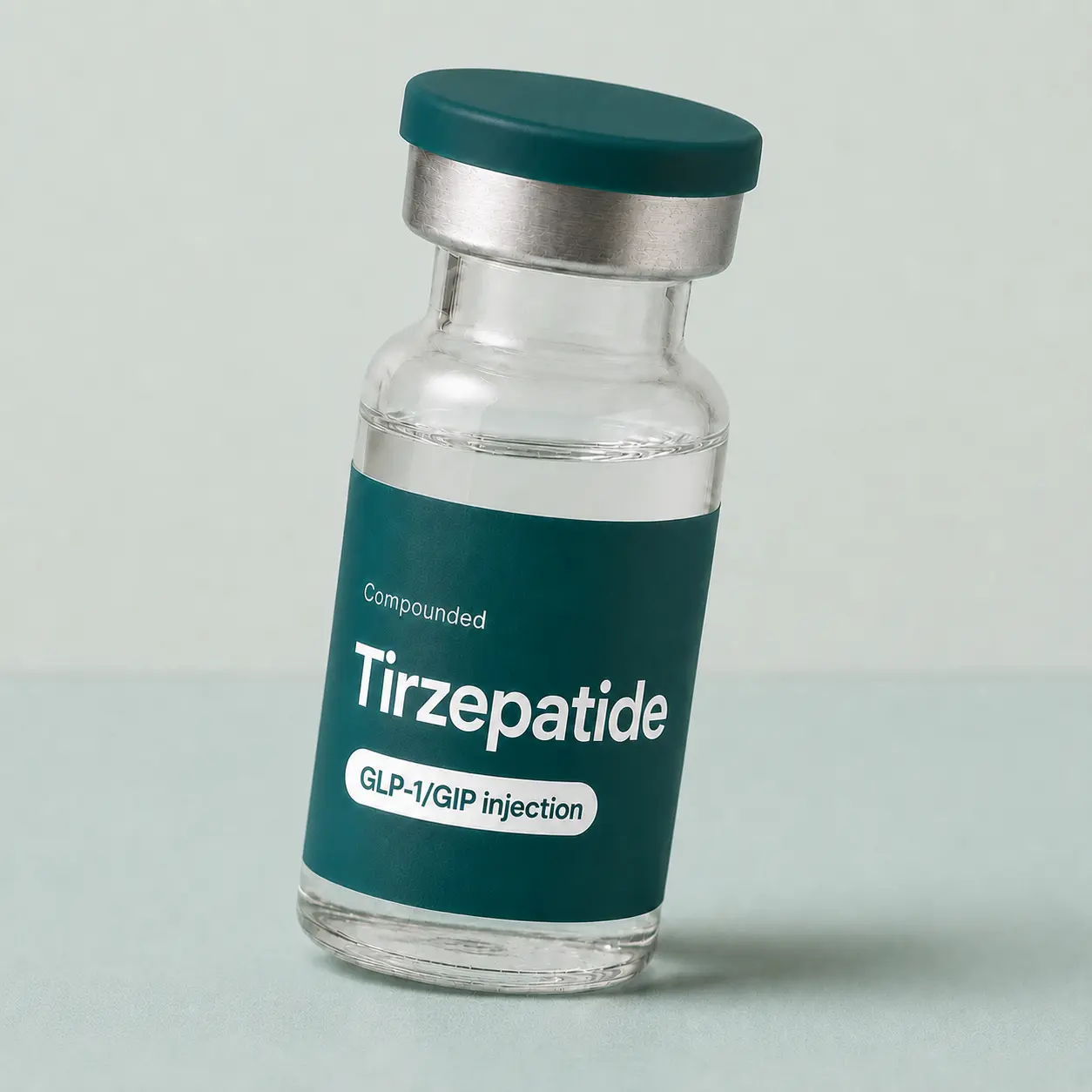
The injection is the easiest part of GLP-1 treatment. It takes about thirty seconds once a week, the needle only has to reach the fat just under your skin, and the technique is identical whether it’s your first 0.25 mg of semaglutide or a full tirzepatide dose. What deserves your attention is site rotation, the missed-dose rule, and keeping the medication cold.
This page is the overview: the technique, the sites, the fear, the reactions, the misses, the fridge. Each links to a deeper guide where the edge cases live.
The short version
- Inject subcutaneously — abdomen, thigh, or back of the upper arm. The label lists all three without preference.
- Rotate the exact spot every week. Staying in one region is fine.
- Missed a semaglutide dose? The label gives you 5 days to take it. Past that, skip it. Never double up.
- Refrigerate at 36–46°F (2–8°C). Never freeze — a frozen dose gets discarded, not thawed.
- Where this guide and your pharmacy insert disagree, the insert wins.
Why this is a shot and not a pill
Semaglutide and tirzepatide are peptides — chains of amino acids, the same category of molecule as the protein in food. Swallowed unprotected, they get digested like dinner. Injected into the fat layer under the skin instead, they absorb slowly and steadily into circulation.
That fat layer is the point. It behaves like a slow-release depot: absorption over days rather than minutes is what lets one injection cover seven, and it’s why the target is fat, not a vein. “Subcutaneous” means exactly that: under the skin, into fat. It’s why the needles are short, and why the approved sites are the places where most bodies keep a pinchable layer.
The injection, step by step
The label lets you inject any time of day, with or without food. Pick a day of the week you can keep, then:
- Take the medication out and look at it. The liquid should be clear and colorless. Cloudy, discolored, or carrying particles — don’t inject it; call your pharmacy. A cold injection also stings more than a room-temperature one, so check your insert for how long the vial or pen may sit out first.
- Wash your hands. Swab the site with alcohol and let it dry. The sting people blame on the needle is often wet alcohol carried under the skin. Give it ten seconds.
- Prepare the dose. Pens differ: some prime, some don’t. Follow your pen’s insert exactly. With a vial and syringe, draw the prescribed amount. A tiny air bubble in a subcutaneous dose is harmless; a large one means a short dose, so tap it to the top and push it out.
- Pinch, insert, push. Pinch a fold of skin if you’re lean. Insert at the angle your insert shows; for most short needles that’s straight in. Press the plunger slowly. Pens need to be held down for a count; the insert gives the number.
- Withdraw and leave the site alone. Don’t rub it. A drop of blood or a small bead of liquid at the surface is normal and doesn’t mean you lost the dose.
- Needle straight into a sharps container. FDA’s household guidance accepts a heavy-duty plastic bottle with a screw-on lid if you don’t own a purpose-made container. Loose needles never go in the trash.
The most common first-injection mistake is not the needle — it is the alcohol. People swab and go straight in while the skin is still wet, which stings sharply, leaves the site red, and gets reported back as a reaction to the medication. It is not one. Swab, count to ten, then inject.
That is the entire skill. Your dose will change over the coming months on a schedule your clinician sets; the technique never does. Before your clinician settles that schedule, this class carries a boxed warning for thyroid C-cell tumors seen in rodents (human relevance unknown), and it is contraindicated with a personal or family history of medullary thyroid carcinoma or MEN 2, cautioned with a history of pancreatitis, and not for use in pregnancy — flag any of these at your consult.
Where the needle goes — and why you move it
Three sites are on the label: the abdomen (keep a couple of inches clear of your navel), the front or outer thigh, and the back of the upper arm. The label ranks none of them, so choose the one you can see and reach. For most self-injectors the abdomen or thigh is easier to reach one-handed than the back of the arm.
Rotate the exact spot each week. Loyalty to one region is fine (abdomen every Sunday works), but move a few centimeters each time, because repeated injections into the same spot irritate the tissue, and irritated tissue hurts more next week. A simple system: treat the area around your navel as a clock face and advance one hour per dose.
What if you’re lean enough that nothing pinches? Which sites bruise least? The injection sites guide goes through it site by site.
If needles scare you
Needle fear is common, and it is not a character flaw. Two things help more than pep talks.
First, the needle itself. A subcutaneous needle only has to travel a few millimeters into fat, so it’s shorter and thinner than what most people are picturing: the blood-draw and vaccine needles that have to reach a vein or a muscle.
Second, don’t hover. Most of the fear lives in the pause between swabbing and injecting. Set everything up, pick the spot, and go in one motion; a slow, hesitating approach drags out the part you dread. If your hands shake, use the thigh — you’re seated, braced, and looking straight down at the site.
If self-injection stays a hard no after a real attempt, say that at your consult. It’s a legitimate input into treatment choice, not a failure.
What normal looks like afterward
Site reactions are usually mild and local: a small red bump, an itch, occasionally a bruise where the needle nicked a capillary. All of it fades over hours to a few days and needs nothing from you. Bruises look worse than they are.
The exceptions are infection signs — redness that spreads after the first day or two, warmth, swelling, pus, or fever. Those get a same-day message to your clinician, not wait-and-see. The site reactions guide sorts the cosmetic from the call-worthy, with timelines.
The missed-dose rule
For semaglutide the label is specific: within 5 days of the missed dose, take it, then return to your usual day. Past 5 days, skip it entirely and resume on schedule. Don’t take two doses close together to catch up. Tirzepatide’s label sets its own, different window. Read your insert. Treat all of this as the default your clinician can override with a plan built for you; that’s a conversation worth having before a trip, not after a miss.
Why it matters more than it feels like it should: these medications only work while they’re in your system. In STEP 4 (Rubino et al., JAMA 2021), participants switched from semaglutide to placebo at week 20 regained much of the lost weight, while those who continued kept losing. One missed dose is a shrug. A pattern of missed doses is quietly becoming a stop. The missed dose guide covers the edge cases: shipping delays, vacations, moving your injection day.
Storage and travel, briefly
Two rules do most of the work. Refrigerate at 36–46°F (2–8°C). And never freeze it — the labels are unambiguous that a frozen dose gets discarded, not thawed. The freeze rule is also why medication flies carry-on: a checked-baggage hold can dip below freezing, and a checked bag can simply fail to arrive.
How long your product may sit at room temperature is a different question, because products differ. That’s insert territory, not blog territory. Cold packs, airport screening, hotel fridges, multi-week trips: the travel and storage guide has the checklist.
When the pharmacy insert wins
This guide describes a drug class. Your insert describes your product, and where the two differ, the insert wins. Defer to it on:
- how long your vial or pen may stay out of the fridge
- pen priming, needle attachment, and how long to hold the button
- the missed-dose window for your exact molecule
- anything involving the concentration or diluent of a compounded vial
Zappy’s compounded semaglutide and tirzepatide are prepared by LegitScript-verified 503A pharmacies in the US: the compounded preparations themselves are not FDA-approved. Every shipment includes that pharmacy’s insert. If the insert and this page seem to conflict, believe the insert; if it still isn’t clear, message your clinician. Every Zappy case gets clinician review within 24 hours, and technique questions are exactly what the message line is for.
Starting from zero
If you’re reading this before you have a prescription, the two-minute quiz checks basic eligibility, and the semaglutide page covers what treatment includes and what it costs — cash-pay, FSA/HSA cards accepted. The first injection is the only one that feels like an event.
What we still don’t know about technique
Nearly everything above — rotate sites, pinch the skin, let the alcohol dry — is inherited from half a century of insulin practice. It is sensible, cheap, and almost certainly fine. But no trial has randomized GLP-1 users to different sites or rotation habits and measured weight outcomes; site equivalence rests on pharmacokinetic data, which is probably enough, and “probably” is the honest word. The larger open question is whether the needle survives at all. Oral GLP-1 formulations are in late-stage trials, and whether a daily pill can match a weekly injection’s numbers — and whether people actually take a daily pill more reliably than a weekly shot — is what the next rounds of readouts will answer. We don’t know yet.