Within 5 days of the missed dose: take it as soon as you remember, then take your next dose on your regular day. Past 5 days: skip it entirely, resume your normal schedule, and never take two doses to catch up. That’s the semaglutide label rule. The rest of this page is what the rule doesn’t say.
Where the 5 days comes from
The rule sits on the semaglutide label — Wegovy and Ozempic — and applies to compounded semaglutide as well. It isn’t arbitrary. Semaglutide clears slowly (that’s why once-weekly dosing works at all), so a dose two or three days late still stacks on what’s left of the last one. You may feel food noise creep back toward the end of a stretched week. That’s drug levels drifting down, not the medication failing.
Past day 5, you’re closer to the next scheduled dose than to the missed one, and taking both puts you in doubling territory. So the label says skip.
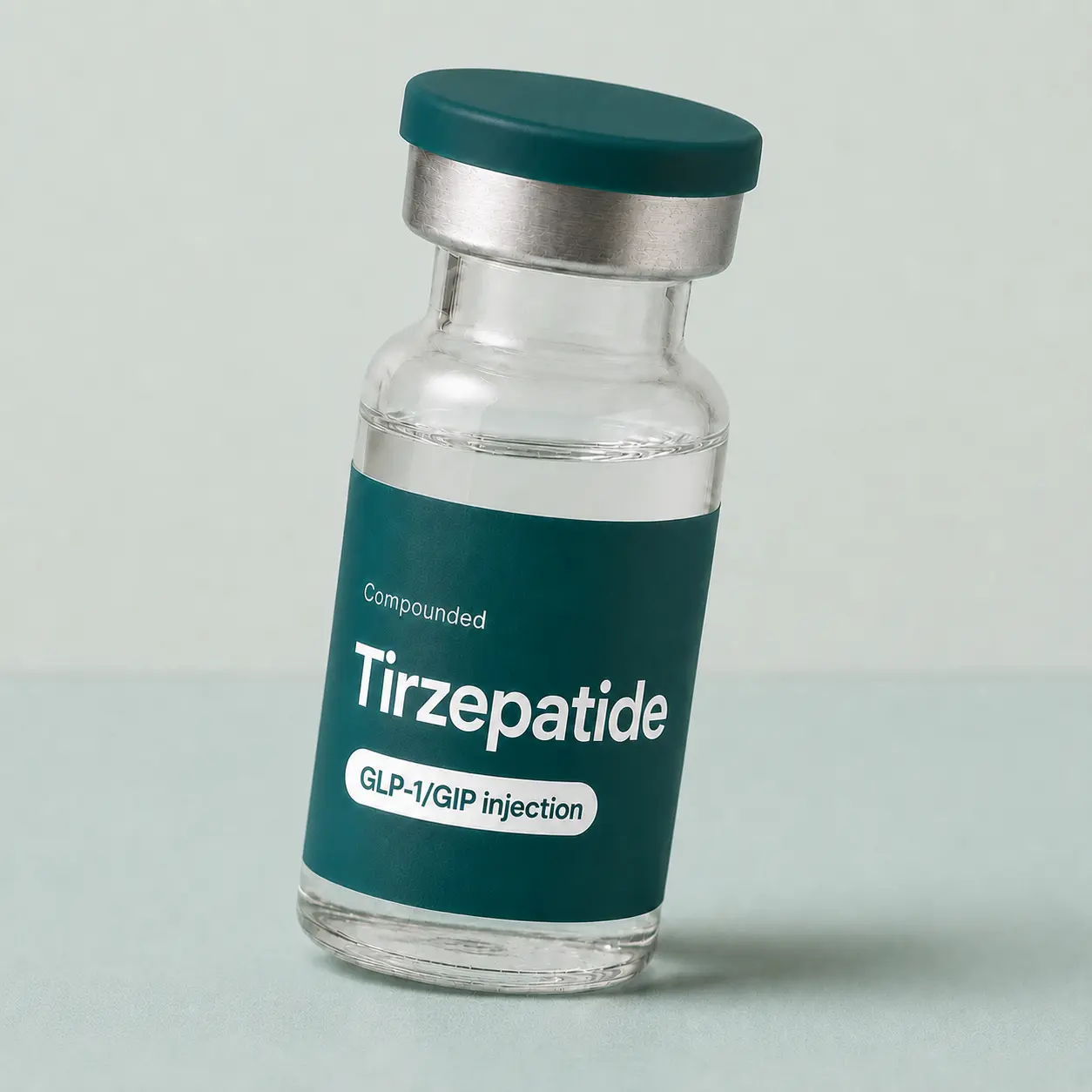
Tirzepatide runs on the same weekly rhythm, but its missed-dose window is set by its own label, not this one — don’t assume the 5-day rule transfers. Check your pharmacy insert, or ask your clinician, which is faster.
This is label guidance, though. If your clinician gave you different missed-dose instructions, theirs win.
Why doubling always backfires
Nausea, reflux, constipation, the wall of early fullness: the familiar GLP-1 side effects follow from slowed gastric emptying, and all of them are dose-dependent. That’s the entire reason titration exists. The semaglutide ladder climbs 0.25 → 0.5 → 1.0 → 1.7 → 2.4 mg with about 4 weeks at each step; tirzepatide starts at 2.5 mg and steps by 2.5 mg toward 10–15 mg. Each step gives your gut a month to adapt before the next one.
Two doses close together put your levels at a rung you haven’t climbed to. Run the trade: a missed week costs a few days of returning appetite. A doubled dose can buy the worst stretch of side effects you’ve had — on a stomach that’s emptying even slower than usual. The math never favors doubling.
What a missed week does to your titration
A dose taken inside the 5-day window changes nothing. Same dose, same schedule, same step.
A fully skipped week usually changes little. Take your next dose at the usual time, at your current dose — don’t jump a step to “make up” lost progress. If the miss lands mid-titration, your clinician may hold you at the current step an extra week; the 4-week interval is there to build tolerance, and a gap interrupts it.
Two or more missed weeks is different. Tolerance to the GI effects fades as the drug washes out, so a full-strength dose after a long gap can hit like a first dose at that strength. This is where clinicians commonly restart a step or two down the ladder instead of resuming where you left off. Practice varies on the exact threshold, which is why this one is a conversation, not a rule you apply yourself.
Up to two weeks missed, resume your usual dose. Three to four weeks, we step you back one rung. Past four weeks, we restart the ladder.
The reason is not caution for its own sake. Gut tolerance is something titration builds, and it decays when dosing stops — which is why liraglutide’s label calls for restarting at the bottom after only three days off. Semaglutide is weekly, so the clock runs longer: with a half-life of about a week, meaningful drug is gone four to five weeks out. Resume at 1.7 mg after six weeks away and you are likely to feel week one again, at a dose your body no longer recognizes. Tirzepatide clears faster, so the window is tighter still.
When to actually message your clinician
- Two or more misses in a row. The restart question above has a clinical answer, not a Google one.
- You missed on purpose. Dreading the injection because of nausea is a titration problem with a titration fix — slower steps, a longer hold, a timing change. Say so plainly. (The nausea tactics are here.)
- A planned gap is coming. Travel without a fridge, surgery, a long stretch off-grid. Storage and transport live in the injection guide; the pause-and-restart plan comes from your clinician.
- The same day keeps failing. If Monday doses keep not happening, the fix is moving your injection day permanently, and your clinician will tell you how to space the switch.
Make the next dose automatic
Most missed doses aren’t discipline failures; they’re scheduling failures. Anchor the shot to something that already happens weekly — Sunday coffee, the same podcast, match day. Set a recurring alarm that names the dose and the site (“0.5 mg, left thigh”), since sites rotate week to week.
Not on a GLP-1 yet and reading ahead? The two-minute quiz is where Zappy starts; a clinician reviews every intake within 24 hours.
If you came here mid-panic, pen in hand: count the days since the missed dose. Five or fewer — inject now, next dose on your regular day. Six or more — wait for your regular day. Then set the alarm.