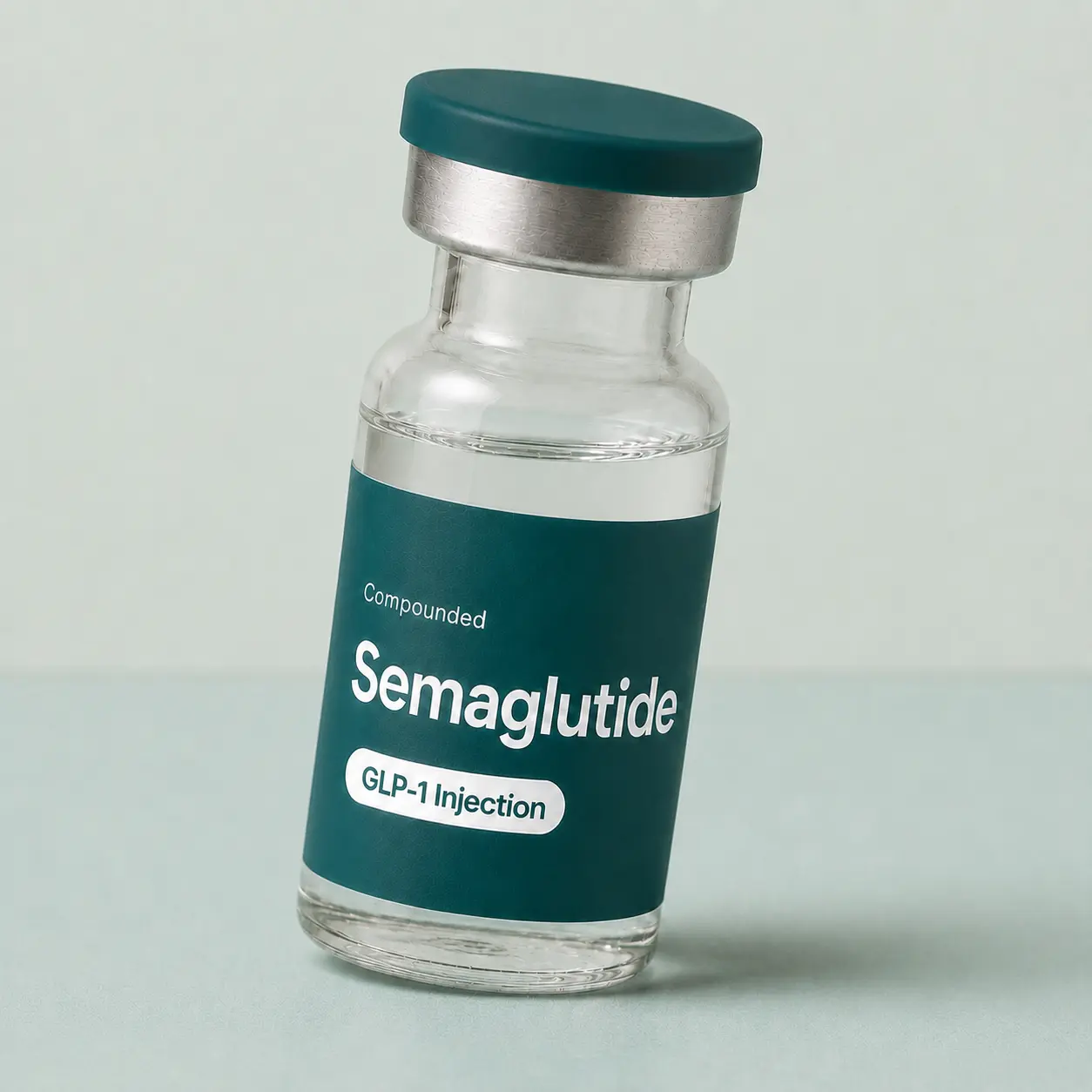
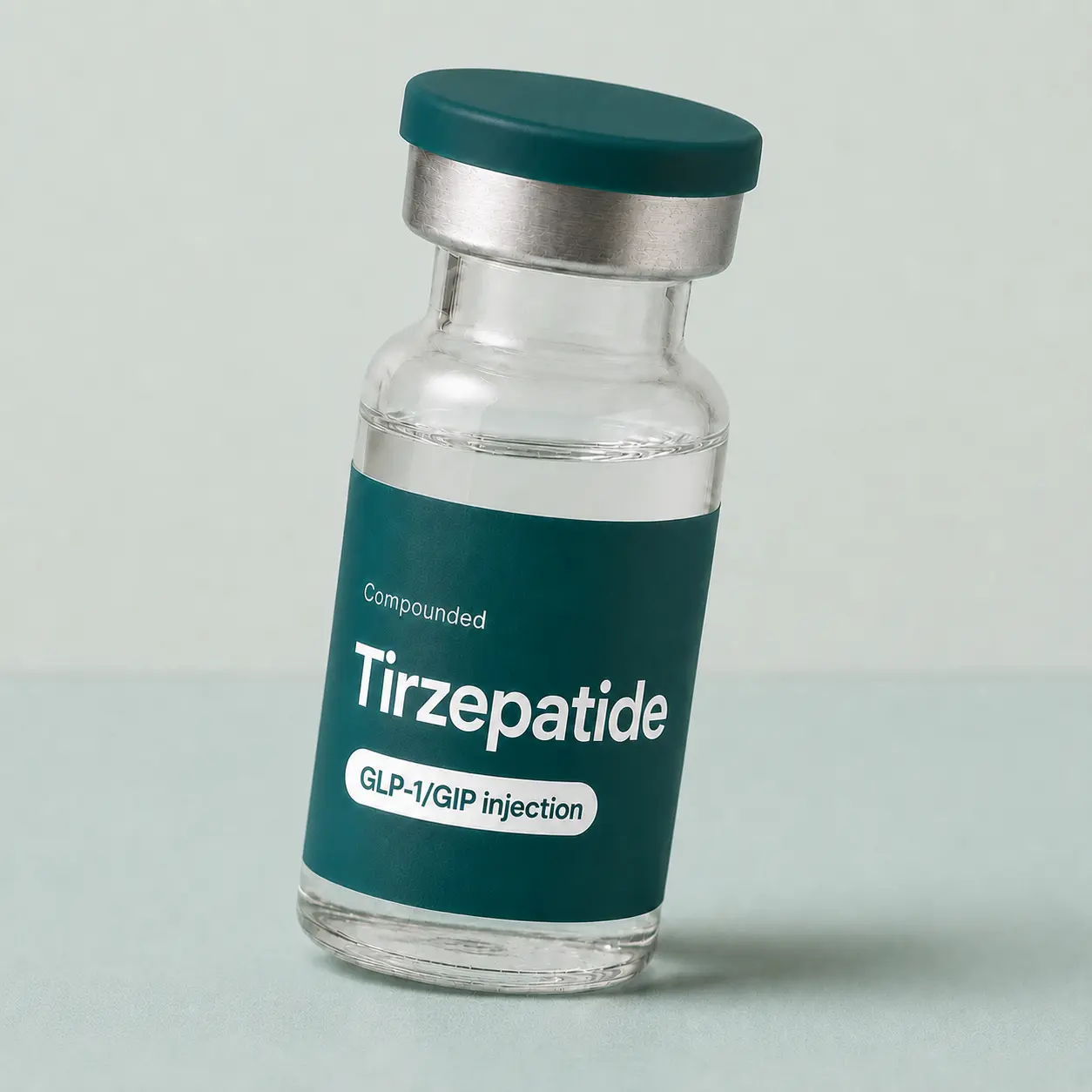
Most GLP-1 plateaus are equilibrium, not failure. The fix is usually dose, protein, or patience, in that order. First confirm it’s real: six-plus weeks flat on all three of scale, waist tape, and clothes fit. One flat number for two weeks is noise. That’s our clinical rule, not a trial endpoint.
Why the scale stops
Semaglutide and tirzepatide act on hypothalamic and hindbrain appetite circuits, slow gastric emptying, and improve insulin secretion; tirzepatide adds GIP receptor agonism. You eat less. But a smaller body spends less energy, so the deficit shrinks as weight comes off; when intake meets expenditure, the scale stops. Every effective obesity treatment ends this way — the question is where.
In STEP 1 (Wilding et al., NEJM 2021: 1,961 adults with obesity, no diabetes), semaglutide 2.4 mg weekly averaged −14.9% of body weight at week 68, versus −2.4% on placebo. In SURMOUNT-1 (Jastreboff et al., NEJM 2022: 2,539 adults), tirzepatide at 72 weeks ran −15.0% on 5 mg, −19.5% on 10 mg, −20.9% on 15 mg, versus −3.1% on placebo.
Lost 14% on semaglutide and stalled? That’s just shy of the trial mean, not failure. The question is whether any lever is still unpulled.
Check the dose before you blame the molecule
Standard semaglutide titration runs 0.25 → 0.5 → 1.0 → 1.7 → 2.4 mg weekly, stepping roughly every four weeks, slower if side effects push back. Stalled at 0.5 or 1.0 mg? You’re mid-ladder, not at the ceiling. Dose-response is real: SURMOUNT-1’s 5 mg and 15 mg arms sit 5.9 points of body weight apart. Below full dose and tolerating it? Up-titration is the first lever. At Zappy, a US-licensed clinician reviews every case and adjusts titration; our compounded semaglutide and tirzepatide come from LegitScript-verified 503A US pharmacies — compounded preparations are not FDA-approved.
Nausea after a step up is common. That’s mechanism, not bad luck: these drugs delay gastric emptying, so nausea tracks dose escalation and fades once a dose holds — in STEP 1 it was the most common side effect and clustered during escalation. Vomiting you can’t stay ahead of is a call-your-clinician problem: it changes the titration plan.
The audit that has to be honest
Protein at 1.2–1.6 g/kg per day, plus resistance training twice a week. The problem is measured: DXA substudies of the GLP-1 trials show a meaningful fraction of the weight lost is lean mass, not fat. The countermeasure is consensus: protein in that range plus resistance training. Whether that lean-mass loss costs strength or function years out — we don’t know yet. (Twice weekly is our practical floor, not a trial-tested dose.)
Sleep and alcohol. No plateau trial has tested either. But alcohol is calories plus disrupted sleep, both are cheap to check, and both are worth ruling out before anyone changes a prescription. Judgment, not data.
The one move that reliably backfires
Quitting at the plateau. Two trials tested stopping. In STEP 4 (Rubino et al., JAMA 2021), people who stopped semaglutide at week 20 regained substantially while continuers held their loss — stopping without a maintenance plan usually reverses it. In SURMOUNT-4 (Aronne et al., JAMA 2024), after 36 weeks of tirzepatide, those switched to placebo regained about 14% of body weight over the next year; continuers lost roughly 5.5% more. Continuing past week 36 still bought more loss — flat weeks are not proof the drug stopped working.
The scale isn’t the only ledger. In SELECT (Lincoff et al., NEJM 2023: 17,604 adults with overweight or obesity and established cardiovascular disease, no diabetes), semaglutide 2.4 mg cut major adverse cardiovascular events by 20% relative (HR 0.80). Relative, and in a high-risk population — but if you have cardiovascular disease, that belongs in the stay-or-stop math alongside the scale.
At full dose and still flat
If you’re at 2.4 mg semaglutide or 15 mg tirzepatide, the audit is honest, and six weeks are flat, two levers remain. One is switching molecule: STEP 1 versus SURMOUNT-1 makes tirzepatide look stronger, but those are different trials in different people, not a head-to-head — hold the comparison loosely (semaglutide vs tirzepatide walks through it). The other is an upstream brake: an untreated thyroid problem, a medication that works against weight loss, chronically short sleep. This is where “talk to your clinician” carries content: a thyroid panel and a med review can surface real problems, and a molecule switch is a prescription decision.
What to do this week
- Evidence: higher dose, more loss (the SURMOUNT-1 dose gradient); stopping reverses the loss (STEP 4, SURMOUNT-4).
- Consensus: 1.2–1.6 g/kg/day of protein plus resistance training, to protect lean mass.
- Our opinion: six flat weeks on three measures before you call it — and audit sleep and alcohol before you audit the molecule.
The trial nobody has run
No one has randomized plateaued patients to hold versus escalate versus switch — the study that would settle most of this page doesn’t exist. Tapering is the same gap: STEP 4 and SURMOUNT-4 tested stopping cold, not stepping down, so who could hold their loss on a lower maintenance dose is genuinely unknown. Until then, plateau management is judgment applied to your chart.