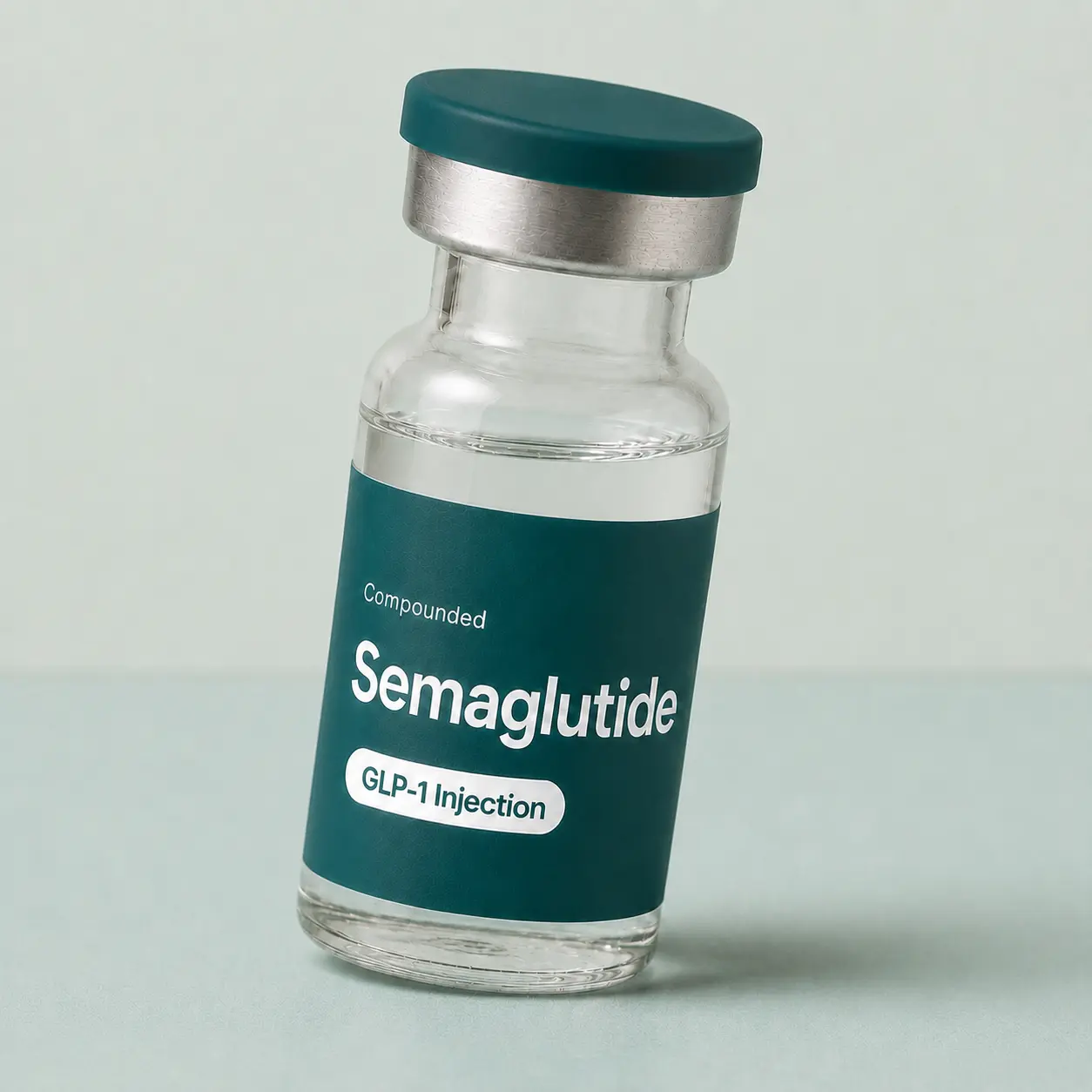
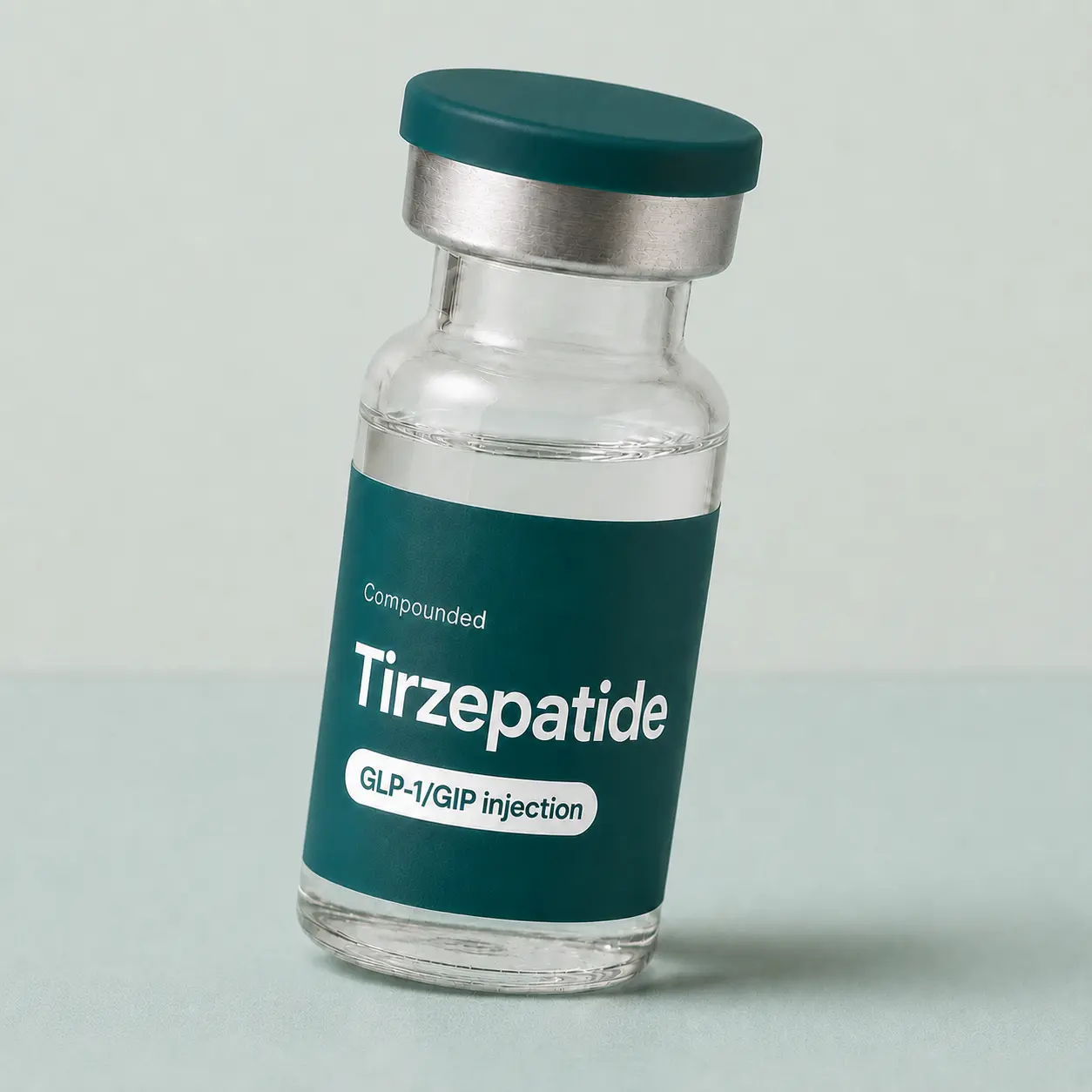
Stop a GLP-1 and the weight usually comes back. In the two trials built to answer this exact question, people regained a large share of what they’d lost within a year of stopping. The regain tracked the drug clearing the body, not a collapse of discipline.
That’s the headline. Here’s the data under it.
The two trials that measured stopping
Most GLP-1 trials measure what you lose. STEP 1 (Wilding et al., NEJM 2021, 1,961 adults) landed semaglutide 2.4 mg at −14.9% mean body weight by week 68; SURMOUNT-1 (Jastreboff et al., NEJM 2022) took tirzepatide as far as −20.9% by week 72. Two others asked the reverse question: what happens when you stop.
STEP 4 (Rubino et al., JAMA 2021) ran everyone on semaglutide for 20 weeks, then randomly split them: keep going, or switch to placebo. The stoppers regained much of what they’d lost; the continuers avoided that regain.
SURMOUNT-4 (Aronne et al., JAMA 2024) did the same with tirzepatide and put hard numbers on it. After withdrawal, participants regained about 14% of body weight over the next year. The group that stayed on treatment lost a further 5.5%. The gap between stopping and continuing was nearly 20 percentage points of body weight — in twelve months.
Why regain is mechanism, not willpower
The rebound isn’t a character flaw showing up on schedule. It’s pharmacology.
GLP-1 receptor agonism does three things: it slows gastric emptying, acts on appetite circuits in the hypothalamus and hindbrain, and enhances glucose-dependent insulin secretion. Tirzepatide adds GIP agonism on top. That combination is what quiets appetite and food noise while the drug is in you. Every one of those effects depends on the drug being present. Clear it, and gastric emptying speeds back up, appetite signaling drifts toward baseline, and hunger returns. The body then defends the fat mass it carried before.
So regain is the predictable result of removing the drug, the same way blood pressure climbs back after you stop an antihypertensive. Obesity behaves like a chronic condition: it responds to treatment and returns without it. Stopping also hands back whatever cardiometabolic benefit was accruing. SELECT (Lincoff et al., NEJM 2023, 17,604 patients) tied semaglutide to a 20% relative drop in major cardiac events, and that is an on-treatment effect.
None of this makes stopping wrong. It makes stopping without a plan the thing that drives the rebound.
What actually holds the loss
Three levers matter, and they are not equal.
The biggest is a maintenance dose. In both trials above, the people who stayed on avoided the rebound — and on tirzepatide they kept losing. Many people don’t need the top dose forever. A lower maintenance dose, set with your clinician, is how most hold their result. Cost is often the real reason people quit, so it matters that a maintenance plan has a cash-pay route: current pricing for compounded semaglutide and tirzepatide is on each treatment page.
The second is muscle. DXA substudies show a meaningful fraction of GLP-1 weight loss is lean mass, not just fat, and less muscle lowers the metabolic floor you’re trying to defend. Resistance training twice a week plus protein around 1.2–1.6 g/kg/day is the countermeasure, and how to protect muscle while you lose covers the specifics. We don’t yet know how much that muscle loss matters functionally over years — the long-term data isn’t in.
The third is the exit itself. Whether to taper or stop outright, and how, is its own call; how to come off a GLP-1 walks through it.
The practical move
Plan the maintenance phase before you taper, not after the scale turns. The people who keep their results decide the dose, the training, and the protein while the drug is still working, not once regain has already started. If you’re weighing whether to start, switch, or step down, the two-minute quiz maps your situation to a plan a clinician reviews within 24 hours.