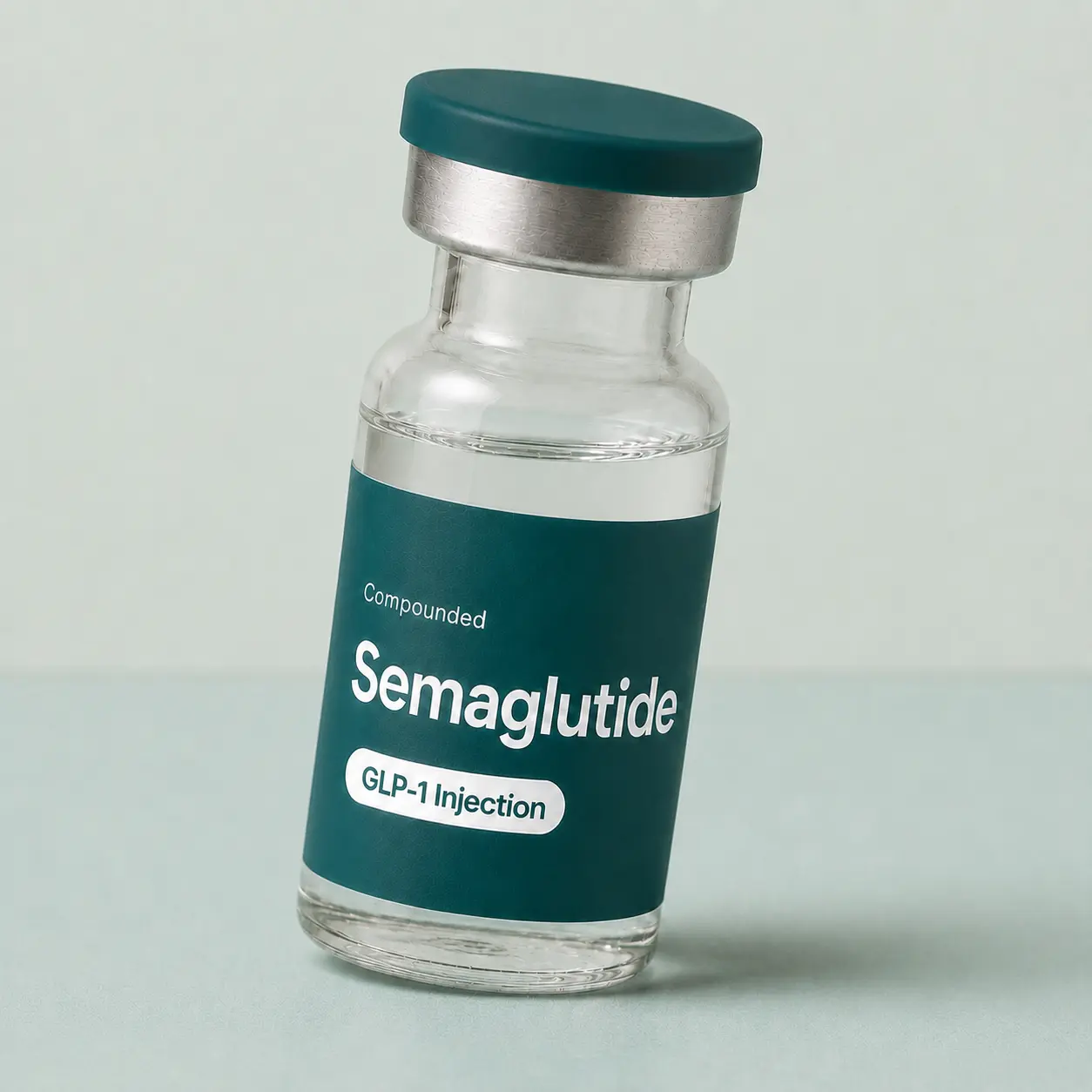
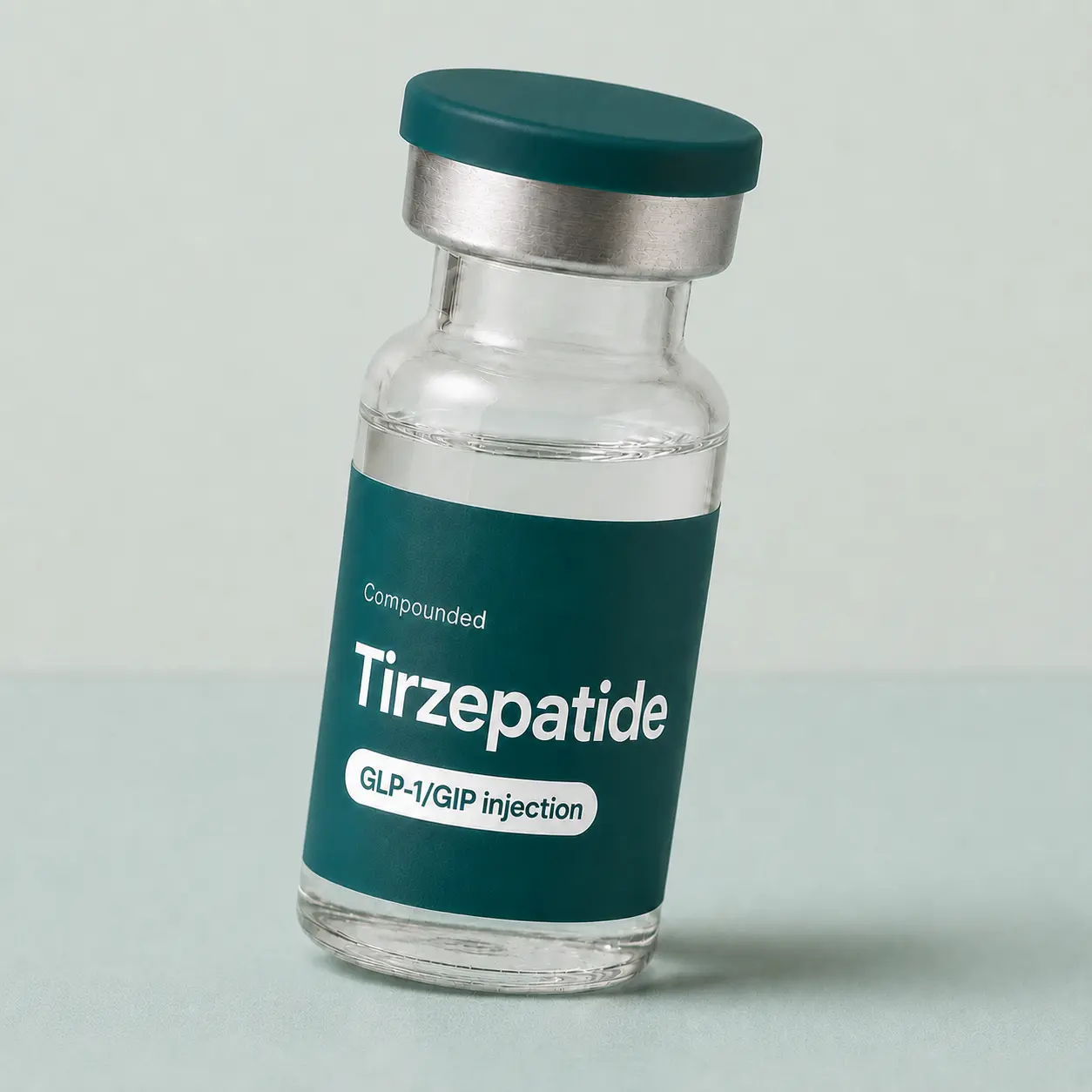
Yes, semaglutide and tirzepatide travel fine. The whole game: keep the medication cold when you can, learn your product’s room-temperature window before you pack, never leave it in a parked car, and if a dose got warm anyway, call your pharmacy before injecting. Don’t guess.
The rest is detail.
Find your room-temperature window before you pack
The default is settled: these medications live in the refrigerator at 36–46°F (2–8°C). But every product also has an allowed stretch at room temperature, and that window is what makes travel work.
The windows differ by product, by brand pen versus compounded vial, and by whether you’ve started using it. Some run days, some run weeks. We’re deliberately not printing a table, because the number that governs your medication is the one on your pharmacy insert, and inserts change. Compounded semaglutide and tirzepatide ship from 503A pharmacies with their own beyond-use dates and storage instructions; those override anything you read online, including this article.
The window exists because both drugs are peptides, and heat degrades peptides gradually: slowly at room temperature, faster in real heat. The insert’s number marks where the stability data says degradation stays negligible. Past it, nobody is certifying anything.
So the pre-trip routine is one minute long: read the insert, find the window, write the fridge-exit date on the box.
Security is the easy part
TSA exempts medically necessary liquids from the 3.4-ounce carry-on limit. Declare the medication at screening and you’re through. Needles fly with their medication. Gel ice packs for medication are allowed even partially thawed. None of this requires a doctor’s letter, though the pharmacy label on the box ends most conversations before they start.
Carry-on, never checked. Checked bags get lost, and hold temperatures are uncontrolled in both directions — freezing ends a pen as surely as heat, and the labels are blunt: do not use if frozen. A small insulated pouch with a gel pack covers a full travel day; keep the pen out of direct contact with the frozen pack, because you’re protecting it from freezing too.
Flying international, keep everything in the original packaging with the pharmacy label attached, and check the destination’s rules early. Some countries restrict injectable or compounded medications; the embassy page settles it faster than a forum thread.
Injection day away from home is injection day at home: abdomen, thigh, or back of upper arm, rotating sites. Technique lives in the injection guide.
The parked car is the real risk
Screening won’t hurt your medication. A car will. A closed car in mild weather can climb well past any temperature your insert accounts for within an hour, and cracking the windows barely changes that. Room-temperature windows assume room temperature; no insert covers the inside of a hot car.
Degraded peptide looks identical to intact peptide — you cannot inspect your way to an answer. So don’t create the question. The medication walks with you at every stop. The glovebox and the trunk count as the car.
It got warm. Now what?
Call the pharmacy that dispensed it, before you inject. Have two facts ready: how warm, how long. Pharmacists handle excursion calls routinely and hold the stability data for your exact preparation. A compounded vial and a branded pen can get different answers to the same excursion.
Two mistakes cost people here. Injecting on faith is the first. Throwing out a usable dose is the second. An excursion can land well inside the stability data, and the phone call is cheaper than the refill.
If the detour pushes you past dose day, the semaglutide label allows a missed dose within 5 days; past that, skip it and resume on schedule. Tirzepatide’s label sets its own window, printed on the insert. Both are label guidance. The plan that applies to you comes from your clinician. Time zones, for what it’s worth, change nothing for a weekly drug: keep your usual dose day and ignore the clock.
Before you go
- Read the insert. Find the room-temperature window. Write the fridge-exit date on the box.
- Carry-on only: insulated pouch, gel pack not touching the pen.
- Save the pharmacy’s number in your phone. It answers every “is this still good?” question you’ll ever have.
- Refill timing around a trip (ship-ahead, early refills) is covered in the FAQ.
If you haven’t started treatment yet and a long trip is coming, sequence deliberately: nausea clusters in the early titration weeks, and those weeks go easier at home. Start with the two-minute quiz, calendar in hand.