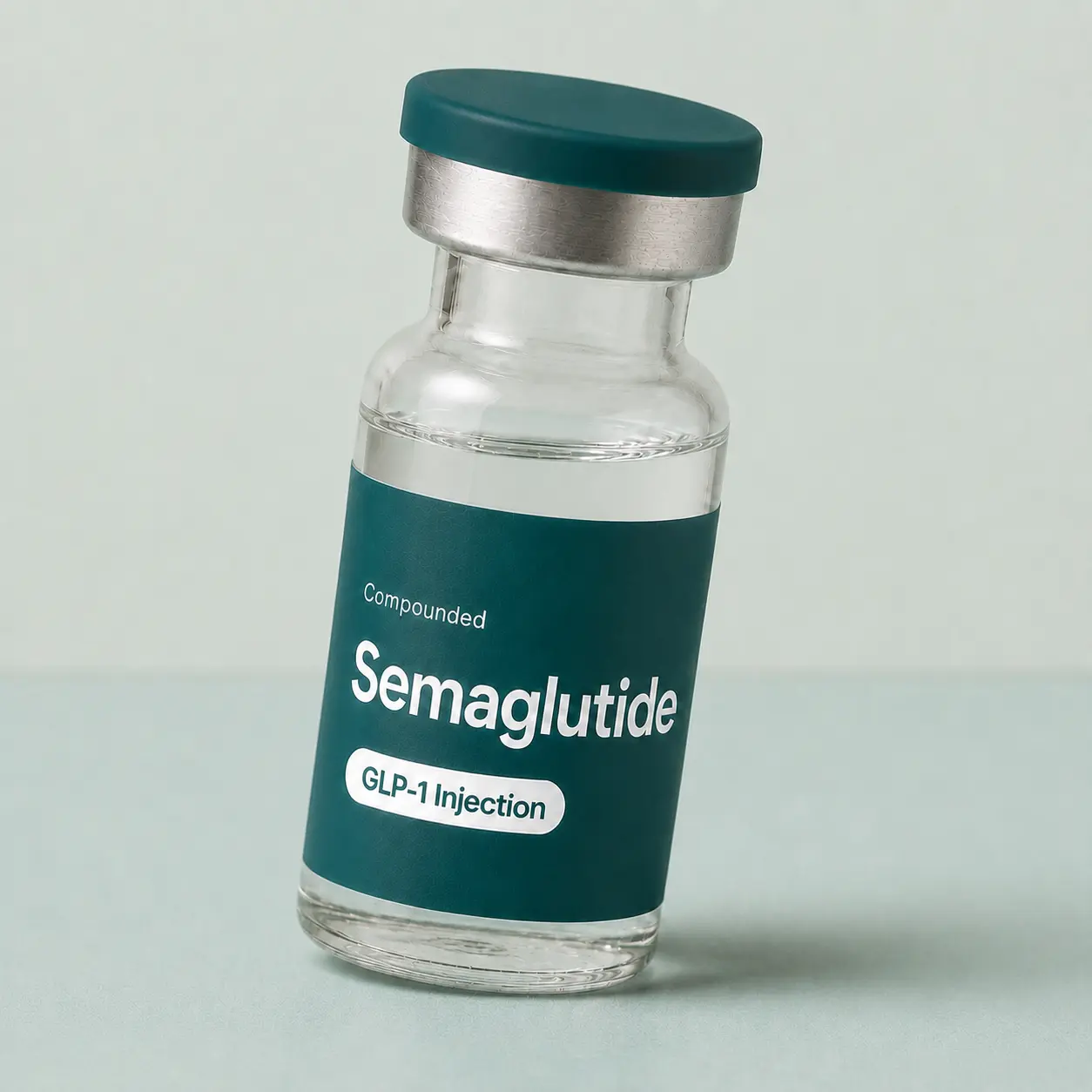
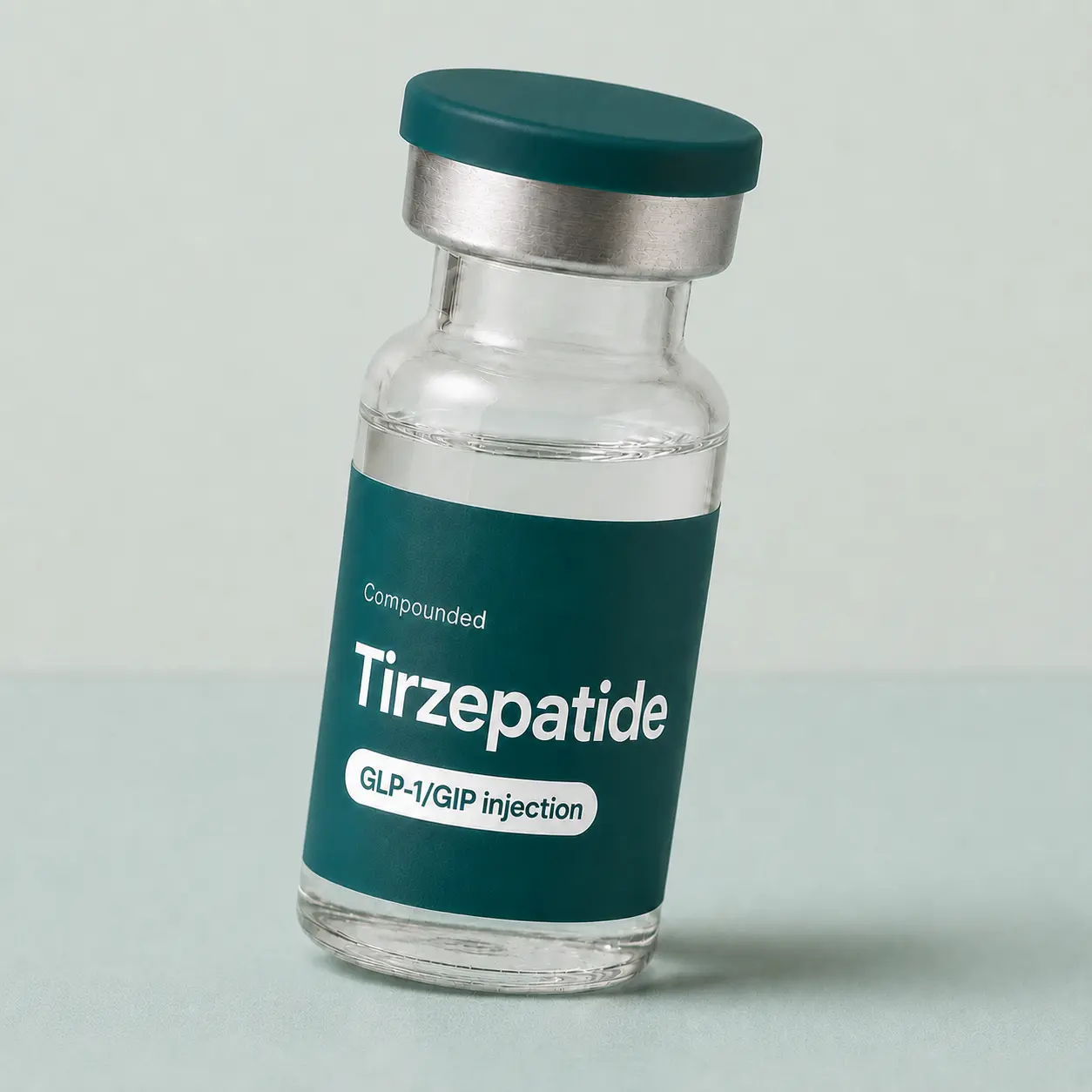
You can switch from semaglutide to tirzepatide, and clinicians handle the crossover routinely — but no validated conversion table exists between the two molecules, so you restart tirzepatide at a low dose and titrate up from there. Plan for the first month to feel like a step backward before the dose climbs high enough to work.
Who switches, and why
The pull is the trial math. In STEP 1 (Wilding et al., NEJM 2021, n=1,961), semaglutide 2.4 mg produced 14.9% mean weight loss at week 68. In SURMOUNT-1 (Jastreboff et al., NEJM 2022, n=2,539), tirzepatide produced 15.0% at 5 mg, 19.5% at 10 mg, and 20.9% at 15 mg by week 72. These are separate trials in separate populations, so treat the gap as directional rather than exact — but it is large and consistent across doses.
The mechanism behind it: both drugs agonize the GLP-1 receptor, which slows gastric emptying and quiets appetite circuits in the hypothalamus and hindbrain. Tirzepatide adds a second receptor, GIP, on top.
The typical switcher has held semaglutide 2.4 mg for months, watched the rate of loss flatten, and still has meaningful weight to lose. The caveat: no trial has tested whether people who plateau on semaglutide lose more after switching. The SURMOUNT numbers come from people starting tirzepatide fresh, not from switchers. It’s a reasonable bet, not a proven one.
One group should hesitate. If you have established cardiovascular disease, semaglutide carries SELECT (Lincoff et al., NEJM 2023, n=17,604): a 20% relative reduction in major cardiovascular events over more than three years of follow-up. Tirzepatide’s equivalent cardiovascular outcomes trial hasn’t read out yet. Switching trades that evidence away — for now. The full head-to-head is in our semaglutide vs tirzepatide comparison.
The crossover dose: there is no conversion table
Neither drug’s label addresses switching, and no published study maps semaglutide doses onto tirzepatide doses. Anyone quoting a precise equivalence — “2.4 mg semaglutide equals X mg tirzepatide” — is inventing precision the literature doesn’t contain.
What clinicians do in practice: start tirzepatide low — the label starting dose is 2.5 mg weekly — not at the top. The one hard rule: one molecule at a time, never both. Overlapping two incretin agonists stacks side effects with no evidence of added benefit. And the switch doesn’t change the safety screening: both molecules carry the same boxed warning for thyroid C-cell tumors seen in rodents, and both are contraindicated if you or a family member has had medullary thyroid carcinoma or MEN 2.
Everyone starts at 2.5 mg. Not because you have not earned more — because tolerance to semaglutide does not transfer cleanly to a molecule that adds GIP receptor activity, and the label has no provision for starting higher on the strength of prior GLP-1 exposure. Four weeks at 2.5 mg, then the standard ladder.
Timing is simple: the first tirzepatide dose goes in on the day your next semaglutide dose would have been due — one week after the last injection. No washout, no gap to bridge.
What surprises people is that the first weeks can feel like starting over. Semaglutide clears slowly enough that you are briefly running on both, then on very little. Appetite can loosen around week two or three before tirzepatide catches up. That is the crossover, not a failed switch.
The first month: expect a lull
Appetite comes back a little. At a 2.5 mg starter dose of tirzepatide — a starting dose, not a therapeutic one — the appetite suppression is weaker than the 2.4 mg of semaglutide you were on, so food noise often returns for a few weeks. Weight loss can stall, or tick back up slightly, until the tirzepatide dose climbs into therapeutic range. That is the protocol working as designed, not the new drug failing.
Familiar side effects can resurface. Both drugs slow gastric emptying, so nausea, reflux, and early fullness can return at each dose step, the same way they did when you started semaglutide. Smaller meals and slower eating apply again.
The ramp is measured in months. Per its label, tirzepatide steps up 2.5 mg every 4 weeks, which puts 10 mg roughly three months out from a 2.5 mg start — and the SURMOUNT-1 numbers reflect 72 weeks on the drug. Dose-by-dose detail is in our tirzepatide guide.
What the switch costs
At Zappy, compounded semaglutide and compounded tirzepatide are prepared by LegitScript-verified 503A US pharmacies, though not FDA-approved as compounded preparations. Cash-pay, no insurance needed, FSA/HSA eligible; current pricing is on each treatment page.
Bring your numbers
If you’re stalled on semaglutide, the useful conversation starts with data: your current dose, months at that dose, side effects, and your rate of loss over the last eight weeks. That is what lets a clinician judge whether you’ve hit the drug’s ceiling or a titration problem. Take the quiz — a Zappy clinician reviews your case within 24 hours, including whether switching is the right call at all.