Tirzepatide produces the largest average weight loss of any weight-loss medication with published phase-3 data: up to 20.9% of body weight over 72 weeks. If maximum weight loss is the goal and you can tolerate a slow ramp, it is the current front-runner. The caveat: it lacks the cardiovascular outcome data semaglutide already has.
Two receptors in one molecule
Tirzepatide is one weekly injection that switches on two gut-hormone receptors: GLP-1 and GIP (glucose-dependent insulinotropic polypeptide). Semaglutide activates only the first. That second receptor is the entire reason tirzepatide is a different drug and not just another GLP-1. The molecule-level detail lives on the tirzepatide ingredient page.
The GLP-1 arm does the work most people have already read about: it acts on appetite circuits in the brain, slows how fast the stomach empties, and raises insulin only when glucose is high. What GIP adds is where the science is genuinely unsettled. GIP is a second incretin hormone. Layering its receptor onto the first should, in theory, amplify the metabolic effect, and the trial numbers are in fact higher. But how much of tirzepatide’s edge comes from GIP, and by what mechanism, is still debated. Paradoxically, both GIP receptor agonism — what tirzepatide does — and GIP receptor blockade have improved metabolism in different experimental models. We do not fully understand why the agonist works. What the trials establish is narrower and solid: the two-receptor drug produces more weight loss than the one-receptor drugs.
One proposed bonus is that GIP activity blunts nausea, which would let people climb to higher, more effective doses than GLP-1 alone allows. That story fits the tolerability data, but it has not been isolated in a trial built to test it. Treat it as plausible, not proven.
What SURMOUNT-1 actually found
SURMOUNT-1 (Jastreboff et al., NEJM 2022) randomized 2,539 adults with obesity to one of three tirzepatide doses or placebo, for 72 weeks. Mean weight change by group:
- 5 mg: −15.0%
- 10 mg: −19.5%
- 15 mg: −20.9%
- Placebo: −3.1%
Set the placebo line beside the doses and the real drug effect is roughly 12 to 18 percentage points. Start at 200 pounds and the top dose corresponds to about 42 pounds lost, against about 6 on placebo. These are means, and individual response is wide: some members lose far more, some far less.
The dose-response is real but flattening. The step from 5 to 10 mg buys 4.5 more points; the step from 10 to 15 mg buys only 1.4. That matters when you weigh the highest dose’s extra side effects against a shrinking extra benefit.
It is tempting to line 20.9% up against semaglutide’s 14.9% from STEP 1 and declare a winner. Be careful: those are different trials, different populations, different years. Cross-trial arithmetic is suggestive, not a head-to-head. The semaglutide vs tirzepatide comparison tracks where the direct evidence stands.
The ramp is the whole point
Tirzepatide is titrated slowly by design. The label starts at 2.5 mg weekly and steps up by 2.5 mg roughly every four weeks, toward a maintenance dose of 10 or 15 mg. The 2.5 mg start is a priming dose, not a treatment dose. Nobody is meant to see the SURMOUNT-1 numbers on it.
The reason for the slow climb is mechanical: each step up raises receptor activation and, with it, gastrointestinal side effects. Slowing or pausing the ramp is the main lever a clinician has when side effects arrive, usually more useful than piling on anti-nausea medication.
Where you need to slow down is individual, and we will not pretend otherwise by naming a rung. Holds are spread across the ladder rather than piling up at one step.
That is not a hedge, it is the useful fact: the plan gets built from how you respond, not from a schedule anyone can predict in advance. Each step raises receptor activation and, with it, gastrointestinal side effects. Slowing the ramp is the first lever we reach for, and it is more useful than stacking anti-nausea medication on a pace your gut has already rejected.
This is also why “how much will I lose” has no honest month-one answer. The trial figures are at 72 weeks, at target dose. The first month is about getting on the drug, not measuring it.
When tirzepatide beats semaglutide — and when it doesn’t
The evidence: tirzepatide’s weight-loss numbers are higher, and it is the only dual GLP-1/GIP agonist on the market.
Our clinical read: tirzepatide is the pick when maximum total weight loss is the priority, when someone has tolerated a GLP-1 before and stalled, or when insulin resistance or pre-diabetes is in the picture. The GIP arm is plausibly additive there, though that specific edge is not proven.
Against our own interest, here is where semaglutide wins. If you have established cardiovascular disease, semaglutide has outcome data tirzepatide does not: in SELECT (Lincoff et al., NEJM 2023), 17,604 patients with prior cardiovascular disease and no diabetes had a 20% relative reduction in major adverse cardiovascular events (hazard ratio 0.80). SELECT is also the largest long-term safety dataset in the class, at roughly three-plus years of mean follow-up. Tirzepatide has no completed equivalent. Compounded semaglutide is also the less expensive of the two at Zappy; current pricing is on each treatment page.
If you already take semaglutide and are weighing the jump, start with the guide on switching from semaglutide to tirzepatide. Not sure which molecule fits you at all? The two-minute quiz is the fastest way to find out.
What it feels like to take
The common side effects are not a mystery; they fall straight out of the mechanism. A stomach that empties more slowly, holding less food, produces nausea, reflux, constipation, and early fullness. They are dose-dependent, usually worst in the days after a step up, and they usually ease as the body adapts. The ones that do not ease, or that spike, are the ones to report.
Because the effects are mechanical, the levers against them are too. Smaller portions, eating slowly, stopping at the first sign of fullness, and easing off high-fat meals all reduce the load on a stomach that is already emptying slowly. None of that is willpower; it is working with the drug instead of against it.
It is a subcutaneous injection you give yourself weekly, into the abdomen, thigh, or back of the upper arm. Rotate the site each week. Injection-site reactions are common and almost always mild and local.
The lean-mass question
Not all of the weight lost on a GLP-1 is fat. DXA-scan substudies show a meaningful share of it is lean mass, muscle included. That is not unique to tirzepatide; it is true of aggressive weight loss generally, drug or not. The countermeasure is well established even where the drug-specific data is still maturing: resistance training about twice a week, and protein in the range of 1.2 to 1.6 grams per kilogram of body weight per day.
What we do not have yet is the long-term functional picture — whether that lean-mass loss shows up years later as measurable weakness or frailty, or whether strength training fully offsets it. That data has not been collected. We don’t know.
Who shouldn’t take it
Tirzepatide carries a boxed warning for thyroid C-cell tumors seen in rodents; whether that risk translates to humans is unknown. It is contraindicated if you or a close relative has had medullary thyroid carcinoma or the syndrome MEN 2. A history of pancreatitis warrants caution. It is not for use in pregnancy. This is the one place where “talk to your clinician first” is not filler: these are the facts a prescriber has to rule out before you start.
Compounded tirzepatide vs Zepbound
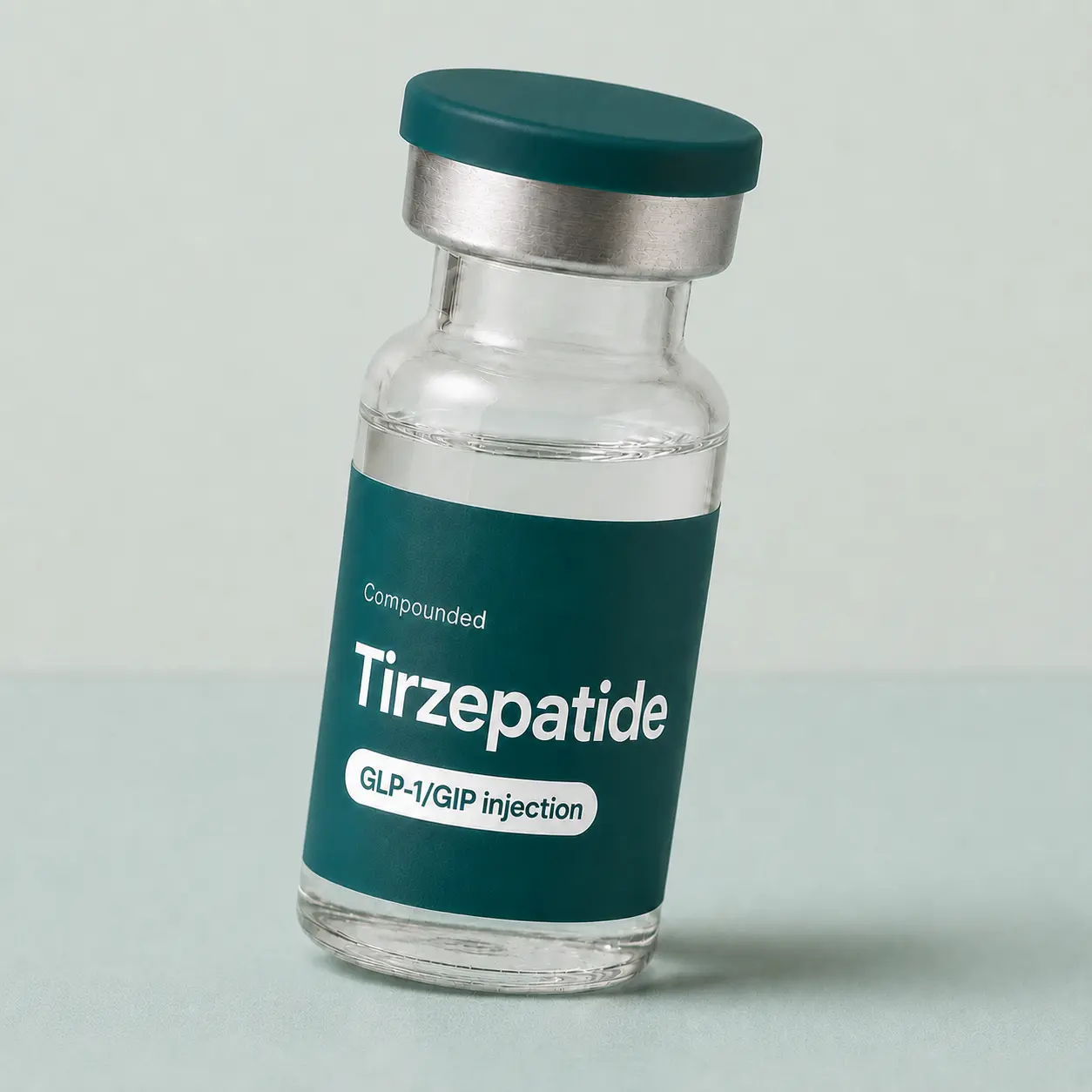
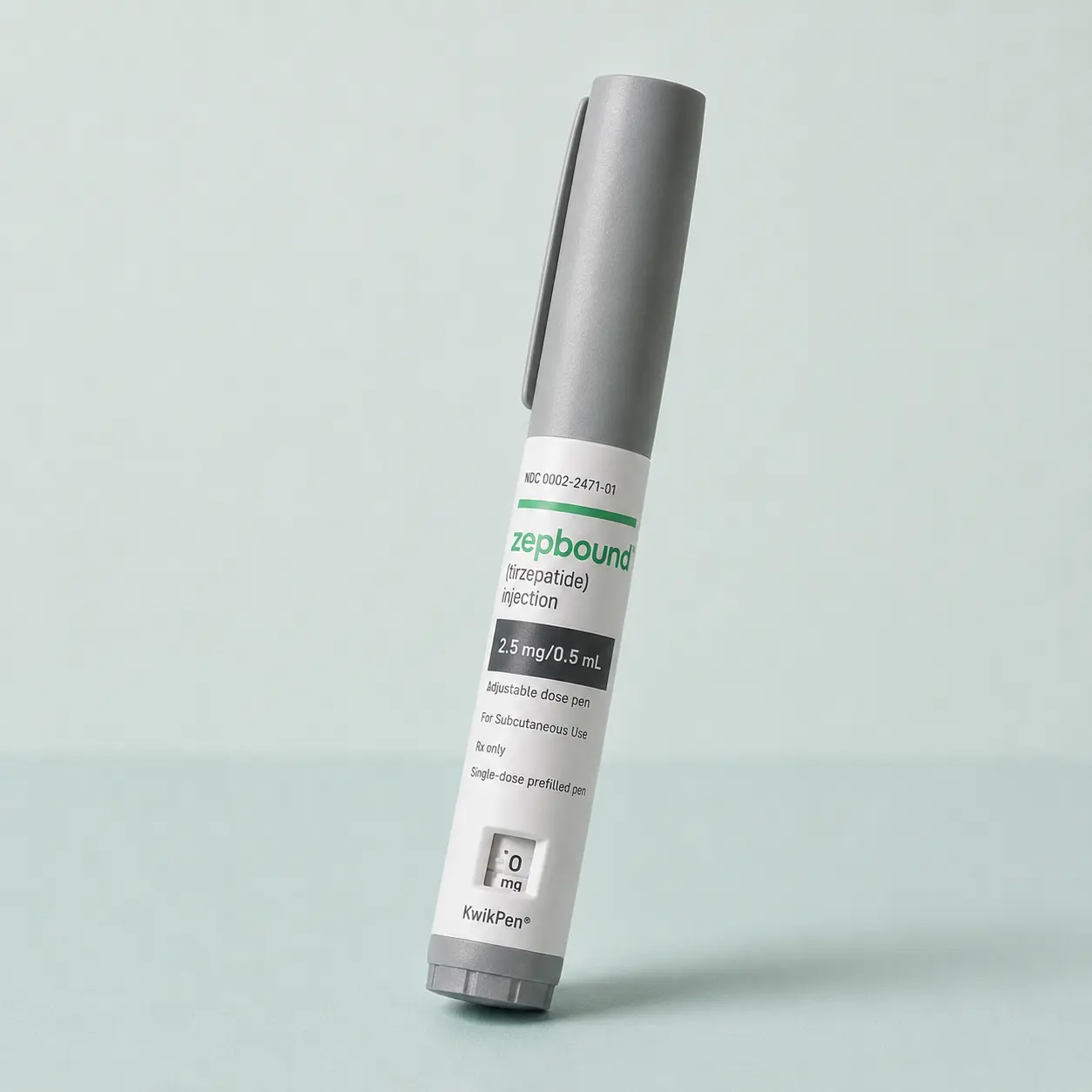
Zepbound is Eli Lilly’s FDA-approved tirzepatide for weight management, the same drug sold as Mounjaro for diabetes. Compounded tirzepatide is prepared by LegitScript-verified 503A US pharmacies; the compounded preparation itself is not FDA-approved.
Price decides it for many people, and it moves — brand manufacturers run their own direct-pay programs, and compounded pricing sits separately. You can see the current tirzepatide options and pricing directly.
Coverage is why the cash price matters so much here. Medicare Part D is barred by statute from covering any drug prescribed for weight loss, and commercial plans vary widely, with many excluding weight-loss GLP-1s outright. Zappy is cash-pay, needs no insurance, and is FSA/HSA eligible. A clinician reviews every case within 24 hours.
One warning about compounding’s flexibility. Custom titration is a real advantage; a compounding pharmacy can build dose steps a fixed-dose pen cannot. But “microdosing” — a fraction of the studied dose sold as if it delivers the studied results — has no trial support at all. If someone markets a sub-therapeutic dose as equivalent, the claim is ahead of the evidence. We don’t know that it works, because it has not been tested.
The number the field is still waiting on
Whether tirzepatide takes weight off is settled; SURMOUNT-1 answered that at 20.9%. The open question is whether that weight loss buys the same downstream protection semaglutide showed in SELECT: fewer heart attacks, fewer strokes, fewer cardiovascular deaths. Tirzepatide’s cardiovascular outcomes trial has not reported. Until it does, the biggest number in weight loss and the biggest number in cardiovascular protection belong to two different drugs. Closing that gap — not another point on the scale at week 72 — is the result worth watching for.